Quick Summary
Removing currency symbols from prices makes people spend more because it subtly disconnects the numerical value from the concept of 'money'. When the pound sign (£) or dollar sign ($) is absent, the price feels less like a financial transaction and more like a neutral data point, reducing the psychological 'pain of paying' and encouraging greater expenditure.
In a hurry? TL;DR
- 1Currency symbols trigger 'pain of paying'
- 2Menus often omit symbols to encourage spend
- 3Numbers alone feel less like money
- 4Psychology over aesthetics drives this trend
- 5Context (e.g., restaurant vs. supermarket) matters
- 6Subconscious cues impact spending habits
- 7Be aware of how prices are presented
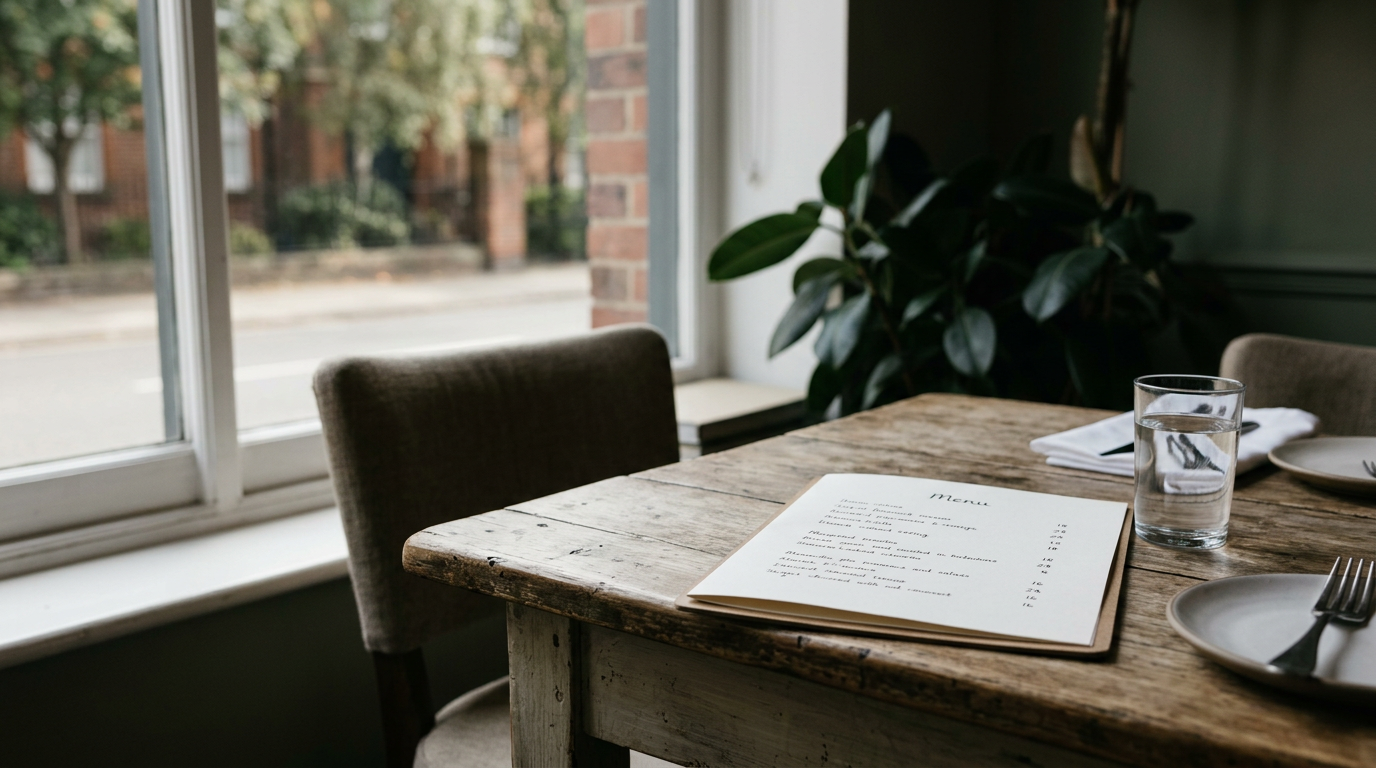
Ever perused a restaurant menu and noticed the prices listed as simply "24" rather than "£24"? It's not a design oversight, nor is it a new fad reserved for high-end dining. This seemingly minor detail is a deliberate, psychologically-backed strategy designed to make you spend more without even realising it. Removing the currency symbol subtly shifts your perception of the price, treating it less like money you're parting with, and more like a neutral number.
It’s a quiet nudge, and it works. This isn't about sleight of hand or deception; it's about understanding the nuances of human behaviour when confronted with financial decisions. The absence of that familiar currency indicator can make the act of spending feel less transactional, less like an exchange of hard-earned cash, and more like an abstract choice.
The Subtle Art of Price Presentation
For years, researchers have delved into the intricacies of consumer behaviour, and one area that consistently yields fascinating results is pricing. Specifically, we're talking about how the presentation of a price can alter our willingness to pay. A seminal study, often cited in behavioural economics circles, found precisely this: removing currency symbols makes people spend more.
In a Cornell University study, participants dining in a restaurant with menus featuring prices without currency symbols spent significantly more than those whose menus included the pound or dollar sign. The difference wasn't negligible; it was a measurable increase in average spend per customer. Why? The theory suggests that the currency symbol, be it '£' or '$', acts as a constant reminder of the 'pain of paying'.
When we see '£25', our brains immediately register this as 'twenty-five pounds I have to give up'. Take away the '£', and '25' becomes just a number. It's still 25 pounds, of course, but the cognitive link to 'money' is weakened. This reduces the friction associated with the expenditure, making us more likely to choose the slightly more expensive dish or add that extra side.
Beyond the Pound Sign: Other Pricing Tricks of the Trade
Once you begin to notice the subtle psychological plays in pricing, you'll see them everywhere. It's not just about removing currency symbols. Here are a few other common techniques:
- Charm Pricing (or '9-ending prices'): This is perhaps the most ubiquitous. Prices ending in .99 or .95 are perceived as significantly cheaper than their rounded counterparts. £9.99 feels much closer to £9 than to £10, even though it's only a penny less. This taps into our left-digit bias, where we focus disproportionately on the first digit we read.
- Decoy Pricing: Presenting three options, where one is clearly an inferior 'decoy' to make the slightly more expensive but better-value option look more appealing. Imagine a small coffee for £2, a large for £4, and a medium for £3.50. The medium often acts as a decoy, making the large seem like a much better deal than if only small and large were offered.
- Anchor Pricing: Presenting a high-priced item first to set an 'anchor' in your mind. Subsequent, lower-priced items then seem more reasonable by comparison. Car dealerships and clothing stores often use this, showcasing their most expensive models or garments to make the mid-range options appear affordable.
- Bundle Pricing: Offering several items together at a slightly reduced price compared to buying them individually. While it can offer genuine savings, it also encourages you to buy more than you might have initially intended. Think of 'meal deals' or software packages.
These strategies, individually or in combination, are designed to make the act of spending feel less painful and more like a good decision. They leverage our cognitive shortcuts and biases, often without us being consciously aware of their influence.
Why Does It Work So Well?
The effectiveness of these pricing tactics lies in our inherent human psychology. We are not purely rational beings who calculate every utility and cost meticulously. Instead, we rely on heuristics – mental shortcuts – to navigate the complexities of daily life. When it comes to money, these shortcuts can be particularly powerful.
Our brains are wired for efficiency, and processing every price as a direct loss of hard-earned income is mentally taxing. So, cues like the absence of a currency symbol, or a price ending in 9, serve as shorthand. They reduce the cognitive load, allowing us to make decisions more quickly, even if those decisions ultimately lead to spending more.
Moreover, the 'pain of paying' is a very real psychological phenomenon. Neuroeconomic studies have shown that paying, especially with cash, can activate areas of the brain associated with physical pain. Credit card payments, by contrast, lessen this pain as they abstract the transaction further away from a direct physical exchange of money. Removing the currency symbol is another layer of abstraction, making the purchase less emotionally charged.
How to Actually Use This
Understanding these mechanisms isn't about becoming cynical about every price tag you see. Instead, it's about becoming a more informed consumer. Here's how you can use this knowledge:
- Be Conscious of the Context: When you see prices presented in a way that minimises the currency symbol, especially in environments like restaurants or luxury stores, remember the psychological play at hand. Ask yourself if you'd still be as willing to pay if the price prominently displayed the currency.
- Translate Mentally: Actively translate those numbers back into their monetary value. '25' on a menu isn't just a number; it's '£25'. Making that mental conversion can help re-establish the 'pain of paying' and encourage more considered spending.
- Focus on Value, Not Just Price: Instead of fixating on the number itself, consider the actual value you're receiving. Is that £25 dish truly worth £25 to you? This shifts the decision from a mere numerical comparison to a value-based one.
- Budget with Awareness: Use this understanding to inform your budgeting. If you know you're susceptible to these subtle nudges, build in a slight buffer, or make a conscious effort to stick to a pre-defined spending limit, particularly in social settings where these tactics are prevalent.
Related Small Talk Reading
Curious about other facets of human behaviour and the invisible forces that shape our decisions? Dive into the facts archive for more.
- Ever wondered about the time we lose at red lights and what it truly costs us?
- Delve into the complex calculations behind the statistical value of a human life – a sobering but fascinating read.
- For more insights into daily curiosities and the hidden mechanics of our world, check today's daily Small Talk.
- And if you're keen on exploring more, there's always more from the Small Talk blog.
Frequently Asked Questions
Learn something new each day
Daily words, facts and quotes delivered to your phone.
