Quick Summary
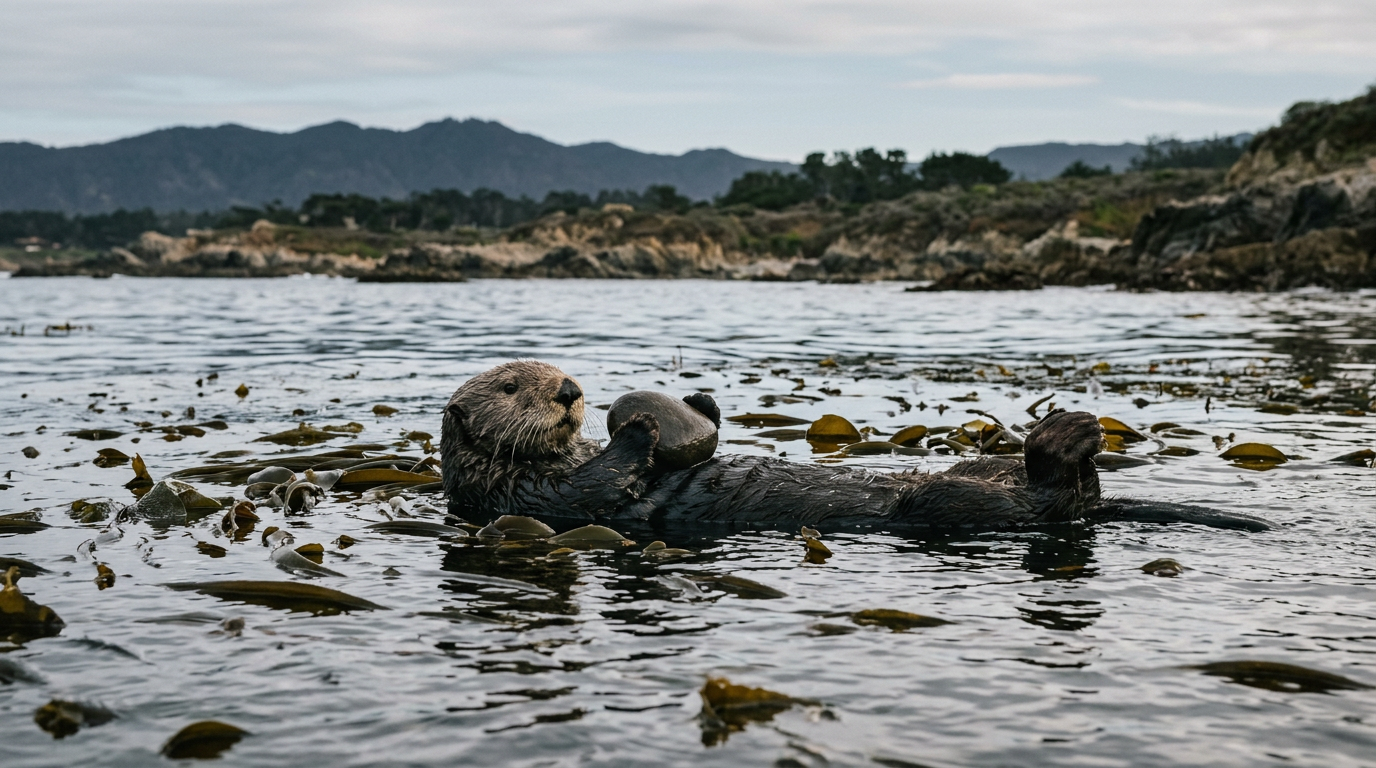
Yes, sea otters do indeed have a distinctive flap of skin, often referred to as a 'pocket' or 'pouch', located under their foreleg. This anatomical feature serves a practical purpose: it's used to store small rocks, which they employ as tools to crack open shellfish, or to temporarily hold their prey while swimming. It's a genuine, verified fact, not just an internet rumour.
In a hurry? TL;DR
- 1Otters use a built-in pouch for their favourite rock tool.
- 2Orcas are technically the largest dolphins.
- 3Hippos are surprisingly close relatives of whales.
- 4Some turtles can breathe through their backside.
- 5Octopus arms can taste and move independently.
That delightful, slightly unbelievable tidbit you might have seen floating around the internet – the one about sea otters having a special pocket for their favourite rock? It is, delightfully, entirely true. Not a charming fable, nor a viral misunderstanding, but a genuine piece of animal biology. Sea otters possess a loose flap of skin, a natural pouch located under their foreleg, where they can tuck away a cherished stone. This stone isn't merely for comfort; it's a tool, used for cracking open shellfish, their primary diet. It's a pragmatic piece of anatomy, often serving as a larder for caught prey, too.
So, before we dive deeper into the world of verifiable oddities, rest assured: the otters and their rocks are very much real. This fact, perhaps because it's so whimsically specific, often raises eyebrows. But it’s just one example of the incredible, sometimes absurd, adaptations found throughout the animal kingdom. Ready to challenge your perception of what's plausible?
Consider this your entry into a menagerie of the genuinely strange. We've sourced the facts, so you can share them with confidence. From unexpected family trees to bizarre bodily functions, these are the animal truths that often sound like elaborate fiction.
The Truth About Otters and Their Tools
Sea otters (specifically the Enhydra lutris species) are remarkable for several reasons, and their tool-use is high on that list. They are one of the few non-primate species observed regularly using tools in the wild. The 'pocket' isn't a true pocket like those on your trousers, but rather a fold of loose skin that provides a secure, temporary storage space. A particularly good, sturdy rock, once found, can be kept and reused, becoming a favoured implement for their foraging endeavours. This isn't just about efficiency; it's about survival. A well-chosen rock allows them to access food sources otherwise unavailable, showcasing a level of intelligence and adaptability that continues to fascinate researchers.
More Animal Facts That Defy Belief
1. The Largest Dolphin Isn't What You Think
When you picture a dolphin, you likely imagine something sleek, grey, and perhaps smaller than a person. You'd be mostly right, but here's the twist: the orca, or killer whale, is technically the largest species of dolphin. Yes, the fearsome apex predator of the ocean, often called a whale, is in fact part of the Delphinidae family – the oceanic dolphins. This often surprises people, who assume 'whale' automatically means it's a different lineage entirely. Taxonomy can be a peculiar thing.
2. Hippos and Whales: An Unexpected Family Reunion
Speaking of surprising relatives, did you know that hippos are closely related to whales? While they live in completely different environments – one a land-based, river-dwelling behemoth, the other a fully aquatic ocean dweller – genetic studies have confirmed a surprisingly close evolutionary link. They share a common ancestor, suggesting a semi-aquatic lineage that eventually split, leading to one group returning entirely to the sea (cetaceans like whales and dolphins) and the other becoming the largely freshwater-dependent hippopotamus. It's a stark reminder that appearances can be deceiving in the evolutionary timeline.
3. Breathing Through Your Backside? Some Turtles Do!
This one tends to elicit a chuckle, but it's entirely true for certain species of freshwater turtles, particularly during hibernation or when submerged for extended periods. They engage in a process called cloacal respiration. Their cloaca (a posterior opening serving as the only opening for intestinal, urinary, and reproductive tracts) is highly vascularised, meaning it has many blood vessels close to the surface. This allows them to absorb oxygen directly from the water, supplementing or even replacing lung respiration when they can't surface for air. It's an ingenious, if somewhat unusual, adaptation for aquatic survival.
4. Octopuses: The Eight-Armed Brains (and Tongues)
An octopus's intelligence is well-documented, but their physicality is just as remarkable. Each of an octopus's eight arms contains a significant portion of its nervous system, allowing the arms to act with a degree of autonomy. An arm can, for instance, open a shell and deliver it to the mouth even if the octopus's 'main brain' isn't actively directing the action. Furthermore, the suckers on an octopus's arms aren't just for grip; they contain chemoreceptors, meaning an octopus can 'taste' what it's touching. Imagine being able to sample your environment with every limb – a truly multi-sensory experience.
5. Koala Fingerprints: Nearly Identical to Humans
Here's a curious case of convergent evolution. Koalas, those sleepy marsupials from Australia, possess fingerprints that are so uncannily similar to human fingerprints that they have, on occasion, been known to confound crime scene investigators. Both species have highly defined, ridged dermal patterns on their digits. While the precise reason for this similarity isn't fully understood, it highlights how similar environmental pressures or functional needs can lead to remarkably parallel evolutionary solutions across vastly different species.
How to Actually Use This
These facts aren't just for idle curiosity; they're conversation starters. Next time you find yourself at a dinner party struggling for a topic, deploy the otter's pocket. Facing a lull in a meeting? Ask if anyone knows the largest dolphin. These verifiable oddities provide a welcome break from the mundane and remind us that the natural world is a constant source of wonder. They're also an excellent way to gently challenge assumptions and spark genuine interest in biology and evolution, without needing a degree in zoology.
Related Small Talk Reading
If these tidbits have piqued your interest, there's a vast world of curious facts waiting to be explored. We're always digging up the unusual and the verifiable.
For more peculiar insights, dive into the facts archive where we regularly update with new discoveries.
Perhaps you're wondering what other surprising dangers lurk in the world? You might be interested in our deep dive into the comparative lethality of coconuts versus sharks. The answer may not be what you expect.
And for your daily dose of the extraordinary, be sure to check out today's daily Small Talk, where we distill big ideas into digestible insights. There's always something new to learn.
For more articles like this, exploring the unexpected corners of knowledge, why not browse more from the Small Talk blog? You'll find plenty to keep your curious mind engaged.
Frequently Asked Questions
Learn something new each day
Daily words, facts and quotes delivered to your phone.
