Quick Summary
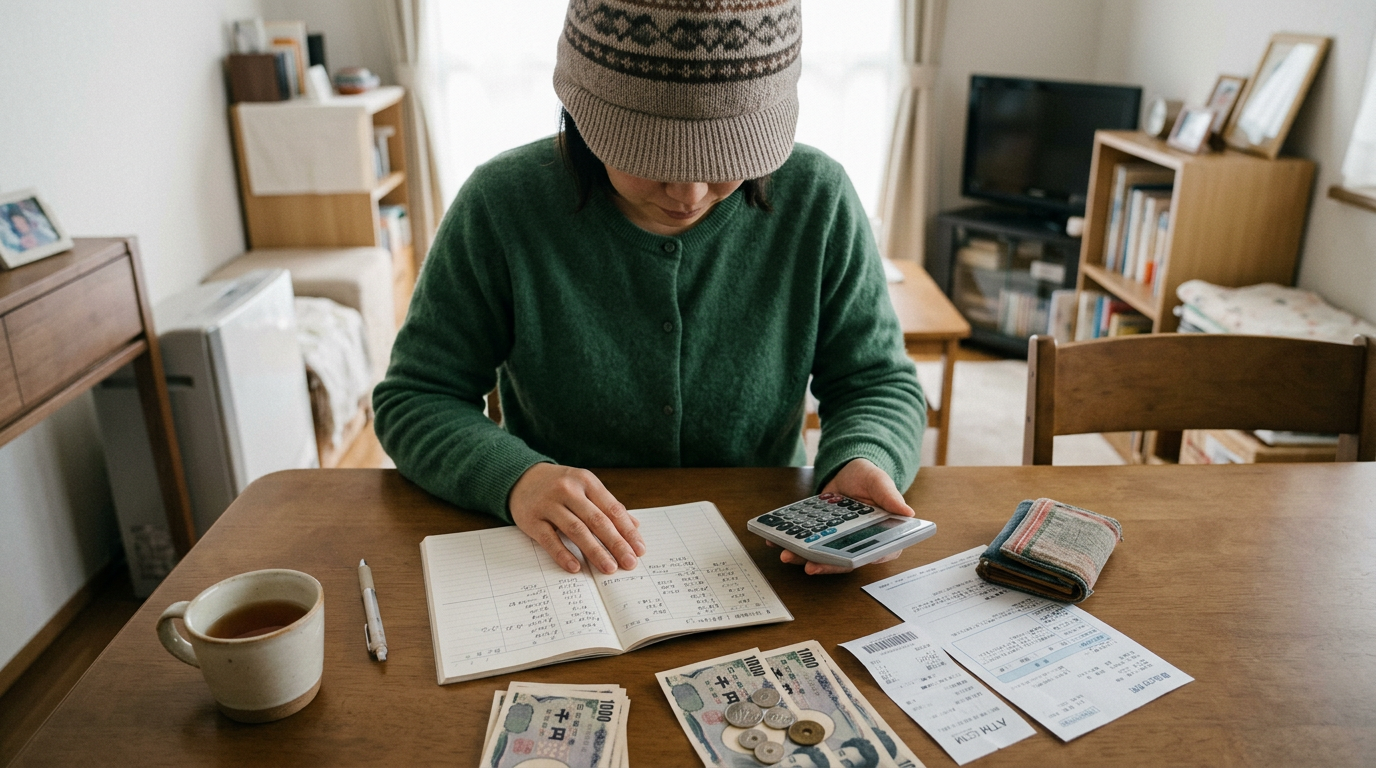
Yes, the claim that wives in Japan often manage household finances, including their husband's entire salary, is largely true. This long-standing practice is deeply embedded in Japanese culture, stemming from historical divisions of labour where men focused on external work and women managed the domestic sphere, a tradition that persists even as modern family structures evolve.
In a hurry? TL;DR
- 1Wives often manage household finances in Japan, including husband's salary.
- 2This practice is deeply rooted in Japanese culture and history.
- 3Known as 'kokan-gasa' (shared purse) or 'heso-okuri' (navel money).
- 4Historically linked to post-WWII gender roles and economic growth.
- 5Offers stability and financial planning, though can create control imbalances.
- 6Modern trends show some shift, but the tradition remains widespread.
- 7Often seen as a practical arrangement rather than a power struggle.
The idea that Japanese wives typically manage the family's money, often including their husband's entire salary, is one of those cultural anecdotes that circulates widely.
It’s a claim that sounds rather specific, perhaps even a little quaint, to those unfamiliar with Japanese domestic life. But as with many generalisations, the truth often lies in the details – and in this particular case, the claim holds up remarkably well.
Indeed, for a significant proportion of Japanese households, the wife is the primary financial manager, a tradition rooted in history and custom rather than mere happenstance. This isn't just about paying bills; it often involves the husband handing over his monthly salary, receiving a modest allowance in return.
The Financial Matriarch: A Japanese Reality
When we dug into the common assertion about who manages household money in Japan, the evidence suggests it’s not just a stereotype; it’s a prevalent, enduring practice. Research and anecdotal accounts consistently show that Japanese women frequently take charge of the family budget, investments, and daily expenditures.
This isn't necessarily a sign of female dominance or male subservience, but rather a long-established division of labour that became particularly solidified in post-war Japan. As the nation rebuilt and industrialised, men often became the primary wage-earners, dedicating long hours to their companies. Their role was external: working to provide.
Conversely, women's roles became largely internal: managing the home, raising children, and critically, overseeing the family's finances. This arrangement freed men to focus solely on their careers, while ensuring a diligent eye was kept on household economics. It's a system that, for many, simply works.
Where Does the Salary Go?
Typically, the husband's full salary is deposited into an account controlled by the wife. From this central pot, she allocates funds for household expenses, savings, and an allowance for her husband. This allowance, often referred to as okozukai, is intended for his personal spending – lunch, after-work socialising, and personal hobbies.
This method is sometimes informally called kokan-gasa, meaning 'shared purse', or heso-okuri, which literally translates to 'navel money' but refers to secret savings a wife might accumulate, often without her husband's full knowledge. While the latter term can imply secrecy, the general management of the main income by the wife is often an open and accepted practice.
Historical and Cultural Roots
The roots of this financial dynamic stretch back further than the post-war economic boom. Historically, within traditional Japanese households, the woman of the house held considerable authority over domestic affairs, including the family's wealth. This was often passed down through generations.
After World War II, as Japan rapidly modernised and Westernised, the 'salaryman' culture emerged. Men were expected to be loyal company employees, often working very long hours, including extensive overtime and after-work socialising with colleagues. In this context, it was pragmatic for wives to handle the day-to-day running of the household, including its finances.
This created a distinct gendered division of labour: men as external providers, women as internal managers. The idea of the okusan (literally 'lady of the house', but often connoting a capable, managing wife) became a cultural ideal, embodying efficiency and fiscal prudence within the home.
The Practicalities of Fiscal Responsibility
One of the main reasons this system endures is its perceived practicality. Many Japanese men are not taught to manage personal finances in detail, often because their mothers managed the family money. When they marry, it becomes their wife's purview.
Furthermore, wives are often seen as more adept at budgeting, saving, and making long-term financial plans. This arrangement can lead to higher household savings rates and more stable financial planning, as the wife is often singularly focused on the family's economic well-being.
Of course, there are downsides. It can limit a husband's financial autonomy and, in some cases, create an imbalance of power. However, for many couples, it's a mutually agreed-upon system that offers clarity and stability.
Modern Shifts and Enduring Traditions
While the tradition remains strong, contemporary Japan is seeing some shifts. More women are entering the workforce, and dual-income households are increasingly common. This naturally leads to different financial arrangements, sometimes with both spouses managing money collaboratively, or with each managing their own income and contributing to shared expenses.
However, even in dual-income families, it's not uncommon for the wife to take on the primary budgeting role for household expenses, even if both contribute their salaries. The cultural ingrained habit of wives as financial stewards is deeply resilient.
It’s a testament to how cultural norms can adapt, yet still retain their fundamental shape. The 'salaryman' system may be evolving, but the financial 'okusan' remains a potent force in many Japanese homes.
A Broader Lens on Household Finance
Understanding such specific cultural practices helps us appreciate the myriad ways societies organise themselves. Just as studying Norwegian ancestry in the United States illuminates immigration patterns, examining Japanese household finance provides insights into gender roles, economic strategies, and domestic power dynamics.
It’s a far cry from, say, behavioural economics research that suggests removing currency symbols makes people spend more. Here, the mechanism isn't psychological nudging, but deep-seated cultural practice.
How to Actually Use This
This isn't an instruction manual, but rather a lens through which to view cultural differences. If you're encountering discussions about Japanese family life or economics, understanding this widespread financial arrangement provides crucial context. It helps to decode why certain financial products or services might be marketed differently in Japan, or why observations about Japanese household savings rates are consistently high.
For those engaging with Japanese colleagues or friends, a gentle awareness of such distinctions can foster better cross-cultural understanding. It's a prime example of how seemingly small details about everyday life can reveal much about a society's values and structure.
Related Small Talk Reading
- For more verified truths and cultural insights, explore the facts archive.
- Keep up with daily curiosities by checking today's daily Small Talk.
- Discover more in-depth articles like this one by visiting more from the Small Talk blog.
Frequently Asked Questions
Learn something new each day
Daily words, facts and quotes delivered to your phone.
