Quick Summary
Yes, butterflies genuinely taste with their feet. They possess chemoreceptors on their tarsi (the very ends of their legs) that allow them to detect chemicals on plants. This enables them to identify suitable host plants for their larvae or nectar sources, assessing edibility and toxicity before committing to feeding or laying eggs. It's a real, sourced, and entirely fascinating aspect of their biology.
In a hurry? TL;DR
- 1Butterflies taste with their feet via chemoreceptors.
- 2This helps them find suitable food or egg-laying sites.
- 3Dolphins sleep with half their brain awake (unihemispheric sleep).
- 4Crows recognise human faces and hold 'funerals'.
- 5These are verifiable, not invented, animal behaviours.
- 6Nature is full of strange but true biological adaptations.
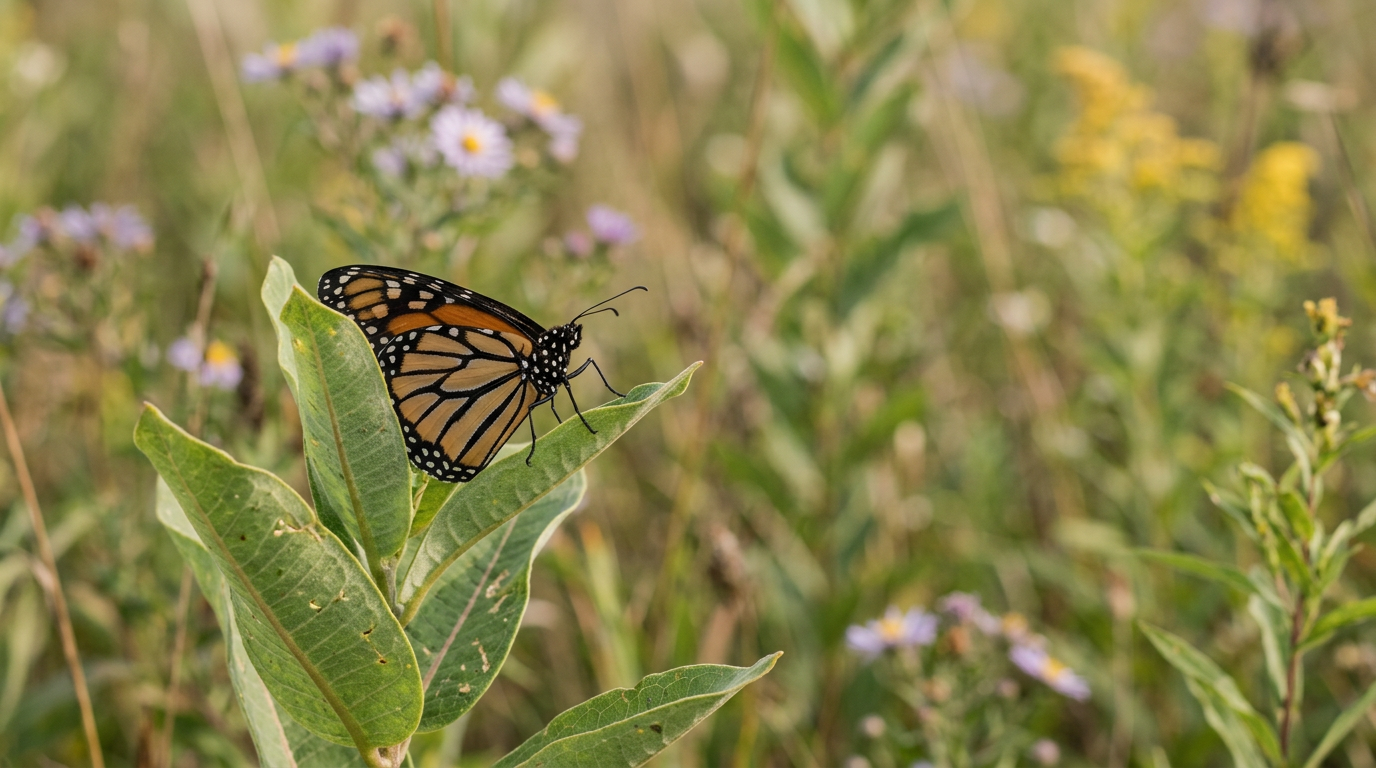
A butterfly flits, then lands gently on a leaf. It doesn't use its antennae to sniff, nor its proboscis to probe. Instead, it presses its tiny feet against the surface. What might look like a casual perch is, in fact, a crucial gustatory examination.
It sounds like something from a whimsical children's book or a piece of trivia plucked from thin air. But the notion that a butterfly tastes with its feet is not an invention. It is a genuine, documented aspect of their biology, allowing them to make life-or-death decisions about food and offspring before ever taking a bite.
This isn't an isolated quirk of the natural world. Many animals possess abilities or exhibit behaviours that, to human ears, sound utterly preposterous. Yet, upon closer inspection, these phenomena are not only true but often reveal elegant and highly effective evolutionary adaptations. Let's peel back the layers of a few such oddities.
The Butterfly's Palate: On its Pedicels, Not its Proboscis
The initial claim is delightfully specific: butterflies taste with their feet. This isn't a figure of speech; it's a physiological reality. Butterflies, much like other insects, don't have taste buds in the same way mammals do. Instead, they have chemoreceptors – specialised sensory cells – located on various parts of their bodies, including their antennae, palps, and, crucially, their tarsi, which are the very ends of their legs.
When a female butterfly lands on a plant, she's not just resting. She's conducting a chemical analysis. These tarsal chemoreceptors detect the specific chemical compounds in the plant's leaves. For many butterfly species, the female needs to lay her eggs on a particular 'host plant' – one that her caterpillars can eat. If she lays them on the wrong plant, her offspring won't survive. So, by 'tasting' the leaf with her feet, she can determine if it's the correct species before committing to laying eggs.
Similarly, when a butterfly is seeking nectar, these same receptors help it discern whether a flower's nectar is suitable or if the plant itself is toxic. It's an efficient, immediate assessment system, allowing for rapid decision-making in a world full of potential dangers and limited resources. It might sound invented, but it's pure, practical biology.
Other Facts That Sound Utterly Implausible
Nature, it seems, delights in challenging our preconceptions. The butterfly's foot-tasting ability is just one example. Here are a couple more verifiable oddities that often elicit disbelief:
Dolphins Sleep with Half a Brain
Imagine needing to stay partially awake even during sleep. That's the reality for dolphins. They exhibit a phenomenon called unihemispheric slow-wave sleep (USWS), meaning one half of their brain sleeps while the other remains active. The active half keeps an eye out for predators, controls their breathing (which is voluntary for dolphins), and allows them to surface for air. The eye on the sleeping side remains closed, while the eye on the awake side stays open, constantly scanning. After about two hours, they switch, allowing the other half of the brain to rest. This ensures they never truly lose full awareness of their surroundings, a critical adaptation for survival in their aquatic environment. It's a sleep pattern that would certainly simplify late-night study sessions, but perhaps less so for actually getting a good night's rest.
Crows Hold Funerals and Recognise Faces
Crows are remarkably intelligent birds, often displaying behaviours that surprise us with their complexity. One such behaviour is their reaction to a deceased crow. When a crow dies, other crows often gather around the body, cawing loudly and sometimes even nudging the deceased. This has been interpreted by researchers as a form of 'funeral' or 'vigil'. It's not a display of grief in the human sense, but rather a sophisticated learning opportunity. The crows are observing what killed their compatriot, learning about potential threats in their environment, and broadcasting that information to the flock. It's an information-gathering and risk-assessment exercise, demonstrating a complex social structure and impressive cognitive abilities.
Even more astonishing, crows have been shown to recognise individual human faces. Studies have demonstrated that crows will remember and react differently to humans who have previously posed a threat to them, sometimes for years. They can even communicate this information to other crows, leading to an entire flock potentially 'knowing' and avoiding a particular individual. This isn't just instinct; it's learning, memory, and social communication on a level many might not expect from a bird.
How to Actually Use This
These seemingly bizarre facts aren't just fodder for pub quizzes or idle chatter. They offer a window into the incredible diversity and ingenuity of life on Earth. Understanding why a butterfly tastes with its feet or how a dolphin manages to sleep partially awake helps us appreciate the intricate evolutionary pressures that shape species. It encourages us to question our assumptions about the natural world and to look closer. When you next see a butterfly land, consider the complex chemical analysis underway. When you encounter a crow, ponder the possibility that it might just remember your face. These observations deepen our connection to the world around us and reveal that reality is often far more interesting than fiction.
Related Small Talk Reading
If these curious facts have piqued your interest, there's always more to explore in the facts archive. For further insights into the animal kingdom's social structures, you might enjoy our piece on a flamboyance of flamingos. And, of course, for your daily dose of verifiable wonder, don't forget to check out today's daily Small Talk. You can find plenty more from the Small Talk blog for similar deep-dives into the curiously real.
Frequently Asked Questions
Learn something new each day
Daily words, facts and quotes delivered to your phone.
