Quick Summary
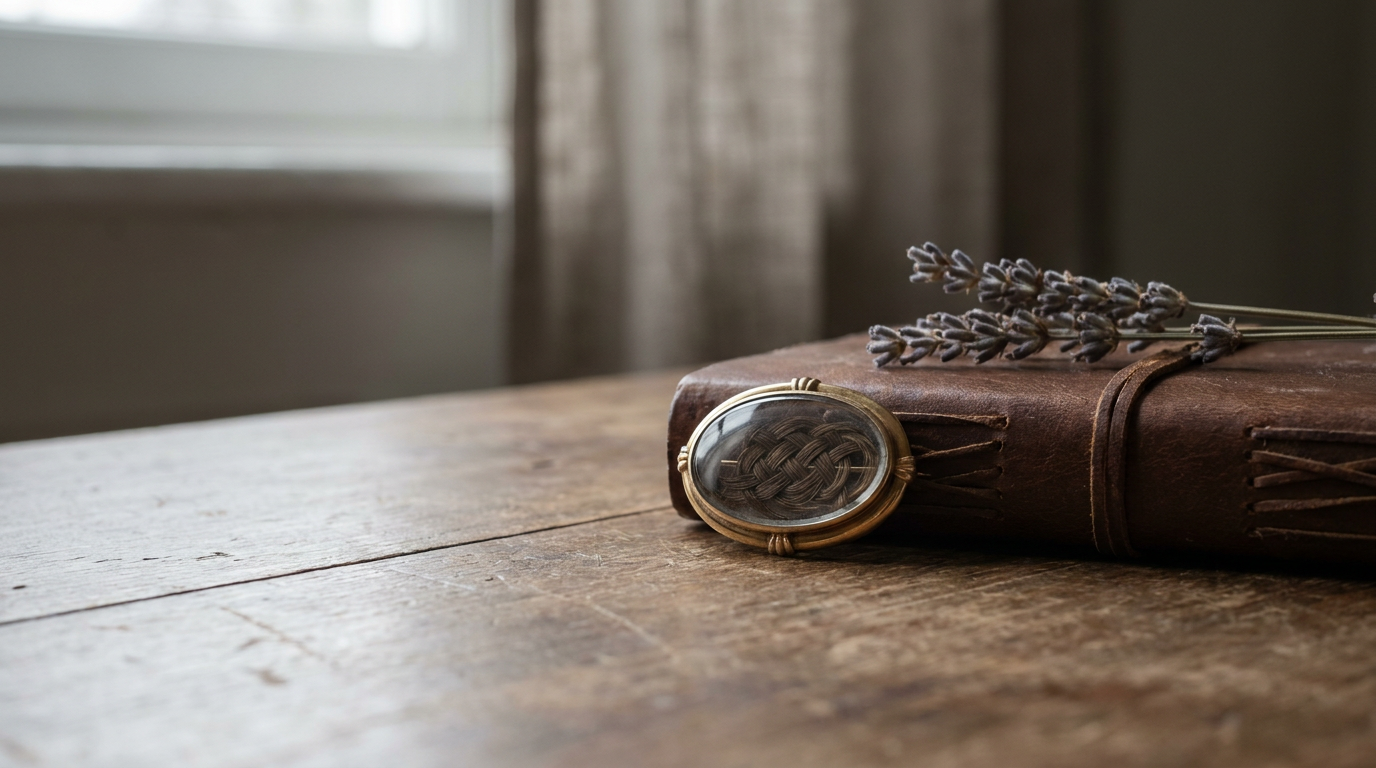
Victorians wore human hair jewellery because it served as a durable, highly personal memento of the deceased. In an era where photography was still in its infancy and mortality was a constant presence, hair did not decay. By fashioning it into brooches, necklaces, or watch fobs, families maintained a tangible connection to the departed. It transformed the raw, uncomfortable reality of loss into a socially acceptable object, weaving the dead into the daily domestic life of the living.
In a hurry? TL;DR
- 1Hair was the primary material for sentimental mourning jewellery.
- 2It offered a permanent, physical connection to the deceased.
- 3Crafting hairwork became a popular domestic hobby for women.
- 4The practice peaked during the mid-to-late 19th century.
- 5Modern shifts in sentimentality rendered the custom taboo.
- 6Our current discomfort with death highlights a stark cultural divide.
To modern eyes, weaving a brooch from a dead relative's locks sounds ghoulish. We tend to associate hair with the living body, and once it is severed—especially if it belonged to someone who has passed—it often triggers a visceral sense of unease. Yet, to a nineteenth-century Briton, this was not a macabre obsession. It was the standard, expected tribute to lasting intimacy.
Death was an omnipresent guest in Victorian homes. With high infant mortality and shorter life expectancies, people were far more familiar with the finality of existence than we are today. Mourning was a public performance, governed by strict social rules, and hair jewellery was a critical prop in that theatre. It allowed the bereaved to keep a piece of their loved one close, quite literally, against the skin.
The Anatomy of Grief
In an age before high-quality digital snapshots, the physicality of the deceased was fleeting. Hair, however, was unique. It was the only part of the body that did not decompose. It possessed a structural integrity that allowed it to be braided, twisted, or ground into a fine powder to create elaborate floral patterns under glass. This transformation of organic matter into an ornamental object allowed the Victorians to navigate their funerary customs with a sense of control.
Women were the primary architects of this sentimentality. Magazines of the period frequently provided patterns and instructions for creating wreaths, watch chains, and bracelets. What we might view as a poignant reminder of death, they viewed as a domestic art form. It was a way of ordering chaos, a deliberate attempt to domesticate the wild, terrifying prospect of loss.
Shifting Attitudes Toward the Body
By the turn of the 20th century, the cultural tide turned. As medicine became more clinical and death was increasingly sequestered into hospitals, our relationship with the corporeal remains of our ancestors changed. We stopped seeing the body as a relic to be kept and started seeing it as a source of contagion or psychological distress. We moved from an era that confronted mortality in an X-ray to one that prefers our memories sanitised, framed in pixels rather than woven from biology.
This shift reflects our wider discomfort with the physical reality of death. The Victorians followed lugubrious codes of etiquette that demanded we look the reaper in the eye. We, conversely, hide the process away. The revulsion we feel toward a Victorian hair wreath is not necessarily a sign of superior hygiene, but an indication of how thoroughly we have sanitised the experience of grief.
How to actually use this
If you find yourself holding a piece of family history that feels 'strange,' try to view it through the lens of the era it was created. Rather than seeing the hair as a creepy biological specimen, imagine the hands that spent hours meticulously twisting those strands. They weren't trying to be ghoulish; they were trying to be present. Use this historical perspective to examine your own biases about how we keep memories today. Are our digital photo albums really any more or less 'real' than the physical keepsakes of the past?
Related Small Talk reading
For more on how we treat the departed, you might enjoy these pieces:
- Read about our deep-rooted funerary customs and why they persist.
- Consider the poignant reminder that death remains a constant, if hidden, part of life.
- Explore the era that confronted mortality in an X-ray for the first time.
- Dive into the lugubrious codes of etiquette that governed Victorian social life.
Check today's daily Small Talk or browse more from the Small Talk blog for further inquiries into the curious habits of humanity.
Frequently Asked Questions
Learn something new each day
Daily words, facts and quotes delivered to your phone.
