
Quick Answer
Young children are most at risk of choking on common foods like hot dogs, peanuts, and even apples. This is a crucial warning because these items are everyday parts of a child's diet. The danger lies in their size and shape, which can easily block a toddler's narrow airway, making careful supervision and preparation essential.
In a hurry? TL;DR
- 1Hot dogs, peanuts, carrots, boned chicken, candy, meat, popcorn, fish with bones, sunflower seeds, and apples are top choking hazards for young children.
- 2Food causes over 50% of non-fatal choking incidents; children under four are most at risk due to developing chewing abilities.
- 3Hot dogs are a leading cause of food-related choking fatalities, often acting as a perfect airway plug due to their size and shape.
- 4Foods that are compressible, cylindrical, or hard and don't dissolve quickly pose significant choking risks.
- 5Children lack the molars to safely grind certain food textures, making them prone to choking on items like fibrous carrots or boned chicken.
- 6Advocates pushed for product redesigns and warning labels on high-risk foods, though the food industry is largely self-regulated on choking hazards.
Why It Matters
It's surprising that common foods like hot dogs and apples pose such a significant choking risk to young children due to their specific textures and shapes.
A 2008 landmark study published in the journal Pediatrics identified the ten most dangerous choking hazards for children: hot dogs, peanuts, carrots, boned chicken, candy, meat, popcorn, fish with bones, sunflower seeds, and apples.
Key Choking Statistics
- Primary Cause: Food causes over 50 percent of non-fatal choking episodes in children.
- High-Risk Age: Children under age four are at the highest risk due to developing molar function.
- The Leading Killer: Hot dogs account for roughly 17 percent of food-related choking fatalities.
- Intervention Rate: An estimated 12,000 children are treated in emergency rooms annually for food choking in the US alone.
The Anatomy of a Hazard
The study, led by researchers at the Interdisciplinary Centre for Health and Society, remains a definitive guide for paediatric safety. It shifted the conversation from general warnings to specific structural risks.
Unlike hard toys, these foods share physical properties that make them uniquely dangerous when they enter a child's narrow airway.
Why These Ten?
The list is not just a collection of small items; it is a catalog of textures. Hot dogs and grapes are dangerous because they are compressible and cylindrical. They can form a perfect seal in the trachea, creating a vacuum that is nearly impossible to dislodge with standard maneuvers.
Hard candies and peanuts are risky because they do not dissolve quickly and can be inhaled into the lungs. In contrast to softer foods that might be coughed up, these rigid items require surgical intervention if they pass the vocal cords.
According to the American Academy of Pediatrics, the lack of molars in toddlers means they cannot grind these specific textures into a safe bolus. They instead use a mash-and-swallow technique that fails when faced with a fibrous carrot or a jagged piece of boned chicken.
The Industrial Response
Following this research, safety advocates pressured food manufacturers to redesign products. While toy manufacturers have strict small parts regulations, the food industry remains largely self-regulated regarding choking shapes.
Comparative data shows that while mandatory warning labels exist for small balls and balloons, no such federal requirement exists for high-risk foods like marshmallows or popcorn.
Practical Safety Scenarios
Preparation: Always cut hot dogs and grapes lengthwise rather than into round coins to break the cylindrical seal.
Environment: Ensure children sit upright while eating; running or playing while chewing increases the risk of accidental inhalation.
Texture Modification: Steam carrots until soft and avoid serving whole nuts or seeds to children under four.
Supervision: Most choking incidents are silent; a child cannot cough or cry if the airway is fully obstructed.
Interesting Connections
- The Hot Dog Shape: The specific diameter of a hot dog was originally designed for easy handling, inadvertently matching the average toddler's trachea.
- Balloon Dangers: While not a food, latex balloons remain the leading non-food cause of choking deaths.
- The Reflex: The gag reflex in infants is located much further forward on the tongue than in adults, serving as a natural, though not foolproof, defense mechanism.
What is the most dangerous food on the list?
Hot dogs are considered the most lethal because their size and consistency allow them to completely block the airway, making the Heimlich maneuver less effective.
At what age is the risk significantly reduced?
Risk drops after age four, when children generally have a full set of molars and improved coordination in swallowing.
Why are apples on the list?
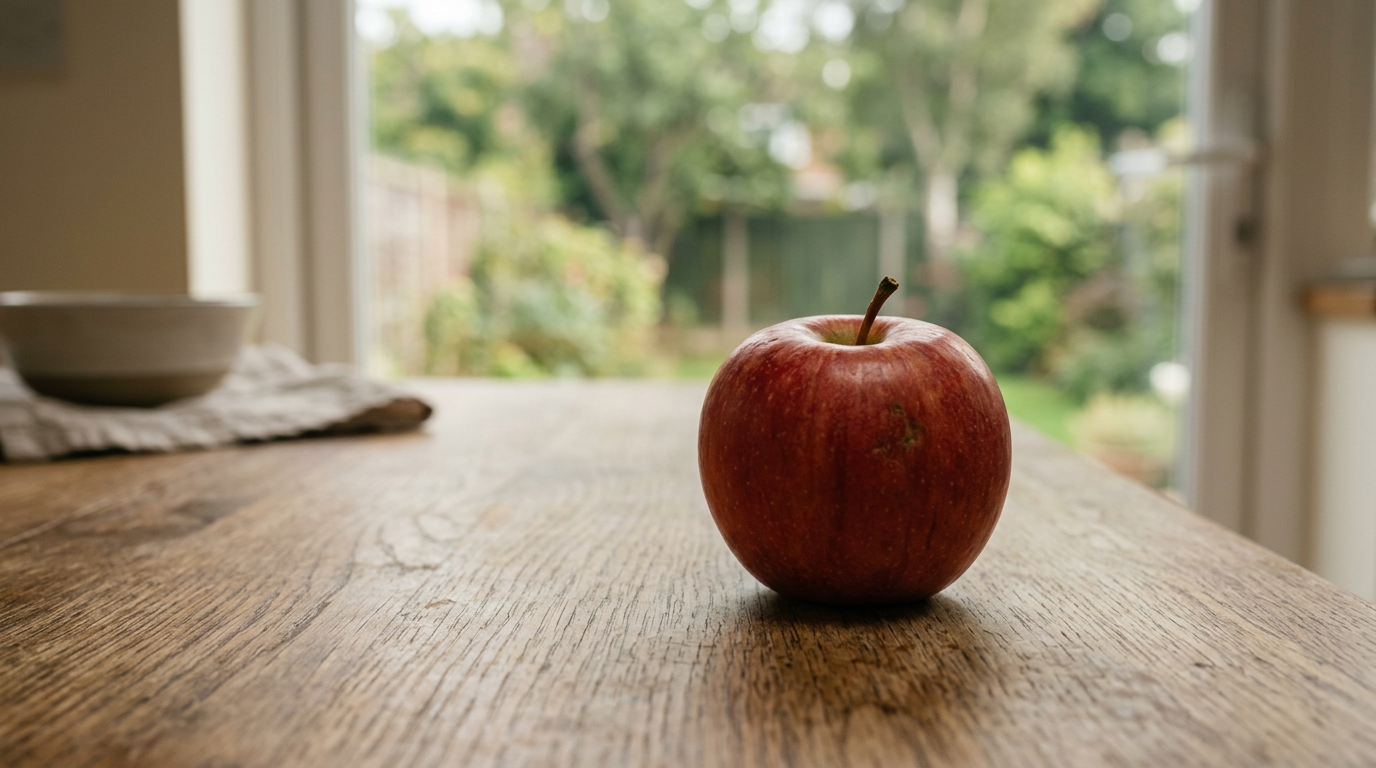
Raw apples are firm and break into sharp, hard chunks that are difficult for toddlers to chew down, leading to fragments that easily bypass the swallow reflex.
Key Takeaways
- Shape Matters: Cylindrical and compressible foods are the highest risk.
- Silent Hazard: Choking rarely involves the dramatic coughing seen in films; it is often quiet.
- Prevention: Altering the physical state of the food (slicing, steaming, peeling) is the most effective intervention.
- Education: Recognising that healthy foods like carrots and apples are just as dangerous as candy is vital for caregivers.
The 2008 study proved that safety isn't just about what children eat, but the geometry of how they eat it. The goal is not to eliminate these foods, but to dismantle their ability to act as a plug.