
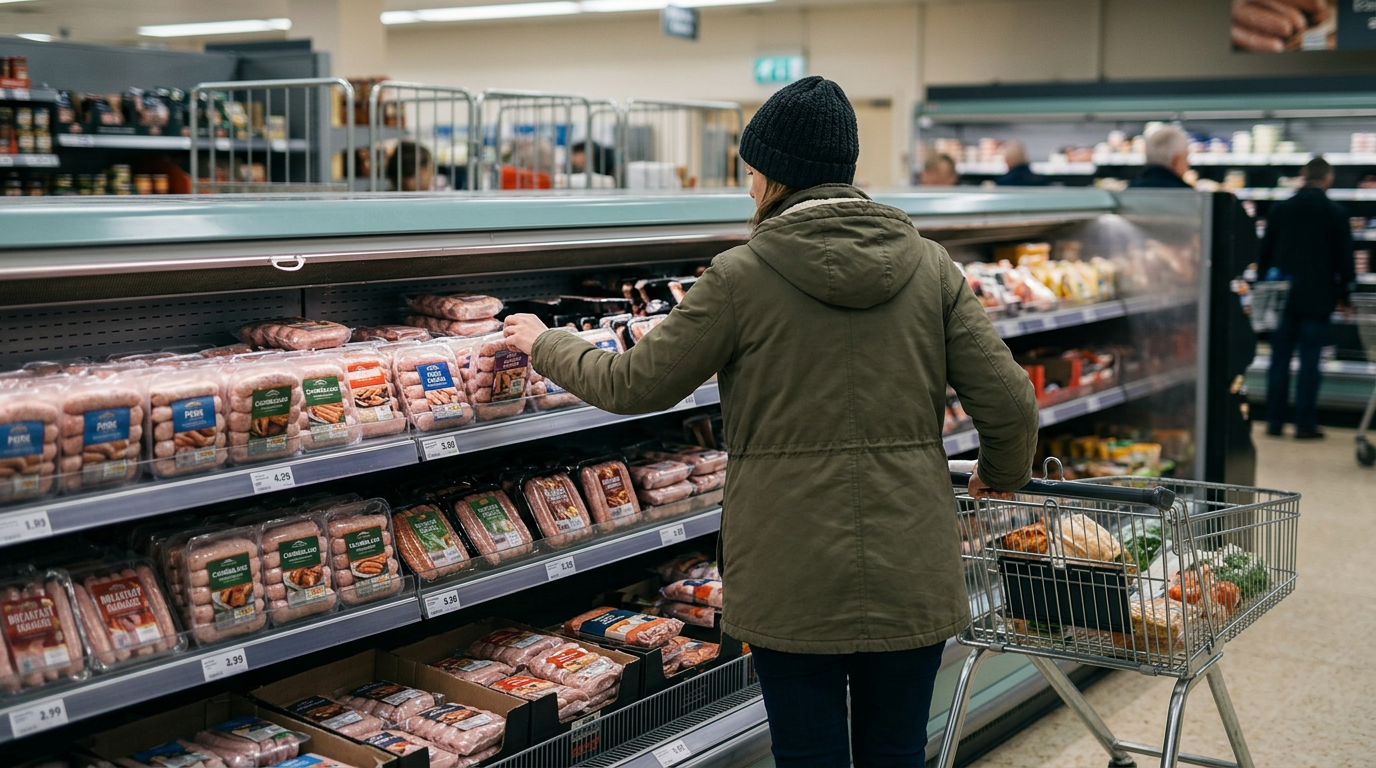
Quick Answer
When the economy's struggling, people tend to buy more sausages. This happens because sausages are a cheap, satisfying way to eat meat when budgets are tight, making them a go-to choice over pricier options. It's a quirky but telling indicator of our spending habits when times get tough.
In a hurry? TL;DR
- 1When the economy weakens, consumers buy more sausages as a cheaper protein substitute for more expensive meats like steak or poultry.
- 2Sausage sales spike during economic downturns, serving as a 'Sausage Index' signal of financial distress.
- 3During the 2008 recession, sausage sales rose nearly 5% in the US while other food categories declined.
- 4Processed sausages can be 4-5 times cheaper per pound than premium beef, making them an attractive option during inflation.
- 5Retailers use this trend to adjust inventory, stocking more sausages and fewer premium items when economic indicators fall.
- 6The sausage index is driven by pure utility and the need for affordable, versatile protein sources during tight budgets.
Why It Matters
It's surprising that a humble sausage can accurately predict economic downturns as people opt for cheaper protein sources.
The sausage index is a real economic indicator suggesting that as GDP falls and consumer confidence wavers, sales of processed meats like sausages tend to spike. Unlike luxury goods, sausages serve as a reliable financial distress signal because they act as a high-protein, low-cost substitute for expensive cuts of steak or poultry.
The Quick Answer
Consumer demand for sausages is inversely proportional to the health of the economy because shoppers trade down from expensive proteins to cheaper alternatives during financial downturns. When the economy shrinks, the sausage market grows.
Key Facts and Figures
- The 2008 Correlation: During the Great Recession, while most food categories slumped, sausage sales in the United States grew by nearly 5 percent.
- The Price Gap: In typical market conditions, premium beef can cost four to five times more per pound than bulk processed sausage.
- Market Resilience: Data from Circana (formerly IRI) frequently shows that processed meat is one of the few grocery categories to remain volume-positive during inflationary spikes.
The Origin of the Sausage Signal
The concept gained mainstream traction during the financial crisis of 2008. While retailers across the board reported devastating losses, meat processors noticed a strange anomaly. Companies like Hillshire Brands reported significant earnings growth even as the housing market collapsed.
This trend is a classic example of what economists call the substitution effect. When disposable income tightens, consumers do not stop eating protein; they simply change the format. The sausage represents the ultimate compromise: it offers the flavour and satiety of meat without the premium price tag of a ribeye or a fillet.
The Logic of Trading Down
Unlike the Lipstick Index, which suggests people buy small luxuries during crises, the Sausage Index is rooted in pure utility. According to research from the American Meat Institute, sausages provide a versatile base for multiple meals, allowing families to stretch a single package across pastas, stews, or breakfasts.
During the 2022-2023 inflationary period, this pattern re-emerged. As the price of fresh beef rose significantly faster than processed alternatives, grocery data showed a distinct shift in basket composition. Shoppers were not becoming vegetarians; they were becoming pragmatic.
Real-World Implications
Retailers use this data to adjust their inventory ahead of predicted downturns. If consumer sentiment indices drop, supermarkets often increase shelf space for processed meats and frozen essentials while scaling back on premium deli counters.
This shift also impacts nutritional trends. Economists at the University of California, Davis, have noted that during recessions, the nutritional quality of grocery baskets often declines as families prioritise calorie density and cost over lean protein sources.
Interesting Connections
- The Lipstick Index: Coined by Leonard Lauder, this suggests sales of affordable luxuries like lipstick rise when the economy falls.
- Inferior Goods: In economics, an inferior good is one whose demand drops when incomes rise. Sausages often fall into this category alongside instant noodles and bus travel.
- The Spam Spike: Similar to sausages, Hormel Foods often reports record sales of Spam during periods of high inflation or unemployment.
Why does this happen with sausages and not chicken?
Chicken is often seen as a staple rather than a budget substitute. Sausages are unique because they are highly processed, allowing manufacturers to keep prices stable by adjusting ingredients, unlike a whole bird or a specific cut of steak.
Is this trend consistent globally?
It is most prevalent in Western economies like the UK, US, and Germany. In contrast to regions where beans or rice are the primary protein substitutes, Western consumers tend to stick to meat-based diets but move down the value chain.
Does this mean sausage companies want a recession?
While they benefit from the substitution effect, high inflation also raises their production costs. They prefer a sideways economy where consumers are cautious but still have enough to spend on branded processed goods.
Key Takeaways
- Counter-Cyclical Growth: Sausage sales move in the opposite direction of the general economy.
- The Substitution Effect: Consumers trade down from steak to sausages to maintain protein intake on a budget.
- Reliable Indicator: Processed meat volume is a faster indicator of consumer stress than many government reports.
- Versatility Wins: The ability to use sausages in various cheap meals drives their recession-proof status.
For more insights into the hidden mechanics of the marketplace, read our guides on the psychology of menu pricing, the history of the gig economy, and why we buy things we don't need.
Frequently Asked Questions
Sources & References
 WikipediaThis source provides context on the Great Recession, a period of severe economic decline, which the article cites as a time when sausage sales rose while most other food categories slumped.en.wikipedia.org
- WikipediaThis source defines the substitution effect in economics, explaining how consumers may substitute cheaper goods for more expensive ones when their disposable income decreases, directly supporting the article's explanation of why sausage sales increase during economic downturns.en.wikipedia.org