
Quick Answer
Dogs have unique 'nose prints' that work just like human fingerprints, meaning each dog's nose pattern is one-of-a-kind. This is fascinating because it offers a natural and permanent way to identify any dog, proving even more reliable than microchips for tracking them down.
In a hurry? TL;DR
- 1Every dog possesses a unique nose print, similar to human fingerprints, which can be used for individual identification.
- 2A dog's nose print pattern is permanent from birth and does not change with age, offering a reliable biometric marker.
- 3Nose prints are a fraud-resistant identification method, unlike microchips which can fail or be removed.
- 4The Canadian Kennel Club has recognized nose prints for dog identification since 1938, predating microchip technology.
- 5AI algorithms can reliably map and recognize dog nose prints with over 99% accuracy in controlled settings.
- 6Modern nose print capture uses smartphone cameras and software, a significant improvement over older, messier inking methods.
Why It Matters
It's fascinating that dogs possess a unique, permanent "nose print" like a fingerprint, offering a reliable way to identify them without invasive tech.
Every dog carries a biometric ID on the tip of its snout. Just as human fingertips are etched with unique ridges, a dog’s nose print features a distinct pattern of dermal ridges and valleys that remains unchanged throughout its life.
The Snapshot
- Unique Identification: No two dogs share the same nose print, even within the same litter.
- Persistence: The pattern is permanent from birth and does not alter with age.
- Fraud Resistance: Unlike microchips, which can fail or be surgically removed, a nose print is an immutable biological marker.
- Recognition: The Canadian Kennel Club has accepted nose prints as proof of identity since 1938.
Why It Matters
This biological quirk offers a non-invasive, foolproof way to track and recover lost animals without the need for internal hardware or uncomfortable branding.
The Architecture of a Snout
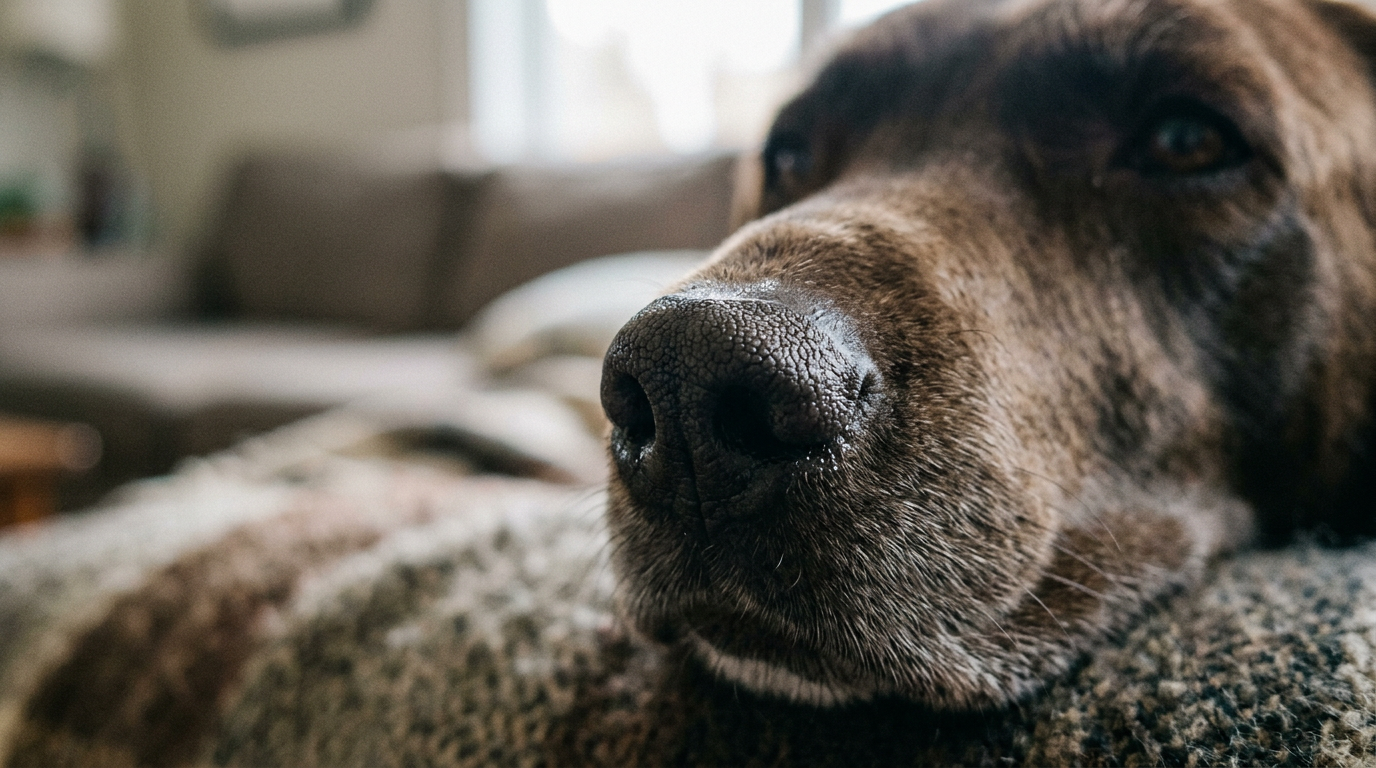
The technical term for the skin on a dog’s nose is the rhinarium. While it may look like a uniform patch of leathery skin, a macro lens reveals a complex topography of bumps and grooves. These patterns are as individual as a snowflake.
In contrast to the smooth skin found on most of a dog's body, the nose is composed of highly specialized tissue. This area is constantly kept moist by mucus and saliva, which helps trap scent molecules, but it is the physical structure of the skin itself that holds the identity.
Scientific Validation
Researchers at the Smart Imaging and Agricultural Engineering Laboratory at Seoul National University have spent years refining AI algorithms to map these prints. Their studies indicate that the reliability of nose print recognition exceeds 99 percent in controlled environments.
Unlike microchips, which are the industry standard but carry a small risk of migration or inflammatory reactions, nose prints require nothing more than a high-resolution photograph.
How the Print is Captured
In the mid-20th century, owners would literally ink a dog's nose and press it onto a piece of paper, much like a police booking. This was messy and often resulted in smudged, unusable data.
Today, the process is digital. Several startups, such as Megvii in China and various apps in the West, allow owners to scan their dog’s nose using a smartphone camera. The software identifies key junction points in the ridge patterns, creating a digital signature that can be stored in a national database.
Real-World Applications
- Lost and Found: If a stray dog is found, a simple phone scan could immediately alert the owner, bypassing the need for a vet to scan for a chip.
- Insurance Fraud Prevention: Verified prints ensure that the dog being treated or claimed for is the specific animal covered by the policy.
- Breed Certification: Ensuring the integrity of pedigree lines by linking DNA results to a specific, unalterable biometric marker.
Can a nose print change if the dog gets a scratch?
Minor scrapes usually heal without altering the underlying pattern. However, deep scarring from severe trauma or certain autoimmune diseases like discoid lupus erythematosus can permanently distort the ridges.
Do cats have unique nose prints too?
Yes. Felids, including domestic cats and large wild cats, possess unique nose prints. However, capturing a cat’s print is notoriously more difficult due to their smaller size and less cooperative nature.
Is this better than a microchip?
It is a complementary technology. While chips are easier to scan quickly at a shelter, nose prints provide a backup that cannot be lost, corrupted, or removed.
Beyond the Print
The complexity of the canine nose is a reminder of how specialized the species has become. Beyond the biometric ridges, a dog’s sense of smell is roughly 10,000 to 100,000 times more acute than a human’s. They don't just see the world; they smell its history and its future.
The next time you look at your dog, remember that their nose is more than just a sensory organ. It is a biological serial number, a one-of-a-kind map that belongs to them and no one else.
Key Takeaways
- Biological Signature: Every dog has a unique pattern of ridges on its nose.
- Age Proof: These patterns remain consistent from puppyhood through the senior years.
- Digital Future: Smartphone technology is making nose-print identification a practical alternative to traditional tagging.
- Historical Precedent: Kennel clubs have recognized the validity of these prints for nearly 90 years.
