Quick Answer
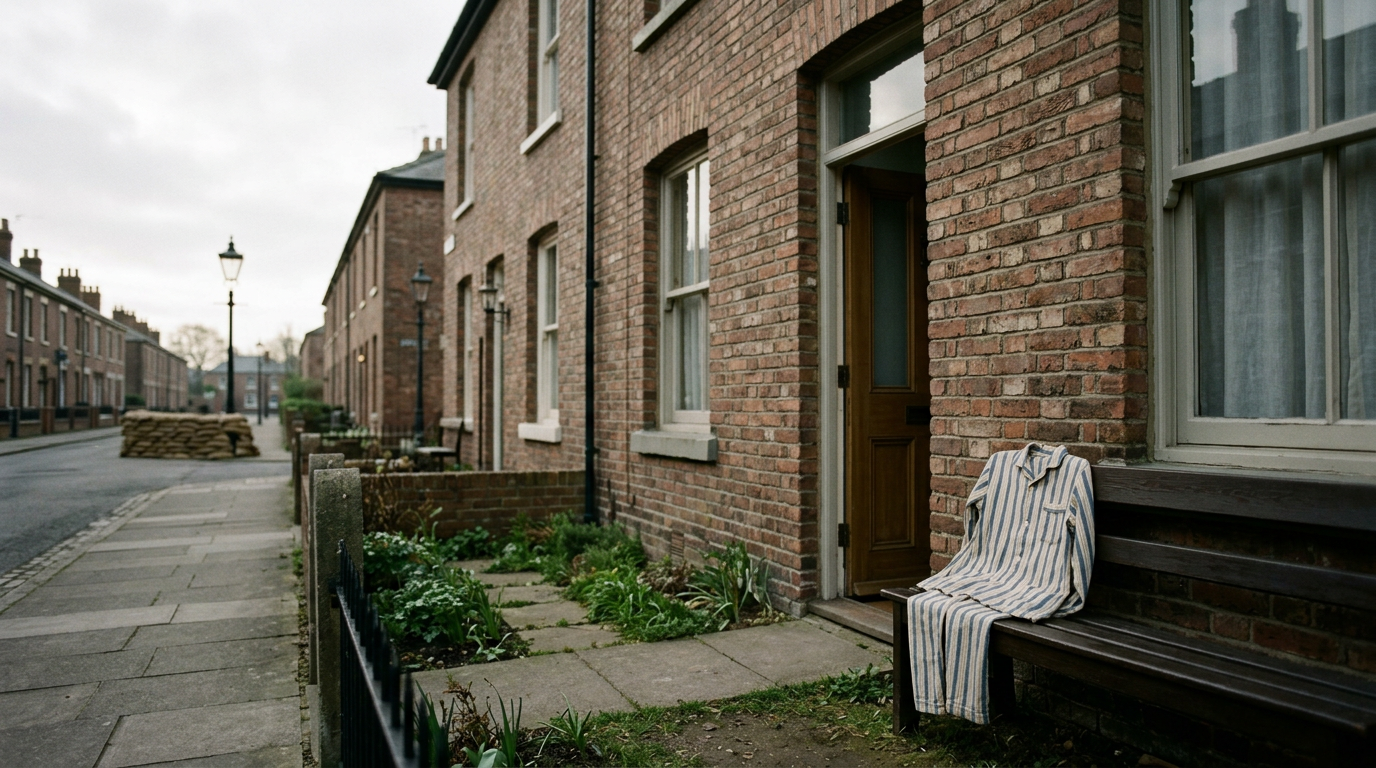
During World War I air raids in England, people switched to wearing pyjamas instead of nightgowns. This was so they could quickly and discreetly escape their homes and appear in public if they needed to during an air raid. It’s a fascinating example of how wartime emergencies directly impacted everyday fashion and privacy.
In a hurry? TL;DR
- 1WWI air raids in England prompted a shift from nightgowns to pyjamas for immediate public readiness.
- 2Pyjamas offered a practical two-piece solution, allowing wearers to quickly become "decently dressed" for escape.
- 3The threat of bombings transformed bedrooms from private spaces into readiness zones during the war.
- 4Originally from India, pyjamas gained popularity in Britain due to their practicality during air raids.
- 5Department stores advertised pyjamas specifically as 'raid-wear' to meet wartime demand.
- 6The war accelerated the decline of traditional nightshirts, favoring the 20th-century functionalism of pyjamas.
Why It Matters
It's surprising that wartime air raids led to pyjamas becoming commonplace bedroom wear for modesty and practicality.
The shift from traditional nightgowns to pyjamas in Britain was driven by the threat of German Zeppelin raids during World War I, which required citizens to be dressed for public appearance at a moment’s notice.
- Transition period: 1914–1918
- Original term: Paejama (Hindi/Persian for leg garment)
- Pre-war standard: Long flannel nightgowns for both sexes
- The catalyst: The first aerial bombings of civilian London
Why It Matters: This shift represents a rare moment where military technology directly dictated the modesty and fashion of the private bedroom.
The Zeppelin Effect
Before 1914, the British nightgown was the undisputed king of the bedroom. For men, it was a long, shapeless tunic; for women, a voluminous floor-length affair. Neither was designed for a sprint to a communal basement or a crowded street.
When the German Air Service began dropping bombs on London and coastal towns, the psychic landscape of the English home changed. Sleep was no longer a private sanctuary; it was a state of readiness.
The pyjama, a two-piece set of jacket and trousers, offered a level of utility that the nightgown lacked. If the sirens wailed, a person in pyjamas could pull on a coat and be decently dressed for the public eye. A man in a nightgown, by contrast, risked a humiliating wardrobe malfunction while fleeing for his life.
From the Colonies to the Trenches
Pyjamas were not new to the British Empire, but they were certainly not mainstream. They had been adopted by colonials in India, who found the lightweight cotton trousers far more breathable than European gowns.
According to fashion historians at the Victoria and Albert Museum, pyjamas were marketed as lounge attire for the wealthy in the late 19th century. However, the Great War democratised the garment.
Unlike the restrictive corsetry and heavy layers of the Victorian era, the pyjama represented a move toward the functionalism of the 20th century. By 1917, department stores like Harrods and Selfridges were reporting record sales of silk and wool-mix pyjama sets, specifically advertised as raid-wear.
The Death of the Nightshirt
The transition was particularly sharp for men. The traditional nightshirt was increasingly viewed as a relic of the elderly or the infirm. In contrast to the rugged, bifurcated uniform of the soldier, the nightshirt felt dangerously vulnerable.
Industry records from the time suggest that production of men’s nightshirts plummeted by nearly 60 percent between 1915 and 1919. Manufacturers shifted their looms to meet the demand for trousers, which provided warmth and, crucially, pockets for carrying identity cards or torches during a blackout.
Modern Legacy
We rarely think of our sleepwear as tactical gear, yet the modern preference for trousers in the bedroom is a direct inheritance from the fear of the Zeppelin. While the nightgown persisted for women, it became increasingly shorter and more streamlined, influenced by the same need for mobility that brought pyjamas into the mainstream.
Today, the pyjama is the global standard for comfort, but its rise was predicated on the most uncomfortable circumstances imaginable.
Key Takeaways
- Safety first: The need to be publicly decent during air raids ended the dominance of the nightgown.
- Linguistic roots: The name comes from the Hindi paejama, meaning leg garment.
- Utility over elegance: Pockets and trousers allowed for easier movement and storage of essential items during emergencies.
- Gender shift: World War I allowed women to adopt bifurcated garments (trousers) in a way that was previously socially unacceptable.