
Quick Answer
Meteorologist Clement Wragge famously started naming storms after people, often using the names of politicians he disliked. This quirky practice made weather forecasts more memorable and injected a bit of public amusement into serious meteorological events, demonstrating a rather cheeky way to engage with both the public and the political landscape of his day.
In a hurry? TL;DR
- 1Meteorologist Clement Wragge pioneered naming storms after people in the 1890s to make forecasts memorable and impactful.
- 2Wragge famously named cyclones after politicians he disliked, subtly criticizing them through storm descriptions.
- 3His method of 'weaponized meteorology' used plausible deniability to lampoon rivals and highlight perceived incompetence.
- 4While his motives were often petty, Wragge understood naming storms enhances public perception of risk and attention.
- 5The practice of naming storms, though controversial for Wragge, is now a global standard for communication.
- 6Wragge's innovative approach, starting in 1887, predated the US Weather Bureau's official adoption of human storm names by decades.
Why It Matters
It's surprising that meteorologist Clement Wragge used storm naming as a way to publicly mock politicians he disliked.
Meteorologist Clement Wragge revolutionised weather reporting in the late 19th century by being the first to name tropical cyclones after people, famously using the system to insult politicians he found disagreeable.
Quick Answer
Clement Wragge, an eccentric British-born meteorologist working in Australia, pioneered the practice of giving storms human names. He frequently chose the names of local politicians to imply they were as erratic, destructive, or full of hot air as the cyclones themselves.
The Wragge Legacy by the Numbers
- Year started: 1887 (Wragge becomes Government Meteorologist for Queensland)
- First naming system: Used Greek letters and mythological figures
- Political naming era: 1890s to 1902
- Official adoption: The US Weather Bureau only began using human names in 1953
Why It Matters
Naming storms makes complex meteorological data relatable and easier to communicate to the public. Wragge understood that giving a storm a personality—even a spiteful one—ensured people would actually pay attention to the forecast.
The Man They Called Inclement
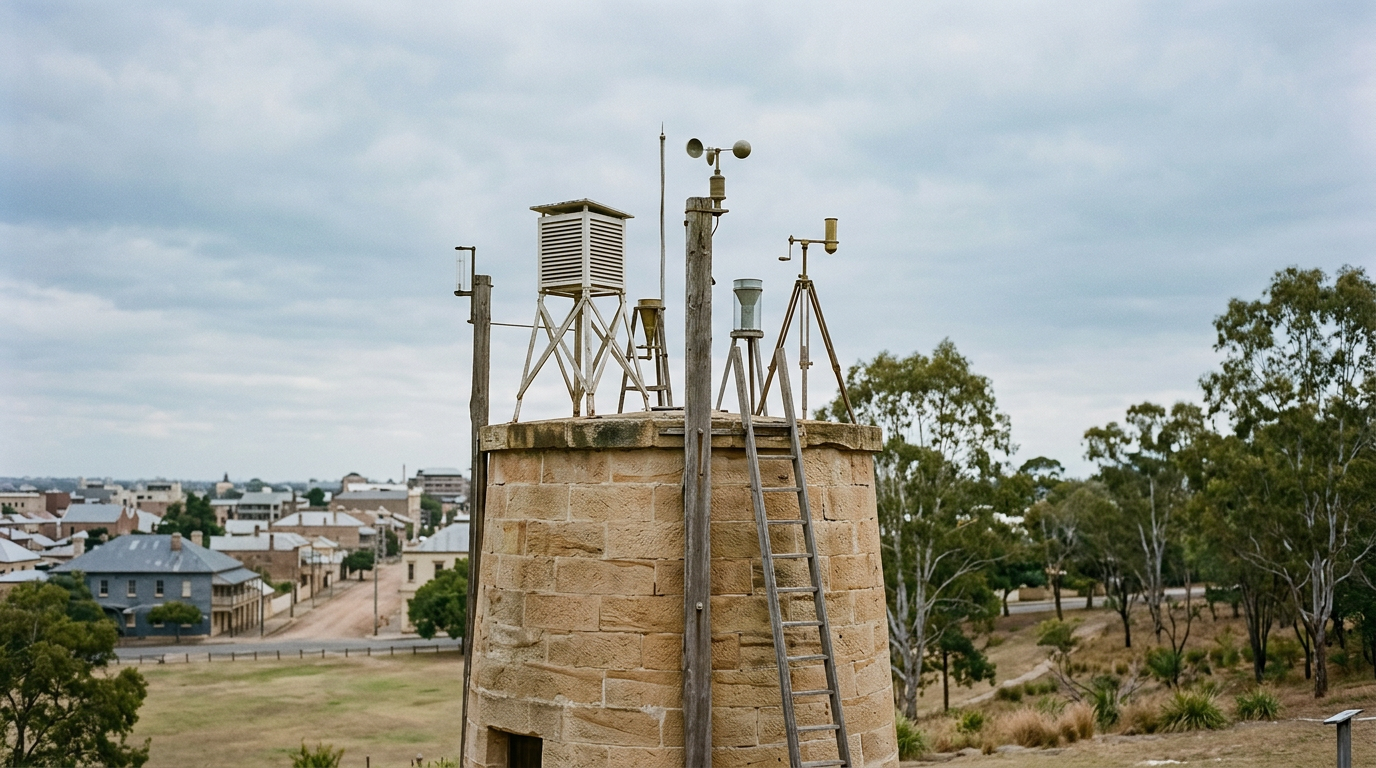
Clement Wragge was not a man of half-measures. Known by the nickname Inclement Wragge, he possessed a temper that rivalled the systems he tracked. When he took over the Queensland Meteorological Bureau, he found himself constantly at odds with the colonial government over funding and scientific recognition.
Unlike other meteorologists of his era who used latitude and longitude coordinates, Wragge preferred nicknames. He began with South Sea Island names but soon transitioned to a more pointed alphabetical system. By the mid-1890s, he was naming storms after the very politicians who controlled his department's budget.
Weaponised Meteorology
The brilliance of Wragge’s method was its plausible deniability. When he named a particularly aimless and wandering storm after a specific member of parliament, he could claim he was simply following an alphabetical list. However, the descriptions he wrote in his weather reports left little room for doubt.
He would describe a cyclone named after a rival as being particularly loud, prone to causing trouble, or eventually fading into insignificance. By characterising storms as politicians, he highlighted their perceived incompetence to the general public. According to records at the National Library of Australia, this habit eventually contributed to the withdrawal of his funding, as the insulted officials grew tired of the meteorological mockery.
The Science of Naming
While Wragge’s motives were often petty, his logic was sound. Modern studies published in the Proceedings of the National Academy of Sciences indicate that the way we name storms directly affects how the public perceives risk. Wragge was a century ahead of the curve in understanding that a storm with a human identity is far more memorable than a set of coordinates.
When Wragge left his post in 1902, the practice of naming storms largely died out for decades. It wasn't until the mid-20th century that the military and weather bureaus revived the concept, though they initially stuck to female names—a practice that has since been diversified to reflect the alphabetical human naming system Wragge first envisioned.
Practical Applications of Naming
- Public Safety: Human names prevent confusion when multiple storms are active simultaneously in the same region.
- Media Efficiency: Short names fit better into headlines and social media formats than technical geographic markers.
- Historical Record: It is easier for communities to remember the impact of Cyclone Tracy than a storm identified by a serial number.
Interesting Connections
- Etymology: The word cyclone was coined by Henry Piddington in 1848, derived from the Greek word for the coil of a snake.
- Cultural Reference: The 1941 novel Storm by George R. Stewart featured a meteorologist naming a storm Maria, which helped popularise the concept in the United States.
- The Wragge Impact: Wragge’s legacy persists in the Australian Bureau of Meteorology, which still manages the official list of names for the region today.
Why did Wragge stop naming storms?
He lost his position as Queensland's government meteorologist in 1902 due to budget cuts and political friction, taking his unique naming system with him.
Were the politicians actually offended?
Yes. Historical accounts suggest that the public ridicule caused by being compared to a destructive weather event was a significant source of tension between Wragge and the government.
When did naming storms become official?
The practice became an international standard in the 1950s, starting in the Atlantic basin and eventually spreading globally under the coordination of the World Meteorological Organization.
Key Takeaways
- Innovator: Clement Wragge was the first to use human names for tropical cyclones in the late 19th century.
- Political Satire: He used his naming system to publicly insult politicians who refused to fund his research.
- Communication: Wragge proved that humanising weather makes it more engaging and easier for the public to track.
- Legacy: Although his specific list died with his career, the concept of alphabetical human naming is now the global standard.
Frequently Asked Questions
Sources & References
 WikipediaThis source explains that Clement Wragge was the first to name tropical cyclones after people, initially after mythological figures and then famously using the names of politicians he disliked in the 1890s to express his contempt.en.wikipedia.org
 Smithsonian MagazineThis article details Clement Wragge's innovative system of naming cyclones after people, specifically mentioning his use of politicians' names in the late 19th century as a way to express his grievances.smithsonianmag.com