
Quick Answer
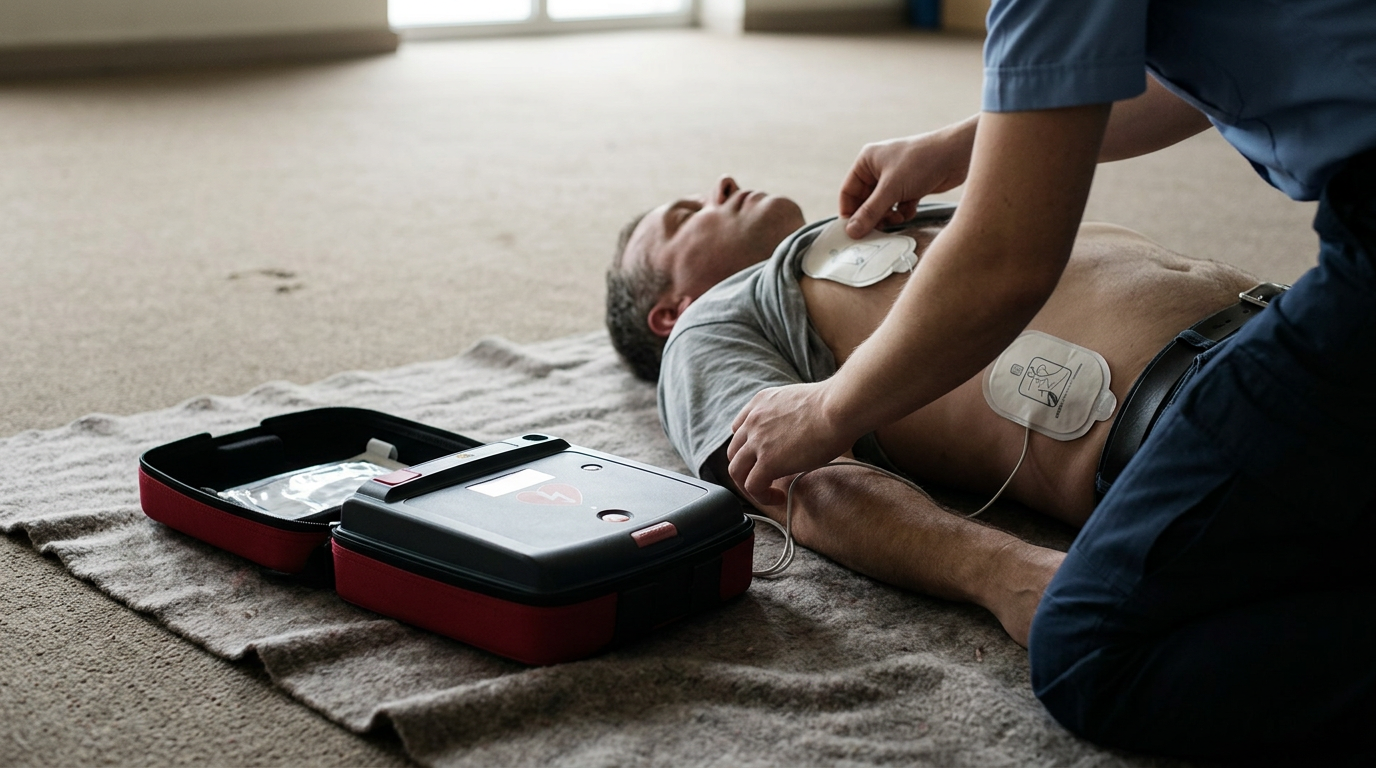
Putting defibrillator pads on the chest and back, instead of both on the chest, could save more lives during cardiac arrest. This simple repositioning, with no extra cost or equipment, makes existing defibrillators far more effective. It means we can get more survival boosts from the millions of machines already out there.
In a hurry? TL;DR
- 1Cardiac arrest survival rates increase significantly with front-and-back defibrillator pad placement (2.64x more likely to survive).
- 2The 'sandwich' pad method improves the chance of restarting the heart by 1.5 times compared to standard chest placement.
- 3This anterior-posterior pad placement directs current more effectively through the heart muscle.
- 4The shift to front-and-back placement requires no new equipment or additional costs.
- 5This research analyzes 255 out-of-hospital cardiac arrest cases with shockable rhythms to support the findings.
- 6Consider adopting the anterior-posterior defibrillator pad placement for improved cardiac arrest outcomes.
Why It Matters
It's surprising that a simple change to where defibrillator pads are placed, with one on the back instead of both on the chest, dramatically boosts survival chances.
Standard emergency protocols for cardiac arrest are shifting after research revealed that the sandwich method of placing defibrillator pads on both the chest and the back significantly increases survival rates compared to traditional front-only placement.
- Survival Odds: Patients were 2.64 times more likely to survive to hospital discharge with anterior-posterior pad placement.
- Return of Spontaneous Circulation: The sandwich method increased the likelihood of restarting the heart by 1.5 times.
- Current Standard: Most public AEDs and paramedics traditionally place both pads on the front of the chest (anterior-lateral).
- Study Scope: Researchers analyzed 255 cases of out-of-hospital cardiac arrest involving shockable rhythms.
Why It Matters: This simple shift in physical positioning requires no new equipment or cost but could radically improve the effectiveness of the millions of defibrillators currently in use worldwide.
The Power of the Sandwich
For decades, the image of a life-saving shock has remained the same: two pads or paddles pressed firmly against a patient’s chest. However, a study led by Oregon Health and Science University (OHSU) has challenged this convention, suggesting that we have been looking at the heart from the wrong angle.
The study, published in the journal JAMA Network Open, found that placing one pad on the front of the chest and the other on the back—known as anterior-posterior placement—was far more effective at correcting lethal heart rhythms than placing both on the front (anterior-lateral).
The Physics of the Current
The logic behind this discovery is rooted in basic electrical physics. When both pads are placed on the front of the chest, the electrical current often travels a shallower path through the torso. If the heart is located deeper or angled differently, a significant portion of the energy might bypass the cardiac muscle entirely.
By placing pads on the chest and back, the heart is effectively sandwiched between the two electrodes. This forces the electrical current to travel directly through the myocardium, ensuring a more comprehensive capture of the heart’s electrical system.
According to Dr. Mohamud Daya, a professor of emergency medicine at the OHSU School of Medicine, the goal is to ensure the maximum amount of energy reaches the heart. When the current has a direct path from front to back, it is less likely to be dissipated by ribs, lungs, or fatty tissue.
Comparing the Methods
The OHSU team reviewed cases handled by the Tualatin Valley Fire and Rescue, comparing outcomes for adults who suffered out-of-hospital cardiac arrests. Unlike other retrospective studies that focus on hospital settings, this research looked at the chaotic, high-pressure environment of real-world emergencies.
The data showed a stark contrast in the return of spontaneous circulation (ROSC). Patients treated with the anterior-posterior method saw their hearts restart at a much higher frequency. While the anterior-lateral method remains the default in many training manuals, these findings suggest that the extra effort required to roll a patient and place a pad on their back is a time investment that pays off in lives saved.
Practical Applications
This research has immediate implications for first responders, hospital staff, and even the design of Automated External Defibrillators (AEDs).
- Paramedic Training: Emergency medical services are increasingly incorporating the front-back flip into their standard resuscitation drills.
- Public AED Use: While AEDs usually have diagrams showing front-only placement, rescuers who are able to safely roll a patient may opt for the back placement to increase the shock's efficacy.
- Refractory Cases: For patients who do not respond to initial shocks, switching pad position to the sandwich method is now a top-tier recommendation for breaking persistent arrhythmias.
Interesting Connections
The concept of sandwiching the heart isn't entirely new to cardiology; it is often used during elective cardioversions, where doctors shock a heart back into rhythm in a controlled setting. However, its application in the field—where seconds are precious and moving a body is difficult—is the new frontier.
The term for this is vector change. By changing the vector of the electricity, medics can overcome transthoracic impedance—the body's natural resistance to electricity. This is similar to how a lightning rod works, providing the path of least resistance to ensure the energy goes exactly where it is intended.
Is it safe to roll a cardiac arrest patient to place a pad?
Yes, as long as it does not significantly delay the start of chest compressions. Medics are trained to perform this move quickly while maintaining the rhythm of resuscitation.
Can I use this method with a standard public AED?
Most AED pads are interchangeable. If the situation allows you to place one pad on the centre of the chest and the other on the back between the shoulder blades, the device will function normally and potentially more effectively.
Does this mean the old way was wrong?
Not wrong, but potentially less efficient. Front-only placement is still life-saving and remains the quickest method for a single rescuer. However, the front-back method is now considered the gold standard for maximum energy delivery.
Key Takeaways
- Sandwich placement: Putting pads on the chest and back is superior to the front-only method.
- Survival gap: The study showed a two-fold increase in survival to discharge for the front-back method.
- Direct path: The electrical current is more likely to hit the heart directly when it travels from the front to the back of the torso.
- Actionable shift: This finding requires no new technology, only a change in how we apply existing tools.
Precision in placement is the next great leap in emergency cardiac care, proving that where you shock is just as important as when.
Frequently Asked Questions
Sources & References
 Scientific AmericanThe American Heart Association reports on the OHSU study, highlighting that the 'sandwich method' of defibrillator pad placement improved survival from out-of-hospital cardiac arrest, with patients 2.64 times more likely to survive to hospital discharge.newsroom.heart.org
- 2JAMA NetworkThis study published in JAMA Network Open, conducted by Oregon Health & Science University researchers, found that anterior-posterior pad placement was associated with significantly higher rates of survival to hospital discharge compared with anterior-lateral placement in out-of-hospital cardiac arrest.jamanetwork.com