
Quick Answer
A teacher once shouted "Quiet!" so loudly it registered at 121.7 decibels – that's as loud as a jet engine! It's a startling demonstration of the human voice's power, and rather amusing that the loudest recorded shout was a plea for silence.
In a hurry? TL;DR
- 1Annalisa Wray set a world record in 1994 by shouting 'Quiet!' at 121.7 decibels, equivalent to a jet engine.
- 2This extreme vocal intensity is one million times more intense than a normal conversation.
- 3Prolonged exposure to 120 dB can cause significant ear stress and permanent nerve damage.
- 4Wray achieved this by efficiently using her diaphragm for a rapid, massive air expulsion.
- 5Her shout was louder than a lion's roar (114 dB) and a symphony orchestra's peak (110 dB).
- 6The record highlights the human body's capacity to briefly produce industrial-level noise.
Why It Matters
It's surprising that a primary school teacher's single shouted word, "Quiet!", achieved a volume comparable to a jet engine.
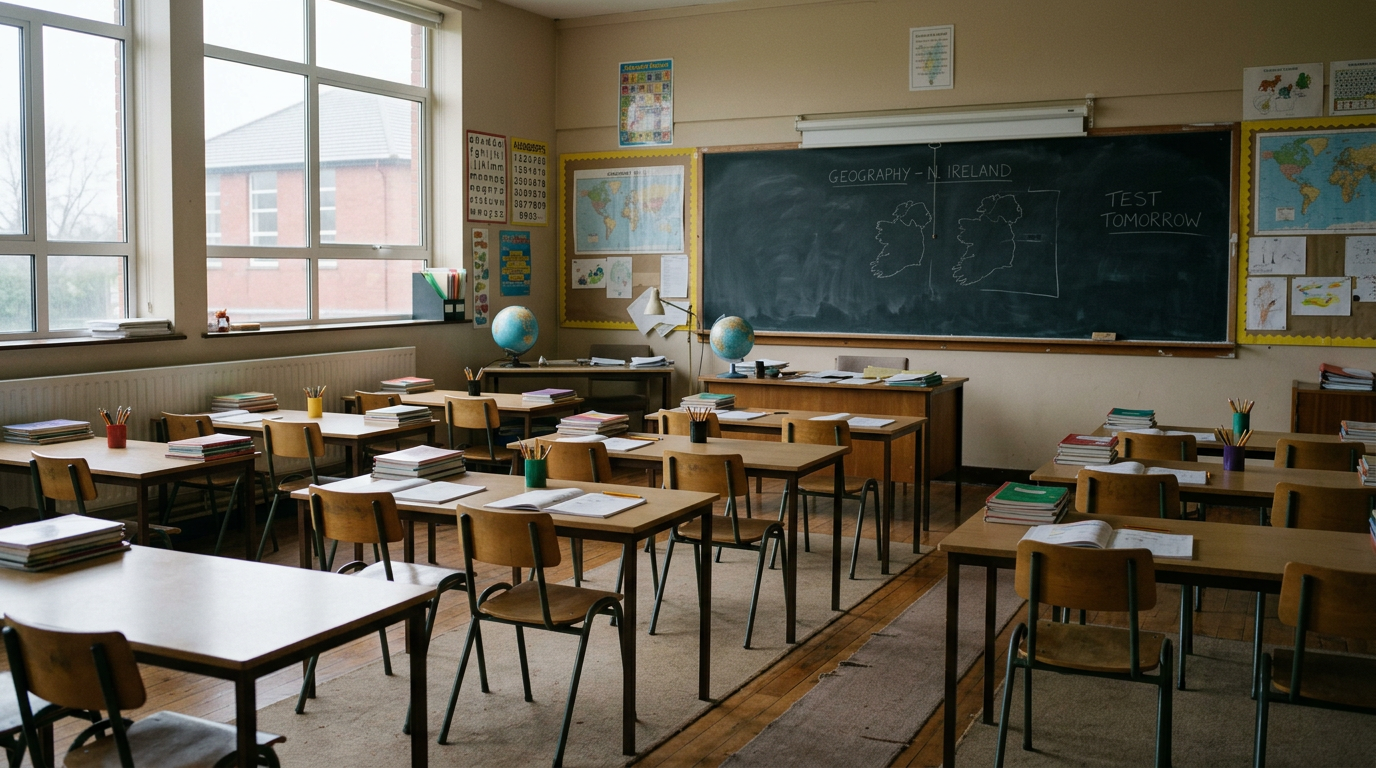
In 1994, Annalisa Wray, a primary-school teacher from Northern Ireland, set a world record by shouting the word Quiet at a staggering 121.7 decibels. This level of noise is equivalent to a jet engine taking off or a thunderclap directly overhead.
- Record Holder: Annalisa Wray
- Measurement: 121.7 decibels (dB)
- Word Spoken: Quiet
- Event Location: Citybus Challenge, Belfast
- Year: 1994
- Comparison: Equal to a pneumatic drill at close range
Why It Matters
The human voice is rarely considered a weapon, but at 121 decibels, it crosses the threshold of physical pain and immediate potential for hearing damage.
The Day Silence Became Deafening
The record was set during a competition in Belfast intended to find the most powerful lungs in the country. Wray, accustomed to commanding a classroom, delivered a single syllable that outstripped the roar of heavy machinery.
To put 121.7 decibels in perspective, a normal conversation sits at roughly 60 dB. Because the decibel scale is logarithmic, an increase of 10 dB represents a tenfold increase in sound intensity.
Wray’s shout was not just twice as loud as a normal voice; it was approximately one million times more intense than a typical classroom instruction. Unlike other vocal records that rely on sustained pitch, this was a pure explosion of pressure.
The Physics of the Shout
According to researchers at the National Physical Laboratory, the human ear begins to feel physical discomfort at 110 dB. At 120 dB, the eardrums are under significant stress, and prolonged exposure can cause permanent nerve damage.
Wray achieved this by manipulating her diaphragm to force a massive volume of air through the vocal folds instantaneously. Most people who attempt to shout at high volumes end up straining their throat, which actually dampens the resonance.
Successful record-breakers usually possess a physiological advantage in their thoracic cavity, allowing for higher lung capacity and more efficient air displacement. Wray’s achievement has stood for decades, illustrating that the human body can briefly mimic industrial-grade noise.
Compared to Other Sounds
When compared to the natural world, Wray’s 121.7 dB shout holds its own against formidable predators. While a lion’s roar is often cited as the pinnacle of animal noise, it typically clocks in at 114 dB.
In contrast to modern technology, the shout was louder than a symphony orchestra at its peak (110 dB) and matched the sound levels found in the front row of a heavy metal concert. It sits just below the sound of a physical gunshot, which usually triggers at 140 dB.
The Classroom Context
While Wray’s record is an extreme outlier, teachers frequently operate in high-decibel environments. Studies published in the Journal of Voice indicate that occupational voice disorders are significantly higher among educators than in the general population.
The necessity of projecting over 30 children leads to vocal fatigue, but few ever reach the point of breaking world records. Wray’s shout was a singular moment where training, necessity, and biology converged to create a sonic boom.
Practical Applications
- Classroom Management: While Wray proved she could command attention, experts suggest that consistent high-volume teaching leads to nodules on the vocal cords.
- Acoustic Engineering: Knowing the limits of the human voice helps engineers design better microphones and soundproofing for public spaces.
- Safety Standards: Occupational Health and Safety (OSHA) regulations use these decibel benchmarks to determine when workers require protective ear gear.
Interesting Connections
- Etymology: The word shout comes from the Old Norse skuta, meaning to taunt or scold.
- The Krakatoa Eruption: The loudest sound ever recorded in nature reached an estimated 310 dB, circling the globe four times.
- Silent Records: The opposite record is held by Microsoft’s anechoic chamber, where the background noise is -20.6 decibels, a place so quiet you can hear your own blood flowing.
How loud is too loud for the human ear?
Anything above 85 decibels can cause damage over long periods. Sounds at 120 decibels can cause immediate harm if the listener is close to the source.
Has anyone broken Annalisa Wray's record?
Several people have attempted to break the record in controlled environments, but Wray’s 121.7 dB mark remains the gold standard for a single-word shout.
Can a shout shatter glass?
Yes, but it requires frequency matching rather than just volume. A singer must match the resonant frequency of the glass and sustain it at high volume, usually above 100 dB.
Key Takeaways
- Record Mark: The loudest shout is 121.7 dB, achieved by Annalisa Wray in 1994.
- Power Level: This volume is comparable to a chainsaw or a jet taking off.
- The Irony: The record was set using the word Quiet.
- Health Impact: Human ears experience physical pain at 120 dB, making Wray’s voice a biological extreme.
Silence might be golden, but in 1994, the demand for it was the loudest thing on earth.
Frequently Asked Questions
Sources & References
 WikipediaBackground and contexten.wikipedia.org
 Scientific AmericanScientific research and analysisscientificamerican.com
 BBCReporting and verificationbbc.co.uk
- 4Guinness World RecordsThis source confirms that Annalisa Wray holds the world record for the loudest shout, recorded at 121.7 dBA in 1994.guinnessworldrecords.com