
Quick Answer
Around one in 10,000 people are born with situs inversus, meaning their internal organs are a mirror image of the usual layout. What's fascinating is that, despite this reversed arrangement, most individuals live perfectly healthy lives, often completely unaware of their unique internal geography until an unexpected medical event highlights it.
In a hurry? TL;DR
- 1Situs inversus, affecting 1 in 10,000, mirrors internal organs like the heart and liver, often unnoticed.
- 2The condition is genetic and inherited in an autosomal recessive pattern.
- 3It's usually discovered incidentally during medical imaging or surgery.
- 4Embryonic cilia function abnormalities are believed to cause the left-right axis reversal.
- 5Situs inversus can be associated with Kartagener syndrome and respiratory issues due to ciliary dysfunction.
Why It Matters
It's surprising that our internal organs can function perfectly well in a completely mirrored arrangement, defying our usual assumptions about biological symmetry.
Situs inversus is a rare genetic condition where the major visceral organs are positioned in a mirror-image reversal of their normal topography. Approximately one in every 10,000 people possesses a heart on the right side and a liver on the left.
The Vital Statistics
- Prevalence: 1 in 10,000 people
- Primary Feature: Transposition of thoracic and abdominal organs
- Genetic Basis: Autosomal recessive inheritance
- Associated Condition: Kartagener syndrome (in 20 percent of cases)
- First Formal Description: Matthew Baillie, 1788
The Mirror Within
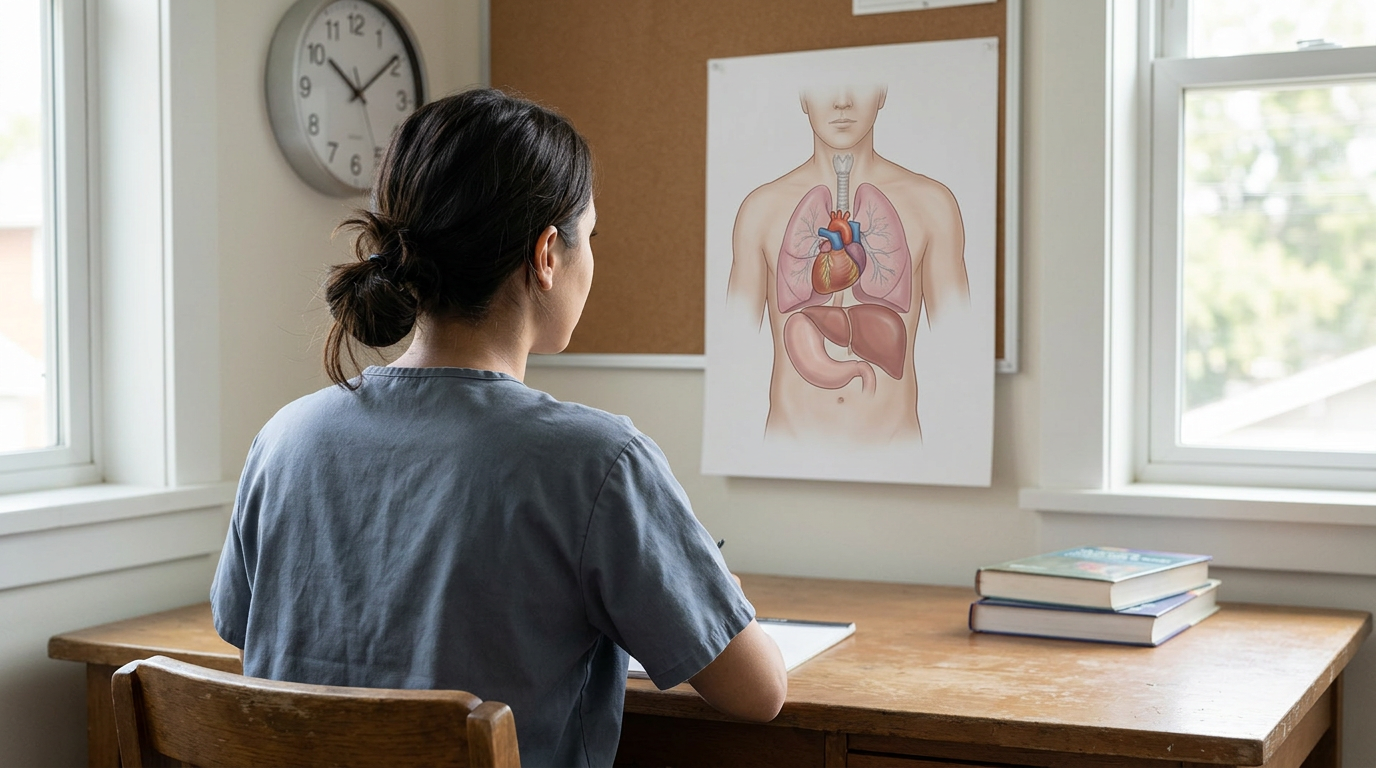
Most humans are built with a predictable internal map. The heart leans left, the liver sits right, and the spleen anchors the upper left abdomen. In a person with situs inversus totalis, the entire blueprint is flipped. This is not merely a quirk of anatomy; it is a fundamental reversal of the body's symmetry.
While the condition sounds like a recipe for medical disaster, many individuals live entire lives without knowing they are biologically inverted. Because the organs function perfectly well in their mirrored positions, the condition is often only discovered during routine scans or when a surgeon makes an incision on the wrong side for an appendectomy.
Discovery and Early Documentation
The first person to truly codify this phenomenon was Matthew Baillie, a British physician and pathologist. In 1788, while working at St George's Hospital in London, Baillie described the complete transposition of the viscera in a cadaver.
Unlike other medical anomalies of the era which were often viewed as monstrous, Baillie noted the elegant functionality of the mirrored system. He observed that despite the reversal, all vascular connections were maintained with perfect geometric logic.
The Ciliary Connection
Modern genetics has traced this reversal to the very first days of embryonic development. According to research published in the journal Nature, the left-right axis of the human body is determined by microscopic, hair-like structures called cilia.
During the second week of development, these cilia rotate in a specific direction to create a fluid flow that signals the heart where to go. In situs inversus, these cilia are either stationary or rotate in the wrong direction.
Clinical Complications and Modern Medicine
The primary danger of situs inversus is not the condition itself, but the confusion it causes in a medical emergency. If a patient with situs inversus develops appendicitis, the pain will manifest in the lower left quadrant rather than the right.
This can lead to misdiagnosis or delayed surgery. In contrast to situs solitus (normal arrangement), surgeons operating on these patients must mentally flip their entire training. Every vessel and nerve is the reverse of what is taught in medical school.
Real-World Scenarios
- Emergency Triage: A paramedic performs an EKG and finds no heartbeat on the left side, leading to a false assumption of cardiac arrest.
- Organ Transplantation: Transplanting a normal heart into a patient with situs inversus is a massive surgical challenge, as the vessels must be rerouted to meet the mirrored anatomy.
- Routine Screening: A patient goes for a gallbladder ultrasound, only for the technician to find the organ on the opposite side of the torso.
Is situs inversus life-threatening?
Generally, no. If all organs are completely reversed (totalis), they usually function normally. Problems only arise if the reversal is partial (situs ambiguus), which can lead to severe heart defects.
Can you inherit this condition?
Yes. It is typically an autosomal recessive trait, meaning both parents must carry the genetic mutation for a child to be born with the condition.
Is it the same as having your heart on the right side?
Dextrocardia is the specific term for the heart being on the right. In situs inversus totalis, the heart is on the right, but all other organs are also flipped to match.
Cultural and Comparative Context
Situs inversus has occasionally surfaced in popular culture, most notably in Ian Fleming's Dr. No, where the villain survives an assassination attempt because his heart is on the right side.
In reality, the condition is less about surviving bullets and more about the strange plasticity of human development. Whereas most biological systems are rigid, the internal map of the human body has a built-in capacity for symmetry that remains one of the most striking deviations in clinical medicine.
Key Takeaways
- Mirror Image: Major organs are flipped from their standard positions.
- Hidden Reality: Many people live healthy lives unaware of their condition.
- Ciliary Origin: The flip is caused by the failure of microscopic hairs in the embryo.
- Medical Mystery: It affects roughly 0.01 percent of the global population.
Frequently Asked Questions
Sources & References
 WikipediaThis source defines situs inversus as a congenital condition in which the major visceral organs are reversed or mirrored from their normal positions, and states its prevalence is approximately 1 in 8,000 to 1 in 25,000 live births.en.wikipedia.org
- 2St. George's University of London: St George's historyThis source mentions Matthew Baillie as a prominent physician and pathologist who worked at St George's Hospital, supporting the claim of his association with the institution.sgul.ac.uk