
Quick Answer
There's a fruit called the black sapote that actually tastes like chocolate pudding. It's native to Central and South America and has a flavour and texture surprisingly similar to a rich chocolate custard. This is brilliant because it offers a naturally sweet, healthy alternative to decadent desserts, proving nature can be just as satisfying.
In a hurry? TL;DR
- 1Discover the black sapote (Diospyros nigra), a tropical fruit from Mexico and Central America tasting like chocolate pudding.
- 2This fruit offers a naturally sweet, creamy texture and is a healthier, low-fat alternative to chocolate desserts.
- 3Black sapote is rich in Vitamin C, providing about four times the amount found in an average orange.
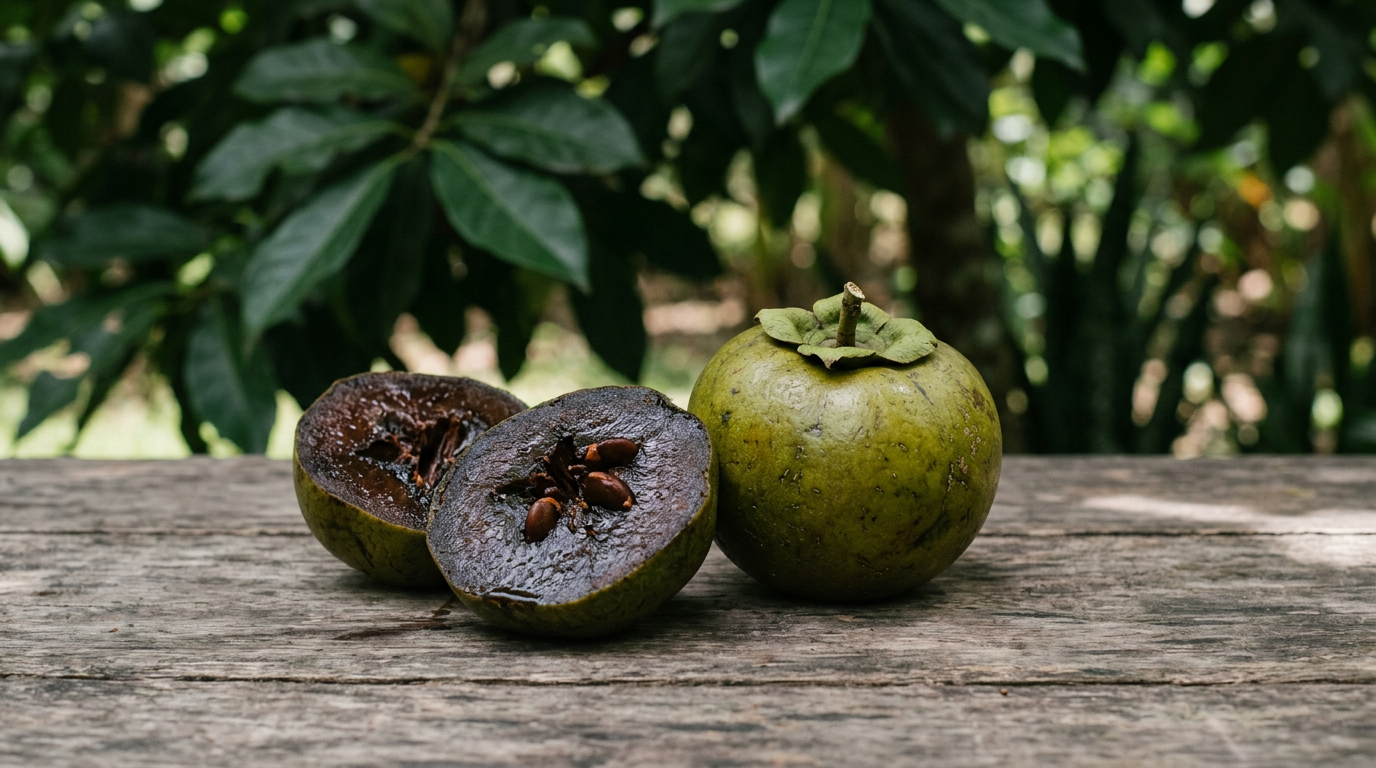
- 4Its skin turns dull olive and softens when ripe, revealing a dark, pudding-like pulp inside.
- 5Unlike cacao, the black sapote needs only ripening time to achieve its chocolatey flavor, requiring no special processing.
- 6Historically cultivated by Aztecs, it's now spread globally and is a resilient addition to tropical gardens.
Why It Matters
It's remarkable that a natural fruit can taste uncannily like chocolate pudding, offering a healthier alternative to processed sweets.
The black sapote is a tropical fruit native to Mexico and Central America that possesses the uncanny ability to mimic the flavour and texture of chocolate pudding. Known scientifically as Diospyros nigra, its olive-green skin conceals a dark, custardy interior that is often used as a natural, low-fat alternative to cocoa-based desserts.
Quick Summary
- Species: Diospyros nigra, a member of the ebony family related to the persimmon.
- Profile: The fruit features a mild, sweet flavour and a dense, creamy texture when fully ripe.
- Origin: Indigenous to the coastal lowlands of Mexico, Guatemala, and Belize.
- Nutrition: High in Vitamin C and significantly lower in calories than traditional chocolate.
Why It Matters
Understanding the black sapote reveals how botanical evolution can accidentally replicate complex, processed human flavours, offering a sustainable, whole-food alternative to resource-heavy confectionery.
The Botanical Profile
| Feature | Detail |
|---|---|
| Scientific Name | Diospyros nigra |
| Common Names | Chocolate pudding fruit, Black persimmon |
| Native Range | Mexico to Colombia |
| Ripening Sign | Skin turns dull olive and feels soft to the touch |
| Vitamin C Content | Roughly four times that of an average orange |
The Chocolate Mimic
The black sapote is not actually related to the cacao bean, yet it manages a sensory heist. While most fruits rely on tartness or watery sweetness, the black sapote develops a thick, paste-like consistency. According to researchers at the University of Florida’s Tropical Research and Education Centre, the fruit belongs to the same genus as the common persimmon, though its chemical profile is distinct.
Unlike the astringent varieties of persimmon that must be jelly-soft to be edible, the black sapote matures into a dark brown, almost black pulp. The flavour is often described as a mix of honey, caramel, and mild cocoa. When blended with a little milk or citrus juice, the resemblance to a processed chocolate mousse is startling.
Origin and Cultivation
The Aztecs were among the first to cultivate the tree, valuing it for both its fruit and its dense, durable wood. Spanish explorers eventually carried the seeds to the Philippines in the 18th century, which helped the species spread across Southeast Asia and eventually into Australia.
Unlike the cacao plant, which requires specific fermented processing to taste like chocolate, the sapote requires nothing more than time to ripen. It is a resilient tree, capable of withstanding brief periods of flooding and varying soil types, making it a staple in tropical home gardens rather than a global industrial crop.
Culinary Science and Application
Professional chefs and home cooks use the black sapote as a structural substitute for fats and sugars. Because the fruit is naturally sweet and creamy, it can replace butter or oil in baking recipes.
- Smoothies: Blending the pulp with almond milk and a pinch of salt creates a shake that rivals a traditional chocolate frosty.
- Baking: It is frequently used in brownies and breads to add moisture without the saturated fats found in dairy.
- Raw: Many enthusiasts simply eat it with a spoon, sometimes adding a squeeze of lime to brighten the earthy undertones.
The Ripening Trap
The most common mistake with the black sapote is eating it too early. If consumed while the skin is bright green and firm, the fruit is incredibly bitter and unpleasant. It must reach a stage that most people would associate with being rotten. The skin should be wrinkled and soft enough that a finger press leaves an indentation.
Does it actually contain caffeine or cocoa?
No. The black sapote contains zero caffeine and is chemically unrelated to the cacao plant. The flavour similarity is a result of its specific sugar and pulp composition.
Where can you find black sapote?
It is difficult to find in standard European or North American supermarkets because it has a short shelf life once ripe. It is most commonly found in farmers' markets in Florida, Australia, Mexico, and throughout Central America.
Can you grow it at home?
Only in tropical or subtropical climates. The tree is sensitive to frost and requires high humidity and consistent warmth to produce fruit, though it can be grown in large pots in greenhouses.
Key Takeaways
- Natural Substitute: The fruit offers a chocolate-like experience with a fraction of the calories.
- Nutrient Dense: It is a powerhouse of Vitamin C, outperforming many citrus fruits.
- Patience Required: The fruit is only palatable when it appears overripe and soft.
- Global Reach: Though native to the Americas, it is now a prized curiosity in tropical regions worldwide.
The black sapote proves that nature often produces the very treats we spend centuries trying to manufacture in factories. For those living in the right climate, it remains the ultimate garden-grown dessert.
Frequently Asked Questions
Sources & References
 WikipediaThis source verifies that Diospyros nigra is commonly known as black sapote, chocolate pudding fruit, or black persimmon, and is a species of persimmon native to eastern Mexico, Guatemala, and Central America.en.wikipedia.org
 Encyclopaedia BritannicaThis source confirms that black sapote (Diospyros nigra) is a tropical tree grown for its fruit, which has a dark, custardy pulp sometimes likened to chocolate pudding, and is native to Central America and southern Mexico.britannica.com