
Quick Answer
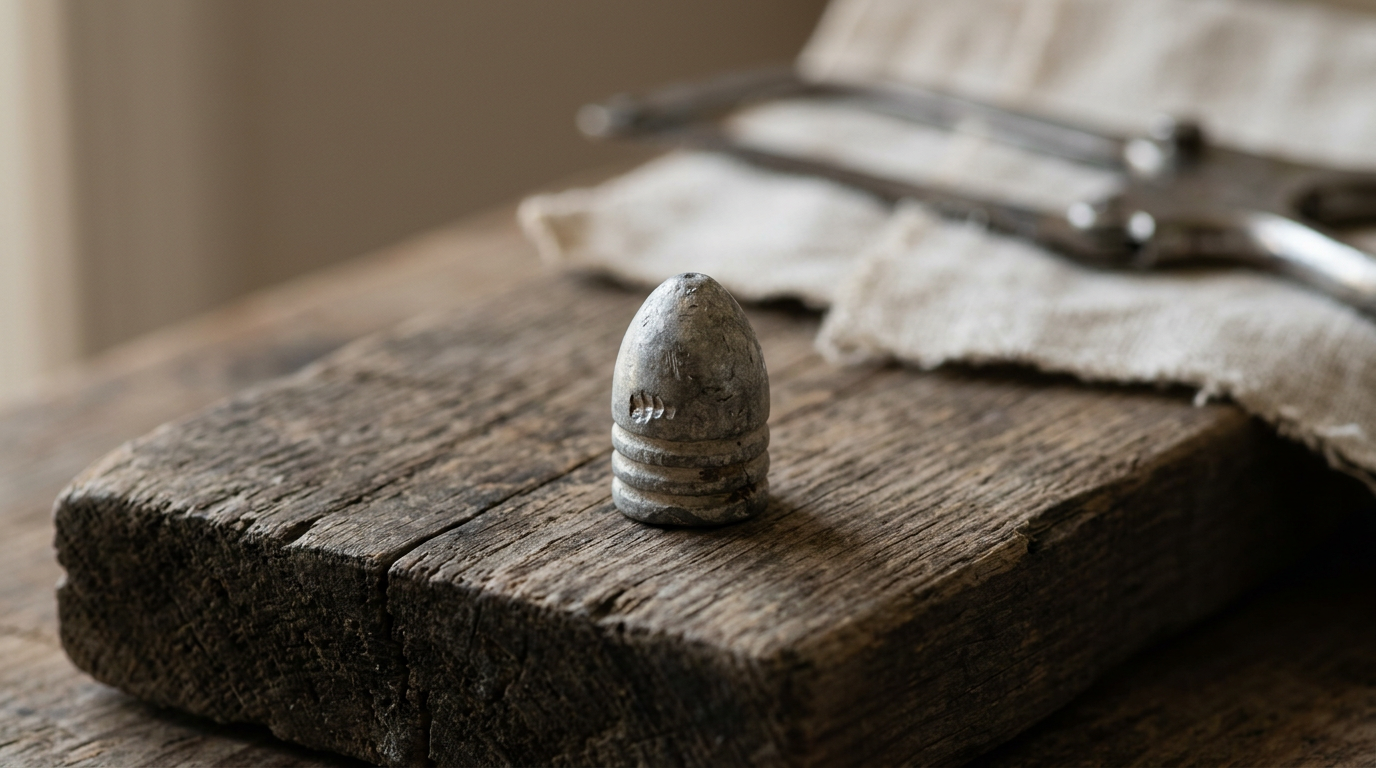
'Bite the bullet' means facing something difficult bravely. This phrase comes from a time before anaesthetic, when injured soldiers would literally bite down on a lead bullet to endure extreme pain during surgery. It's a powerful reminder of past resilience and is still used today to describe enduring hardship without complaint.
In a hurry? TL;DR
- 1The phrase 'bite the bullet' originates from soldiers biting lead bullets to endure pain during surgeries before anesthesia was common.
- 2Lead was chosen for bullets due to its softness, allowing teeth to indent without breaking.
- 3The idiom signifies accepting an unavoidable and unpleasant situation with courage.
- 4Its first recorded use was in Rudyard Kipling's 1891 novel, 'The Light that Failed'.
- 5The practice highlights the brutal realities of pre-modern battlefield medicine and physical endurance.
- 6Similar idioms like 'chewing the rag' existed, but the bullet became the dominant symbol.
Why It Matters
It's surprising that a common phrase we use today has such a grim and specific origin in pre-anaesthetic battlefield surgery.
Biting the bullet refers to the historical practice of soldiers clenching a lead projectile between their teeth to endure excruciating pain during battlefield surgery performed without anaesthesia. The idiom entered the English lexicon formally in the late 19th century to describe stoically accepting an unavoidable, unpleasant situation.
- First Lexical Appearance: 1891 in Rudyard Kipling’s The Light that Failed
- Primary Material: Lead, chosen for its relative softness compared to wood or iron
- Modern Meaning: Accepting a difficult or painful necessity with courage
- Historical Context: Pre-ether and pre-chloroform military medicine
Why It Matters
This phrase serves as a linguistic fossil of the brutal transition between medieval trauma care and modern medicine, reminding us that for most of human history, surgery was a test of physical endurance rather than a controlled biological procedure.
The Lead-Lined Origin
The phrase is most commonly rooted in the harrowing realities of the American Civil War and the British colonial conflicts. Before the widespread adoption of ether or chloroform in the mid-19th century, surgeons operated on conscious patients. To prevent a soldier from screaming, biting his tongue off, or shattering his teeth from the sheer force of muscle contractions during an amputation, they were given something to clench.
Lead bullets were the ideal tool for this grim task. Unlike wood, which could splinter and cause choking, or steel, which could break teeth, lead is a soft, malleable metal. A patient could sink their teeth into the casing, leaving deep indentations while providing a physical outlet for the nervous system's response to trauma.
The First Recorded Use
While the practice likely dates back centuries, the specific idiom didn't appear in print until 1891. It debuted in Rudyard Kipling’s novel, The Light that Failed. Kipling, a chronicler of the British Empire, used it to describe a character’s stoicism. Unlike other military idioms that faded, this one captured a universal human experience: the moment when you stop resisting the inevitable and simply brace for the impact.
Historical Precedents and Alternatives
Biting the bullet was not the only way surgeons managed pain. In the British Royal Navy, sailors were often given a leather clout or a piece of rope, leading to the parallel expression chewing the rag. However, the bullet became the dominant cultural symbol because it represented the intersection of warfare and suffering.
Evidence in Literature and Lexicography
According to researchers at the Oxford English Dictionary, the phrase is frequently confused with biting the pipe or biting the dust, but its specific connotation of endurance is unique. Unlike biting the dust, which signifies defeat or death, biting the bullet signifies an active, albeit painful, survival strategy.
Recent studies published in the Journal of the History of Medicine and Allied Sciences note that the psychological effect of having an object to bite during trauma is a legitimate physiological distraction. By engaging the masseter muscles—some of the strongest in the human body—the patient can marginally regulate the autonomic nervous system's fight-or-flight response.
Real-World Applications
- Economic Policy: A government might bite the bullet by raising interest rates to curb inflation, knowing it will cause short-term pain for long-term stability.
- Personal Relationships: Ending a long-term but stagnant partnership requires one to bite the bullet and initiate the difficult conversation.
- Career Moves: Resigning from a secure job to pursue a risky venture is a modern form of this stoic endurance.
Did they really use bullets?
Yes. Lead's physical properties made it safer than wood for the patient's teeth. However, it was a last resort when leather straps or wooden blocks were unavailable.
Is there a link to biting the wax tadpole?
No. That is a common mistranslation myth related to Coca-Cola’s entry into the Chinese market. Biting the bullet is strictly rooted in military medical history.
Why don't we say bite the leather?
Leather was used, but the bullet carried a stronger symbolic weight. It represented the very thing that caused the wound now being treated, creating a poetic irony that writers like Kipling found irresistible.
Key Takeaways
- Origins: Rooted in pre-anaesthetic surgery during the 18th and 19th centuries.
- Material: Lead was used because it is soft enough to be bitten without breaking teeth.
- Literary Debut: First written record by Rudyard Kipling in 1891.
- Modern Usage: Describes facing a difficult situation with grit and resolve.
- Physical Proof: Tooth-marked bullets from old battlefields confirm the practice was not just a myth.
In a world of quick fixes, the phrase reminds us that some pains cannot be bypassed; they can only be endured.
Frequently Asked Questions
Sources & References
 Encyclopaedia BritannicaThis source defines the idiom 'biting the bullet' as accepting a difficult situation with courage and traces its origin to the practice of soldiers clenching a lead bullet during surgery without anesthesia.britannica.com
 WikipediaBackground and contexten.wikipedia.org
 Scientific AmericanScientific research and analysisscientificamerican.com
 BBCReporting and verificationbbc.co.uk