Quick Answer
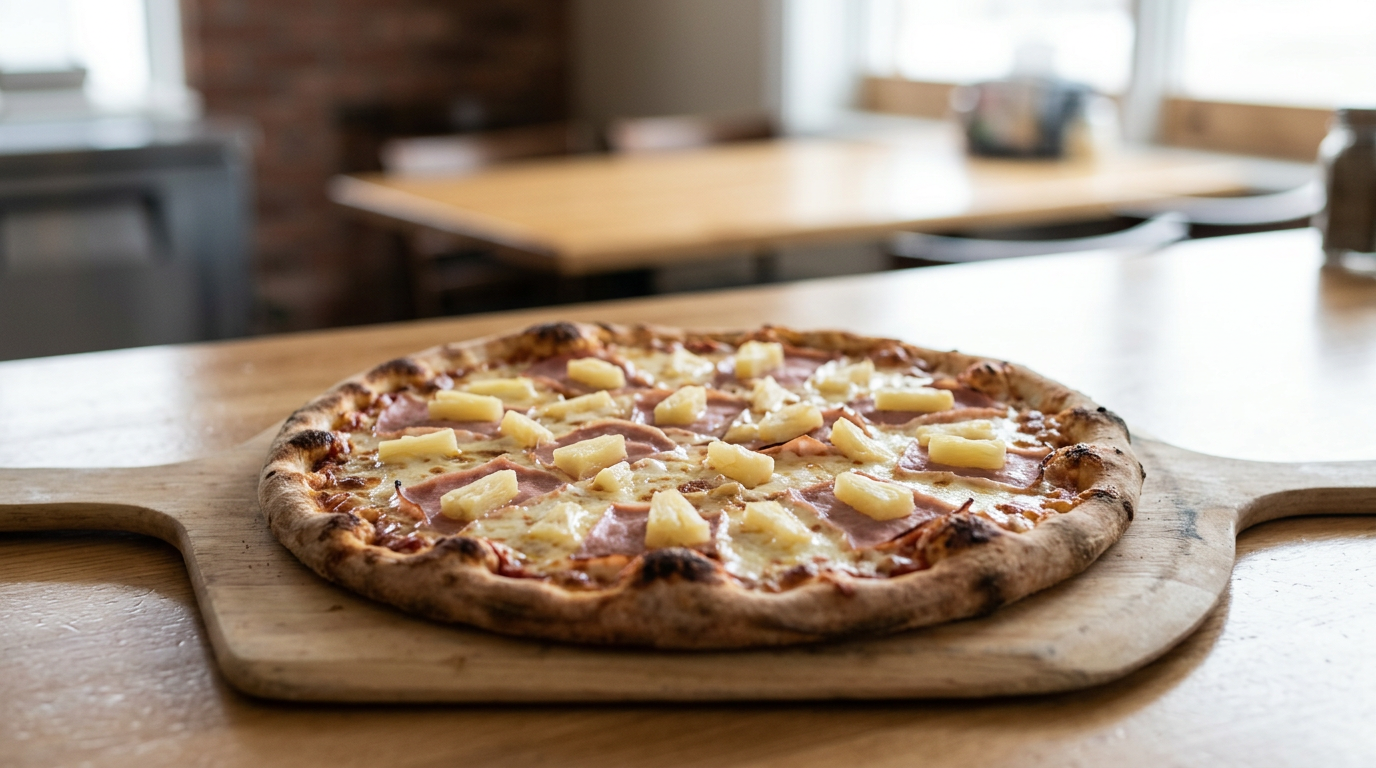
Hawaiian pizza, surprisingly, wasn't born in Hawaii but in Canada! A Greek chef, inspired by Chinese sweet and sour dishes, decided to top a pizza with canned pineapple. This unexpected culinary creation went on to become a worldwide favourite, sparking endless debates about whether pineapple truly belongs on pizza.
In a hurry? TL;DR
- 1Hawaiian pizza was invented in Canada in 1962 by Greek chef Sam Panopoulos, not Hawaii.
- 2The inspiration for Hawaiian pizza came from sweet-and-sour Chinese dishes, specifically the combination of pork and pineapple.
- 3The pizza was named after the 'Hawaiian' brand of canned pineapple used in its creation.
- 4The combination of pineapple and pizza works due to citric acid cutting through fat and sugar caramelization.
- 5Despite its name, Hawaiian pizza is a Canadian invention that has achieved global popularity.
- 6The pizza gained significant attention after Iceland's president jokingly suggested banning pineapple on pizza.
Why It Matters
It's surprising that Hawaiian pizza, a dish so often associated with tropical climes, was actually a Canadian creation by a Greek chef influenced by Chinese food.
Hawaiian pizza was not born in Honolulu, but in the small town of Chatham, Ontario. In 1962, Greek-born restaurateur Sam Panopoulos decided to top a pizza with canned pineapple, creating a culinary debate that still divides the world.
The Quick Answer
Despite its tropical name, Hawaiian pizza is a Canadian invention created by a Greek immigrant inspired by the sweet-and-sour profiles of Americanised Chinese cuisine. It was named after the brand of canned pineapple used in the first experimental batch.
Key Facts and Origins
- Inventor: Sam Panopoulos
- Location: Satellite Restaurant, Chatham, Ontario, Canada
- Year: 1962
- Inspiration: Chinese sweet-and-sour dishes
- Original Brand: Hawaiian canned pineapple
Why It Matters
The story of the Hawaiian pizza is a masterclass in accidental fusion and the power of branding. It proves that a name can completely rewrite the perceived history of a product, detaching it from its snowy Canadian roots and tethering it to a tropical paradise it has never actually called home.
The Greek Chef and the Chinese Influence
Sam Panopoulos emigrated from Greece to Canada in 1954. At the time, pizza was a novelty in Ontario, often associated with simple toppings like pepperoni, bacon, or mushrooms. Panopoulos, however, was running a restaurant that served a mix of typical diner fare and Americanised Chinese dishes.
He noticed the popularity of combining sweet and savoury flavours in Chinese cooking, such as pork served with pineapple. In a moment of low-stakes experimentation, he took a tin of Hawaiian brand pineapple slices, chopped them up, and threw them onto a pizza alongside some ham.
Global Fame and Political Furore
The pizza eventually became a global staple, but it achieved a new level of notoriety in 2017. Iceland’s President, Guðni Th. Jóhannesson, jokingly told a group of high school students that he was fundamentally opposed to pineapple on pizza and would ban it if he had the power to pass laws.
This sparked an international social media war. Even Canadian Prime Minister Justin Trudeau weighed in on Twitter, stating: I have a team pineapple defence. I stand by this delicious Southwestern Ontario creation. Unlike other regional specialties like Montreal smoked meat or poutine, Hawaiian pizza is a Canadian export that few people actually recognise as Canadian.
The Science of the Scent
According to food scientists, the reason the combination works at all is due to the chemical reaction between acidity and fat. The citric acid in the pineapple cuts through the heavy fat of the cheese and ham, while the sugars undergo a slight caramelisation process in the high heat of the pizza oven.
Real-World Applications
- International Diplomacy: The pizza remains a lighthearted tool for soft power and social media engagement for Canadian politicians.
- Menu Engineering: It serves as a classic case study in how sweet-and-salty profiles can increase the palatability of high-fat foods.
- Cultural Branding: It demonstrates that geographic naming is often more about marketing a feeling than documenting an origin.
Interesting Connections
- The Pineapple Paradox: The fruit contains bromelain, an enzyme that breaks down proteins, which is why your tongue might tingle when eating it raw.
- The German Version: In Germany, a similar dish called Toast Hawaii (ham, pineapple, and cheese on toast) predates the pizza, popularized by TV chef Clemens Wilmenrod in the 1950s.
- Etymology: The word pineapple was originally used to describe the reproductive organs of pine trees (pine cones).
Did Italians invent Hawaiian pizza?
No, Italians generally view pineapple on pizza as a culinary transgression. The dish is strictly a North American invention that gained popularity in Australia and Europe later.
Why is it called Hawaiian?
It was named after the brand of canned pineapple Panopoulos used, which featured the word Hawaiian on the label.
Is Hawaiian pizza popular in Hawaii?
While it is available there, it is not a traditional Hawaiian dish. Local Hawaiian cuisine is more likely to feature Kalua pig, poi, or poke.
Key Takeaways
- Created in 1962 in Chatham, Ontario, by Sam Panopoulos.
- Named after a brand of canned fruit, not the US state.
- Inspired by the sweet-and-sour balance found in Chinese cuisine.
- Validated by food science as a functional fat-acid-sugar pairing.
- Became a flashpoint for international culinary debate involving heads of state.