
Quick Answer
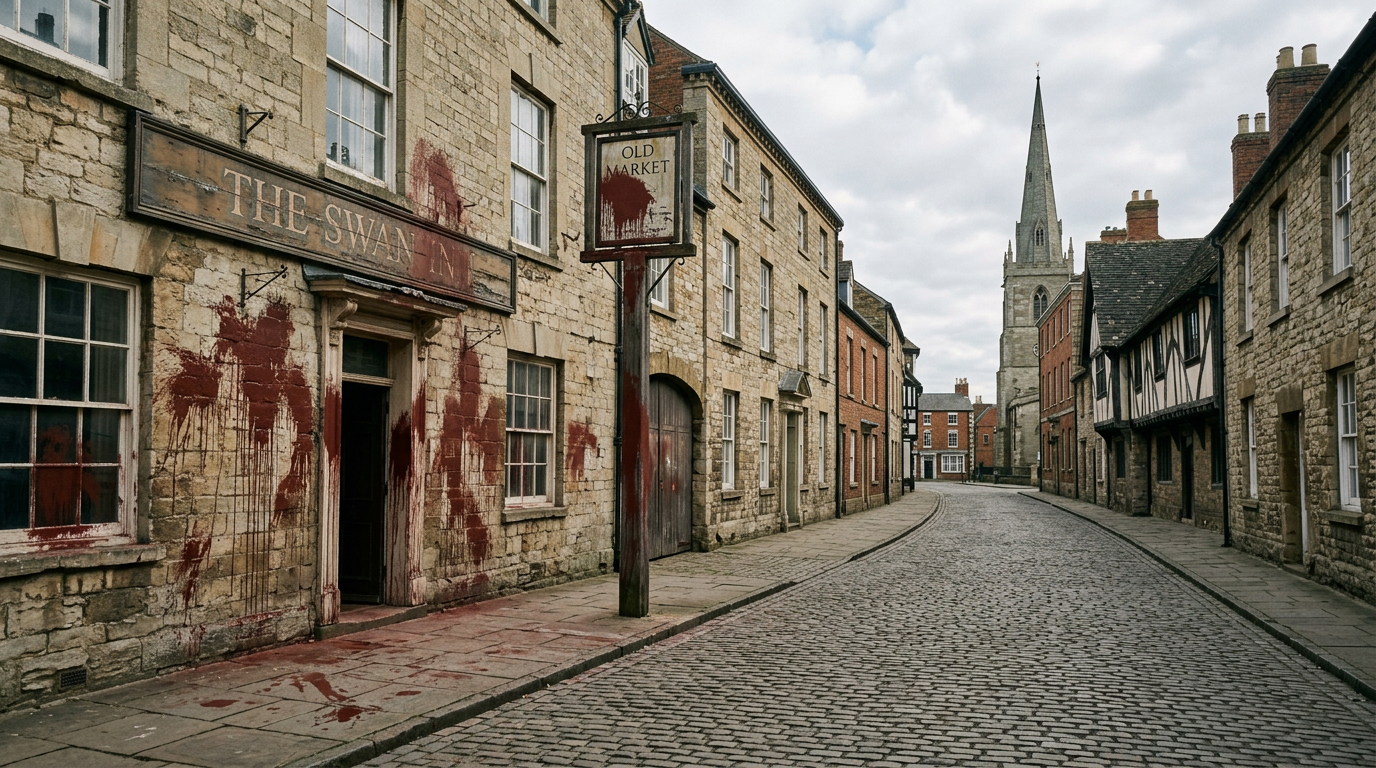
The phrase "paint the town red" likely originates from an actual drunken spree in 1837. Revellers in Melton Mowbray got so wild they painted buildings and signs red. This colourful origin story highlights how extreme, boisterous behaviour can give rise to everyday expressions we still use.
In a hurry? TL;DR
- 1The idiom 'paint the town red' likely originated from an 1837 drunken rampage by the Marquess of Waterford and his friends in Melton Mowbray.
- 2The group literally painted buildings, doors, and a tollbooth red after finding leftover paint from a local builder.
- 3The Marquess was known for his wild behavior, earning him the nickname 'Mad Marquess'.
- 4The incident resulted in damages costing the Marquess approximately £12,000 in today's currency.
- 5The phrase first appeared in print in the New York Times in 1883, indicating its spread and evolution into a common idiom.
- 6While other theories exist, the Melton Mowbray event is the most widely accepted origin for the idiom's British usage.
Why It Matters
It's surprising that the colourful phrase "paint the town red" has a rather grubby origin in actual drunken vandalism.
The idiom paint the town red likely originates from a literal act of vandalism in 1837, when the Marquess of Waterford and his companions used red paint to deface the Leicestershire market town of Melton Mowbray.
Key Facts and Figures
- Date of Incident: 6 April 1837
- Primary Actor: Henry Beresford, 3rd Marquess of Waterford
- Location: Melton Mowbray, Leicestershire, England
- Damages Paid: £100 (approximately £12,000 today)
- First Written Appearance: 1883 in the New York Times
- Revellers: The Marquess and his group of aristocratic hunters
- Targets: A tollbooth, the Swan Inn, and various private doors
- Weaponry: Stolen red paint and brushes from a local builder
The Night Melton Mowbray Turned Crimson
Most people assume the phrase paint the town red is a poetic metaphor for the vibrant glow of nightlife or the flush of intoxication. The reality is far more literal. In the early hours of 6 April 1837, Henry Beresford, the 3rd Marquess of Waterford, led a group of drunken aristocrats through the streets of Melton Mowbray.
After a night of heavy drinking to celebrate the end of the hunting season, the group came across a pot of red paint left out by a local workman. In a fit of chaotic exuberance, they began painting the town. They started with a toll bar, moved on to the doors of several private residences, and eventually smeared the facade of the Swan Inn.
The rampage ended with the group physically assaulting the local constabulary and overturning a caravan. The following morning, the Marquess paid for the damages, but the memory of the literal red town stuck. While some etymologists suggest the phrase could refer to the red-light districts of the American West, the Melton Mowbray incident remains the most compelling and widely cited origin for the British usage of the term.
Evidence and Evolution
Unlike other idioms that fade into obscurity, the story of the Mad Marquess is supported by local court records. The group was eventually brought before the Derby Assize in 1838, where they were fined for riotous behaviour.
According to researchers at the Melton Carnegie Museum, the incident was so notorious that it stayed in the local consciousness for decades. However, the phrase did not appear in print as a popular idiom until the late 19th century. The New York Times used the expression in 1883, suggesting that the story had crossed the Atlantic, evolving from a specific historical anecdote into a general description of a wild night out.
Real-World Implications
- Local Identity: Melton Mowbray is now famous for two things: pork pies and the origin of this specific phrase.
- Cultural Branding: The town uses the story to attract tourists, leaning into its history as a hub for the rowdy fox-hunting elite.
- Linguistic Shift: The phrase has softened over time, moving from a description of criminal vandalism to a benign shorthand for a fun evening.
Common Misconceptions
- The Fireworks Theory: Some believe the phrase refers to the red glare of celebratory fireworks, though this lacks the specific historical evidence found in Melton Mowbray.
- The Red-Light Theory: A common US-centric view is that it refers to visiting brothels, yet the term appeared in UK sporting circles long before it became associated with urban vice.
- The Roman Connection: There is no evidence that the Romans used the phrase, despite their fondness for painting statues and temples.
Who was the Marquess of Waterford?
Henry Beresford was an Irish nobleman famous for his reckless behaviour, earning him the nickname the Mad Marquess. He was a staple of early Victorian gossip columns.
Is there physical proof in Melton Mowbray today?
While the original paint was scrubbed off in 1837, the town features several murals and plaques that commemorate the night the Marquess and his friends literally painted the town red.
Why did it take so long to appear in print?
Idioms often exist in oral tradition for decades before being formalised in literature or journalism. The delay between 1837 and 1883 reflects the time it took for a local Leicestershire story to enter the global lexicon.
Key Takeaways
- Literal Origins: The phrase likely stems from an actual act of painting buildings red in 1837.
- The Mad Marquess: Henry Beresford’s reputation for chaos gave the story the momentum it needed to survive in popular memory.
- Evolution: What began as an aristocratic riot is now a standard invitation for a night at the pub.
- Enduring Legacy: The incident highlights the historical divide between the rowdy hunting elite and the quiet residents of rural England.
Most modern revellers are content with a few drinks and a loud conversation. They owe their favourite expression for a wild night to a man who couldn't see a bucket of paint without wanting to start a riot.
Frequently Asked Questions
Sources & References
- 1Melton Carnegie Museum - Paint the Town RedThis source confirms the 1837 incident in Melton Mowbray involving Henry Beresford, 3rd Marquess of Waterford, and his companions literally painting the town red, and supports its connection to the idiom 'paint the town red'.meltonmuseum.org
 WikipediaThis source details the biography of Henry Beresford, 3rd Marquess of Waterford, including the 1837 incident in Melton Mowbray where he and his friends vandalized the town with red paint, leading to the idiom 'paint the town red'.en.wikipedia.org
- 3Oxford English DictionaryThis source provides the etymology of the idiom 'paint the town red,' noting its origin is traditionally attributed to the riotous actions of the Marquess of Waterford in Melton Mowbray in 1837.oed.com