
Quick Answer
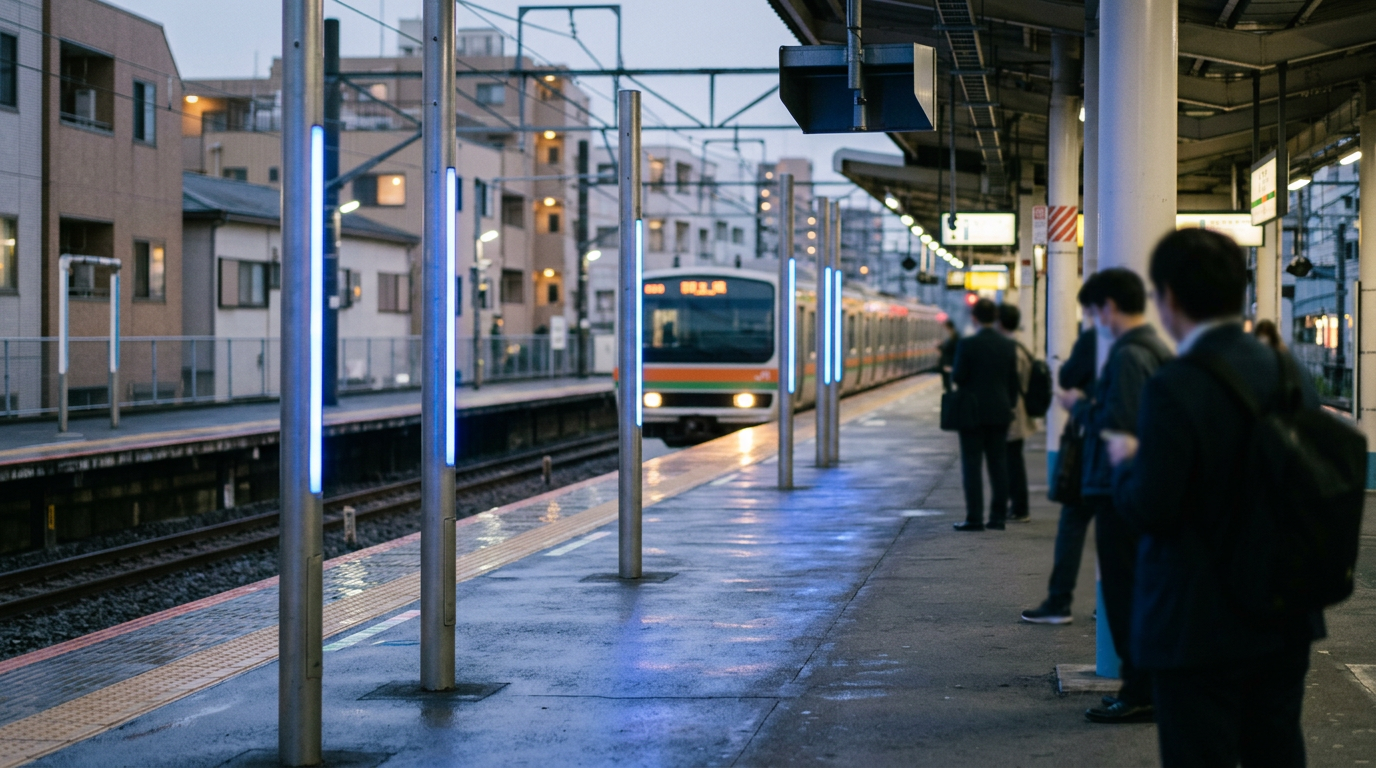
Installing blue lights at Japanese train stations dramatically reduced suicides by 84%. It's astonishing because this simple, low-cost measure seems to deter people from taking their lives. This raises intriguing questions about how our surroundings can unconsciously influence behaviour, even in profound and serious situations.
In a hurry? TL;DR
- 1Install blue LED lights on train platforms to potentially reduce suicide attempts, as shown by an 84% drop in Japan.
- 2The installation of blue lighting is a cost-effective suicide prevention method compared to physical barriers.
- 3Blue light may calm individuals by lowering heart rates and reducing agitation, according to biological theories.
- 4The blue hue might psychologically signal a monitored, safe space, disrupting suicidal impulses.
- 5An unusual light color could create cognitive friction, offering a crucial moment for reconsideration.
Why It Matters
It's surprisingly effective how a simple change in platform lighting seems to have drastically reduced suicides at Japanese train stations, prompting new ideas about how our environment can influence our minds.
Railway suicide rates at Japanese stations plummeted by 84 percent following the installation of blue LED lighting on platforms, a phenomenon that has sparked global interest in psychological priming and urban design. While the statistical correlation is undeniable, researchers remain divided on whether the effect is purely biological or a subtle form of social conditioning.
The Data at a Glance
- Reduction Rate: 84 percent decrease in suicide attempts over a ten-year observation period.
- Location: 71 railway stations across Japan managed by various operators.
- Cost-Benefit: High, as LED installation is significantly cheaper than physical platform screen doors.
- Primary Study: Published in the Journal of Affective Disorders by researchers from the University of Tokyo.
The Luminescent Shield
In 2009, several Japanese railway companies began replacing standard orange or white platform lights with deep blue LEDs. The move was initially a desperate, low-cost attempt to curb a rising trend of suicides on the tracks. According to a long-term study led by Professor Michiko Ueda, the results were staggering: stations with blue lights saw a near-total collapse in suicide attempts compared to those without the intervention.
The study, which tracked data between 2002 and 2013, confirmed that the 84 percent drop was specific to the stations where the lights were installed. Unlike physical barriers, which cost millions of yen to install, a few blue bulbs provided a psychological deterrent that seemed to disrupt the immediate impulse of individuals in crisis.
Why Blue Works (Theories of Calm)
Scientists have proposed several theories to explain why a simple colour shift produces such a profound result. The most prominent theory involves the physiological impact of the blue spectrum on the human nervous system.
Biological Response: Research suggests that blue light triggers the production of calming hormones. Unlike red or orange, which are associated with alertness and danger, blue is thought to lower heart rates and reduce agitation.
Psychological Priming: Blue is often associated with authority and public safety, such as police sirens or streetlights. This may subconsciously signal to an individual that they are in a monitored, controlled space, breaking the sense of isolation required to act on a suicidal impulse.
Aesthetic Disruption: The unusual hue of the platform might simply provide a moment of cognitive friction. By changing the expected environment, the light forces a person out of a trance-like state, providing a crucial window for reconsidering their actions.
Real-World Applications
The Japanese success story has led to experimental installations in other global transit hubs.
- North Branch, London: Several stations on the UK rail network have trialled blue lighting to assess if the Japanese results translate across different cultural contexts.
- Swiss Federal Railways: Operators in Switzerland have considered similar visual interventions to complement their existing safety protocols.
- US Transit Systems: Planners in cities like Boston and New York have studied the data as a potential supplement to the prohibitively expensive installation of glass platform doors.
Comparisons and Contrast
Unlike physical platform screen doors, which provide a literal wall between the passenger and the tracks, blue lights act as a soft barrier. While screen doors are 100 percent effective at preventing accidental falls and jumps, they require significant structural reinforcement of the platform. Blue lights, by contrast, offer a scalable solution for older stations where structural upgrades are not feasible.
Whereas physical barriers address the means of the act, blue lights address the mindset. This makes them a unique tool in the arsenal of public health, focusing on prevention through environmental design rather than just restriction.
Key Takeaways
- Environmental Nudges: Small changes to the physical environment can have outsized impacts on public safety.
- Cost Efficiency: Visual interventions are a fraction of the cost of heavy infrastructure like platform doors.
- Psychological Pause: The primary value of the light may be its ability to disrupt a momentary crisis.
- Collaborative Safety: Blue lights are most effective when used alongside traditional mental health resources and physical barriers.
The success of the blue light initiative proves that architecture is never neutral. Every bulb, bench, and barrier in a city is a silent participant in the mental health of its citizens.
Frequently Asked Questions
Sources & References
- 1American Psychiatric AssociationThis article discusses the findings from a study in Japan, indicating that the introduction of blue LED lights at railway stations was associated with an 84% reduction in suicides.psychnews.psychiatryonline.org
- 2The Japan TimesThis article reports on a study published in the Journal of Affective Disorders which found that blue lights installed at 71 stations in Japan were associated with a significant reduction in suicides, estimating an 84% decrease.japantimes.co.jp