
Quick Answer
Your McDonald's burger might not be from just one cow. The beef used is a mix from potentially hundreds of cattle, all blended together. This happens to ensure every burger tastes and feels the same, highlighting how industrial food production prioritises uniformity over the origin of the ingredients.
In a hurry? TL;DR
- 1McDonald's patties combine meat from around 100 different cattle for consistent flavor and fat content.
- 2This blending of multiple animals ensures a uniform taste and grilling experience globally.
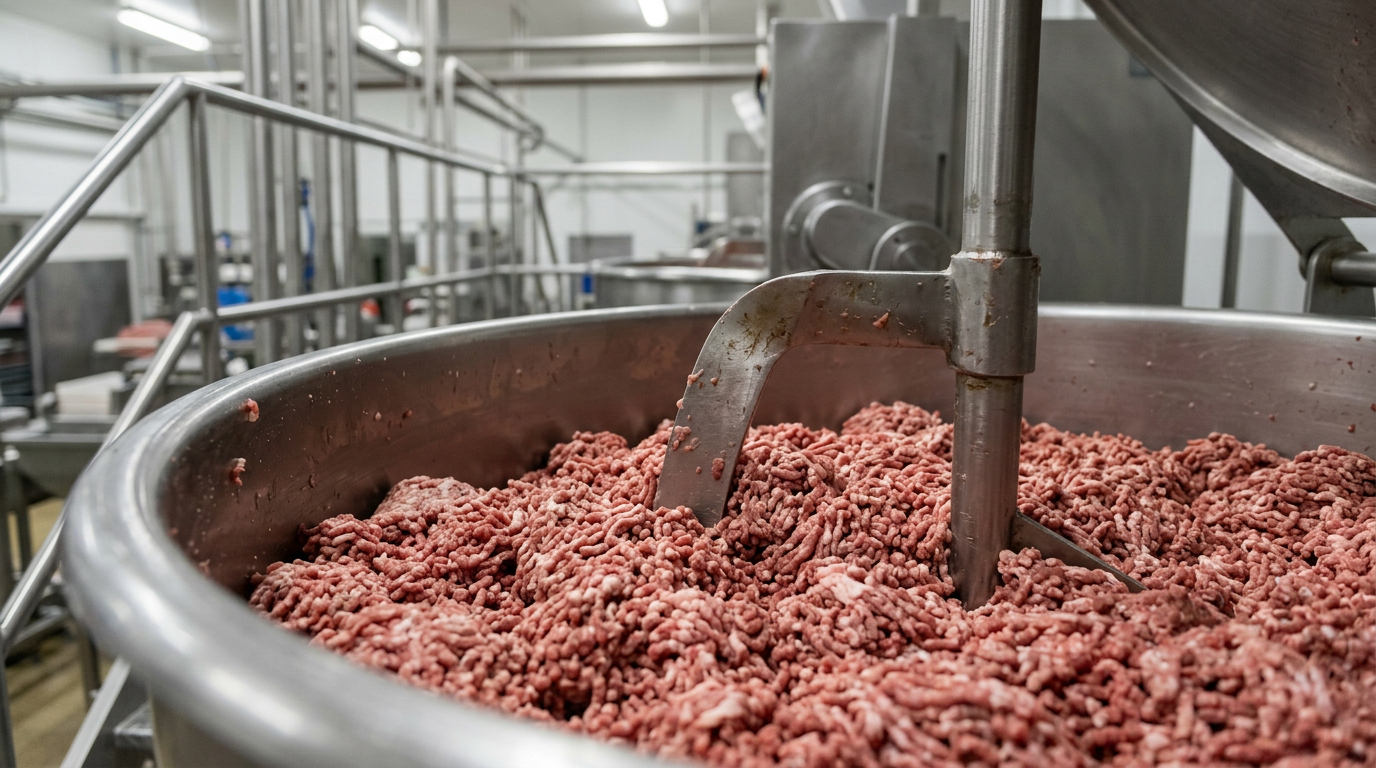
- 3Industrial meat processing grinds and mixes trimmings from thousands of carcasses into large batches.
- 4The practice is common in supermarkets too, but McDonald's scale makes it more noticeable.
- 5Centralized grinding allows for easier pathogen testing but can spread contamination widely.
- 6This system prioritizes consistency and efficiency in large-scale food production.
Why It Matters
It's surprising that a single McDonald's burger patty might contain DNA from over 100 different cows due to industrial meat processing.
A single McDonald’s beef patty can contain genetic material from over 100 different cattle. This occurs because large-scale industrial meat processing combines trimmings from thousands of carcasses into massive batches to ensure consistent fat content and flavour.
The Snapshot
- Average cattle per patty: Roughly 100 individual animals
- Daily McDonald’s customers: 69 million globally
- Meat source: 100 percent real beef, primarily from the forequarter and flank
- Processing method: Centralised grinding and blending for uniformity
Why It Matters
Understanding the scale of industrial food production reveals the distance between the farm and the tray, highlighting how modern logistics prioritise consistency over individuality.
The Mechanics of the Grind
The journey of a Big Mac begins at massive processing facilities where beef arrives in large sections. Unlike a steak, which is a single cut from a single animal, a burger is a composite product. To achieve the specific lean-to-fat ratio required for a standard McDonald’s patty, processors must blend various batches of meat.
According to reports from McDonald’s own supply chain transparency initiatives, the sheer volume of beef processed means that trimmings from hundreds of different cows are tossed into the same industrial grinders. When these machines produce a single vat of ground beef, the resulting mixture is redistributed into thousands of individual patties.
The Scale of Modern Meat
This is not a practice unique to the Golden Arches. In a study published in the journal Food Control, researchers noted that ground beef sold in supermarkets often contains DNA from dozens, if not hundreds, of different animals. McDonald’s simply operates at a scale that makes this statistical reality more pronounced.
The primary driver is consistency. A customer in London expects the same bite as a customer in Tokyo. To achieve this, suppliers like Keystone Foods and OSI Group use sophisticated blending techniques. By mixing meat from many animals, they can precisely calibrate the fat percentage, ensuring the patty reacts to the grill the same way every time.
Industry Recognition and Standards
Unlike a local butcher who might grind a single chuck roast, industrial processors work with trimmings. These are the smaller pieces of meat left over after primary cuts like steaks and roasts are removed. Because these trimmings come from every carcass passing through the plant, the mixing is inevitable.
Practical Applications
- Traceability: Large chains use batch numbering to track which groups of cattle contributed to specific production runs.
- Texture Control: Blending multiple sources prevents the natural variations of a single animal from affecting the final product.
- Cost Efficiency: Using trimmings from various animals allows the industry to minimise waste and keep prices low.
Interesting Connections
- Culinary Etymology: The word hamburger originates from the city of Hamburg, Germany, though the modern patty-in-a-bun format is a distinctively American evolution.
- Pink Slime: In 2012, McDonald’s famously stopped using lean finely textured beef (LFTB), often called pink slime, in response to public pressure.
- Food Printing: The future of burgers may move away from cattle entirely, as 3D-bioprinting companies work to create patties from lab-grown cells.
Does this mean the meat is low quality?
No, it is a matter of processing style rather than quality. McDonald’s uses whole cuts of beef, but the grinding process naturally mixes those cuts from multiple sources.
Are there fillers in the patties?
In most markets, including the UK and US, McDonald’s patties contain 100 percent beef with nothing added but a pinch of salt and pepper after cooking.
Is this safer than a single-cow burger?
It depends on the perspective. Large-scale processors have higher testing frequencies, but the complexity of the supply chain makes the impact of a single error more widespread.
Key Takeaways
- Industrial blending: Mass-produced patties require meat from many cattle to maintain specific fat ratios.
- Uniformity: The goal is a consistent taste experience across tens of thousands of locations.
- Supply chain: The scale of production makes the single-animal burger a logistical impossibility for fast food.
- Transparency: Modern labelling and tracking allow companies to manage the risks associated with multi-source meat.
Next time you finish a cheeseburger, remember you didn't just eat a meal; you consumed a cross-section of an entire herd.
Frequently Asked Questions
Sources & References
 The New York TimesThis article discusses that ground beef, especially from large producers, commonly contains meat from hundreds of different cows, a practice driven by efficiency and the use of trimmings from various carcasses.nytimes.com
 WikipediaBackground and contexten.wikipedia.org
 Scientific AmericanScientific research and analysisscientificamerican.com
 BBCReporting and verificationbbc.co.uk