
Quick Answer
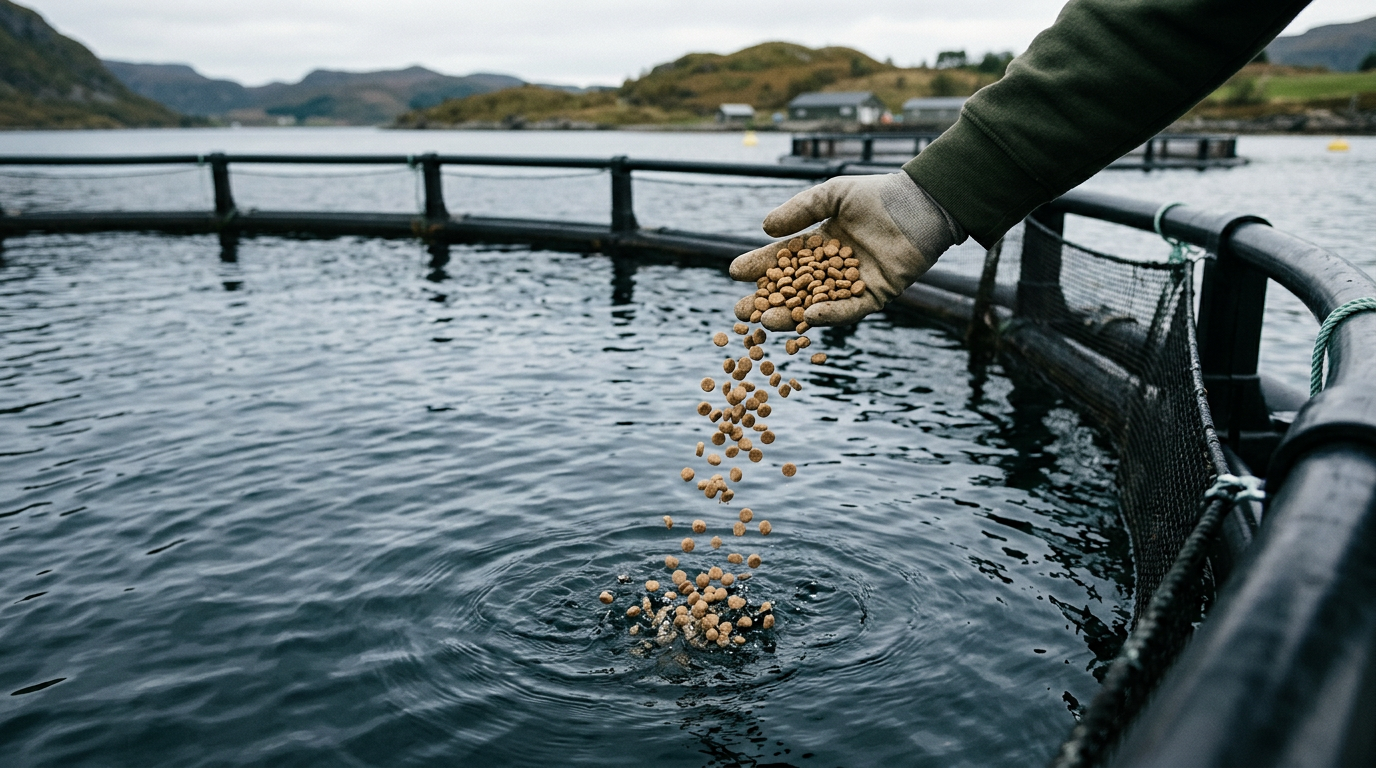
Farm-raised salmon is naturally grey, not pink. Unlike their wild cousins who eat krill and shrimp, farmed fish are fed a different diet. This means farmers add a red pigment to their feed to achieve the familiar colour we expect. It's a surprising fact, as the vibrant hue we often associate with quality salmon is actually an artificial addition.
In a hurry? TL;DR
- 1Farmed salmon is naturally grey; farmers add synthetic astaxanthin to achieve the desired pink color.
- 2Consumers expect pink salmon; pale fish have lower market value, driving the need for pigment additives.
- 3Astaxanthin, often synthetic, is the most expensive component of salmon feed, costing up to 20%.
- 4The SalmoFan color chart dictates the target pink hue for farmed salmon.
- 5While color is cosmetic, astaxanthin also acts as an antioxidant supporting farmed salmon health.
- 6Grey farmed salmon is safe to eat, lacking only the diet-driven pigment seen in wild salmon.
Why It Matters
It's surprising that the appealing pink colour of farmed salmon isn't natural but is actually achieved by adding synthetic dyes to their feed, costing farmers a significant amount and influencing consumer choice.
Without a specific synthetic additive, farm-raised salmon is naturally a dull, unappealing grey. To achieve the signature sunset pink consumers expect, fish farmers must supplement the fishes' diet with chemical pigments.
The Colour of Choice
- Natural state: Farmed salmon flesh is naturally grey or pale beige.
- The cause: Wild salmon eat krill and shrimp; farmed salmon eat processed pellets.
- The solution: Farmers add astaxanthin, a carotenoid, to the feed.
- Consumer impact: Research shows shoppers will not buy salmon unless it reaches a specific hue on a colour chart.
- Market value: Pigmenting agents are the most expensive component of salmon feed, accounting for up to 20 percent of total costs.
Why It Matters
The pinkish-orange hue of salmon has become a visual shorthand for health and luxury, yet in the aquaculture industry, this colour is an engineered commodity rather than a biological certainty.
The SalmoFan Standard
In the wild, salmon develop their reddish tint by consuming crustaceans that contain carotenoids. Because farmed salmon are raised in pens on a diet of fishmeal and soy, they never encounter these natural pigments.
To fix this, the industry uses the SalmoFan. Developed by pharmaceutical giant DSM (now dsm-firmenich), this tool functions like a Pantone swatch book for fish. Farmers use it to select the specific shade of pink they want their fish to achieve. If the fish are too pale, they lose market value; if they are too dark, the cost of the feed additive becomes prohibitive.
Science of the Pigment
The primary pigment used is astaxanthin. While it can be derived from natural sources like algae or yeast, the vast majority used in commercial farming is synthesised from petroleum.
According to a study published in the journal Trends in Food Science & Technology, the chemical structure of synthetic astaxanthin differs slightly from the natural version found in wild salmon, though the visual result is nearly identical.
Unlike other meats where colour is a byproduct of iron-rich proteins like myoglobin, salmon colour is entirely diet-dependent. In contrast to beef or poultry, where a grey tint signals spoilage, a grey salmon is perfectly safe to eat; it simply lacks the marketing-approved costume of its wild cousins.
Consumer Psychology and the Price of Pink
The industry is trapped by consumer expectations. A study by the University of British Columbia found that consumers are willing to pay up to 2.00 dollars more per pound for darker-coloured salmon compared to paler fillets.
“The colour of salmon is a promise of quality that the biology of farming cannot naturally keep.”
Because of this, the DSM SalmoFan 1-34 scale has become an industry bible. Most retailers demand a minimum score of 23 on the fan. If a batch of fish falls below this number, it may be rejected by supermarkets or sold at a significant discount for use in processed products like salmon burgers or spreads where the colour can be masked.
Practical Applications
- Label Reading: Look for the phrase "color added" on fresh salmon packaging. This is a legal requirement in many regions, including the US, to disclose the use of astaxanthin in feed.
- Wild vs. Farmed: Wild salmon, particularly Sockeye, will often have a deeper, more varied red because their diet consists of diverse marine life rather than uniform pellets.
- Nutrient Density: While the colour is added, farmed salmon often contains higher levels of Omega-3 fatty acids than wild salmon due to their high-fat, controlled diet, even if their natural colour is less impressive.
Interesting Connections
- Flamingos: Much like salmon, flamingos are born grey. They only turn pink because of the carotenoid pigments in the brine shrimp and blue-green algae they eat.
- Butter and Eggs: For decades, farmers have added marigold petals or synthetic dyes to chicken feed to ensure egg yolks are a rich orange rather than a pale yellow.
- Etymology: The word salmon comes from the Latin salmo, which is thought to be derived from salire, meaning to leap.
Is the dye in salmon safe to eat?
Yes. The astaxanthin used in fish feed is approved by food safety authorities globally. It is chemically similar to the antioxidants found in many vegetables and is generally considered beneficial to human health.
Does wild salmon ever look grey?
Rarely. A small percentage of Chinook salmon possess a genetic trait that prevents them from processing carotenoids, resulting in white flesh. These are often sold as a delicacy known as Ivory King Salmon.
Can you tell the difference by taste?
Generally, yes. Farmed salmon tends to be fattier and has a milder flavour, whereas wild salmon is leaner and has a more robust, mineral-like taste due to its varied diet and higher activity levels.
Key Takeaways
- Visual Deception: Farmed salmon is naturally grey; the pink colour is a result of dietary additives.
- Economic Driver: Fish colour is precisely managed using the SalmoFan to meet consumer preferences.
- Nutritional Reality: The pigment astaxanthin is an antioxidant that is necessary for the fish’s health, not just its appearance.
- Labeling: Most commercial salmon must be labeled as having color added due to the synthetic nature of the feed.
Frequently Asked Questions
Sources & References
 WikipediaBackground and contexten.wikipedia.org
 Scientific AmericanScientific research and analysisscientificamerican.com
 BBCReporting and verificationbbc.co.uk
- 4Appetite JournalThis source states that astaxanthin is added to the feed of farmed salmon to provide the desired flesh coloration and that without it, the flesh would be pale.sciencedirect.com