
Quick Answer
Pubs have odd names because of a medieval law! Back then, most people couldn't read, so pubs had to hang pictorial signs – think lions or bells – to be identifiable. This tradition of visual branding stuck, leading to the wonderfully unique and often quirky pub names we see across Britain today.
In a hurry? TL;DR
- 1British pub names originated from a 1393 law requiring pictorial signs for illiterate citizens to identify taverns.
- 2The law aimed to aid taxation and quality control by enabling officials and patrons to easily locate alehouses.
- 3Many popular names, like 'The Red Lion', reflected political loyalty or royal symbolism, like Richard II's 'White Hart'.
- 4Symbols such as animals, objects, or religious figures served as recognizable markers before widespread literacy.
- 5Pub names evolved from initial heraldic symbols to occupational and religious imagery, changing with historical events like the English Reformation.
Why It Matters
The common and often peculiar names of British pubs originated from a 14th-century law that mandated pictorial signs to help illiterate people find their local alehouse.
British pub names like The Red Lion or The Green Man are not just quirky branding choices; they are a functional relic of a time when the general population could not read. To ensure people could find their local tavern, King Richard II passed an act in 1393 making it mandatory for alehouses to display a pictorial sign.
Quick Answer
The tradition of unique British pub names stems from a 14th-century royal decree requiring establishments to hang visual signs so that an illiterate public could identify them through simple imagery.
Key Facts and Origins
- Mandatory Signage Act: Passed by Richard II in 1393.
- Most Common Name: The Red Lion (over 500 across the UK).
- Royal Symbolism: The White Hart was the personal badge of Richard II.
- Literacy Rates: In the 14th century, less than 10 percent of the non-clerical population was literate.
The Decree of 1393
In late 14th-century England, the pub sign was a matter of law rather than marketing. Richard II’s legislation was not born out of a love for art, but for taxation and quality control. If an official ale-conner arrived to inspect the quality of the brew, they needed a way to identify the premises.
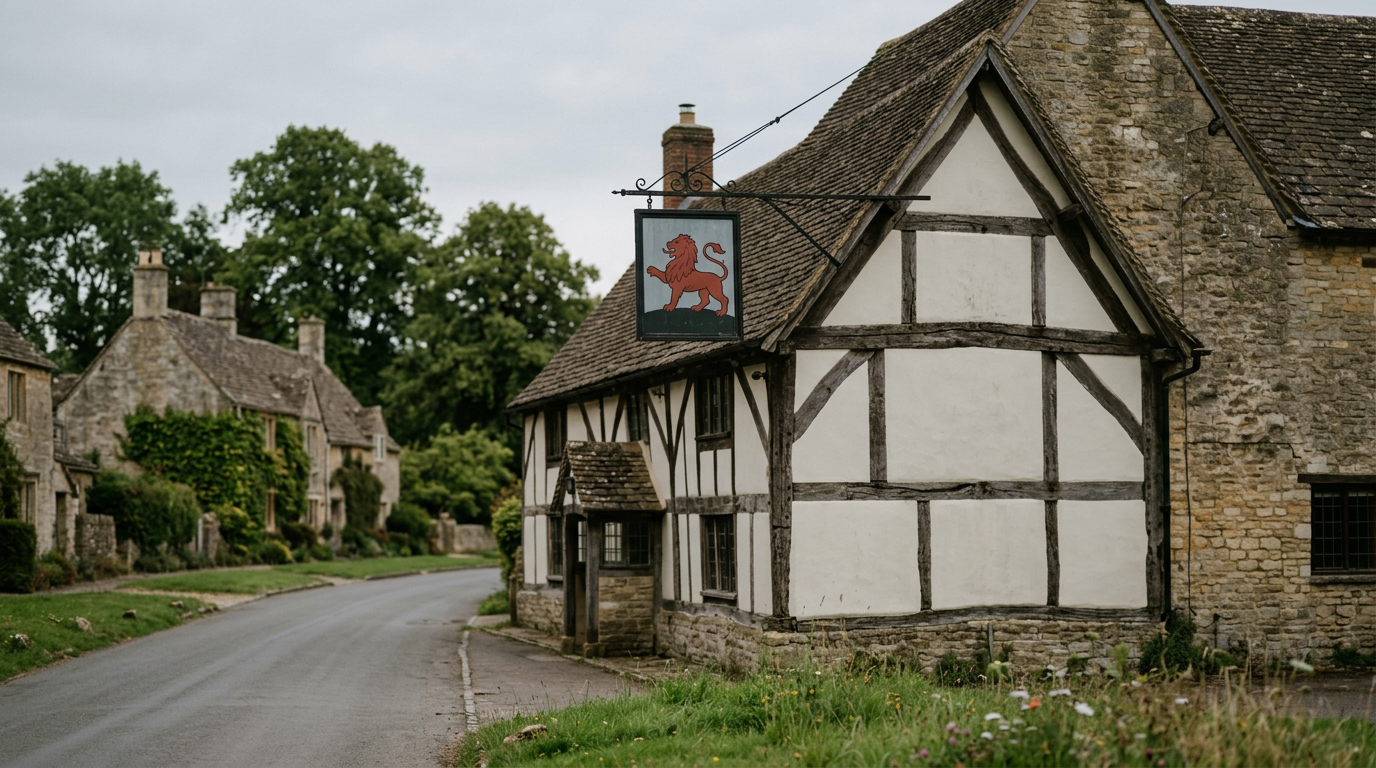
Because the vast majority of the peasantry could not read letters, owners used bold, recognisable symbols. A painting of a swan, a crown, or a bell told a traveller exactly where they were. If you told a friend to meet you at The Sun, they didn't need to read a ledger to find the door; they simply looked for the yellow circle hanging over the street.
Why Symbols Became Names
The names we use today are essentially descriptions of those original wooden boards. Unlike other European traditions that might name a shop after its owner, the British system prioritised the heraldic or religious image.
According to research from the Inn Sign Society, many early signs were chosen to signal political loyalty. The Red Lion became ubiquitous because it was the badge of John of Gaunt, the most powerful man in England during the late 1300s. Hanging his colours was a smart way to stay on the right side of the ruling class.
The Evolution of the Visual Language
As the centuries progressed, the imagery shifted from purely heraldic to occupational and religious. Names like The Adam and Eve or The Lamb and Flag were common before the English Reformation. When Henry VIII broke from the Catholic Church, many pubs hastily changed their signs to more secular or royalist themes to avoid execution for treason.
Real-World Implications
This visual legacy created a standardised mental map of Britain. It allowed for a pre-digital branding consistency that lasted for over 600 years. Even today, the British pub sign is one of the few places where hand-painted, representational art remains a standard feature of the high street.
- Wayfinding: Before house numbers were introduced in the 18th century, pub signs served as essential landmarks for giving directions.
- Cultural Branding: The consistency of names like The Queen's Head allowed travellers to find reliable lodging in unfamiliar territory.
- Artistic Preservation: The tradition has kept the trade of sign-painting alive long after it became obsolete for other businesses.
Why are so many pubs called The White Hart?
The White Hart was the personal badge of King Richard II. Since he was the monarch who made signs mandatory, many publicans chose his symbol as a mark of respect or legal compliance.
What is the strangest pub name origin?
The Bucket of Blood in Cornwall is often cited. While it sounds gruesome, it reportedly refers to a time when a well at the pub drew up red-tinted water due to local tin mining activities.
Do the colours in pub names mean anything?
Usually, yes. A Blue Boar was the badge of the Earl of Oxford, while a Golden Lion often indicated a connection to the Percy family or royal heraldry.
Why did pub signs survive after literacy improved?
By the time literacy became widespread in the 19th century, the names were already part of the local identity. The visual signs had become iconic landmarks that owners were loath to remove.
Practical Applications
If you are navigating the British countryside today, understanding these names helps decode the history of the area:
- The Coach and Horses: Likely located on an old mail coach route.
- The Mason's Arms: Often found near quarries or historic building sites where guilds gathered.
- The Woolpack: Usually situated in historic sheep-farming regions or near old textile markets.
Key Takeaways
- Legal Mandate: Pub names exist because Richard II forced owners to hang signs in 1393.
- Visual Literacy: Symbols were used because the medieval public could not read text.
- Political Survival: Many names, like The Red Lion, were chosen to show loyalty to powerful lords.
- Historical Layers: A pub’s name acts as a linguistic fossil, revealing the previous industry or religious leanings of the town.
The next time you walk into a pub with a nonsensical name, remember you are looking at a 600-year-old solution to a literacy problem. The sign isn't just decoration; it is a medieval GPS coordinate.
