
Quick Answer
The word "shrapnel" comes from a British officer, Henry Shrapnel, who invented a type of artillery shell that scattered projectiles over enemy troops. It's interesting because his innovative design, first used in 1804, changed how warfare was conducted by allowing lethal projectiles to be dispersed over a wider area at long distances.
In a hurry? TL;DR
- 1Shrapnel is named after British officer Henry Shrapnel, who invented a shell that scattered projectiles.
- 2His 1784 invention was a hollow shell filled with bullets and gunpowder, designed to explode mid-air.
- 3The 'spherical case shot' improved long-range effectiveness over previous canister shot designs.
- 4Officially adopted by the British Army in 1803, it saw significant use at Waterloo.
- 5The ammunition was officially renamed 'shrapnel shells' in his honor by 1852.
- 6Modern usage often misapplies 'shrapnel' to any flying debris from an explosion, not just Shrapnel's specific invention.
Why It Matters
The term "shrapnel" is a surprisingly specific testament to a British officer's ingenuity in turning an artillery shell into a deadly rain of projectiles.
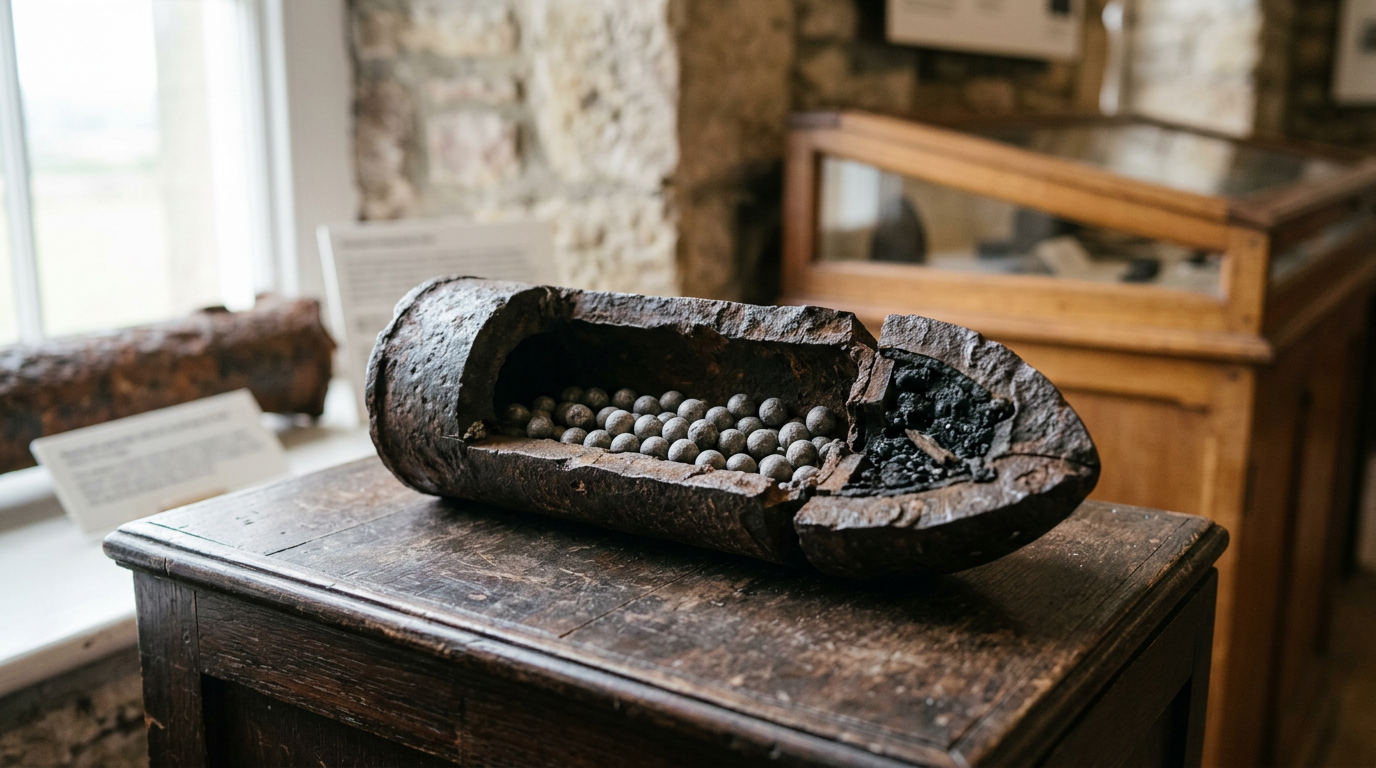
Shrapnel is not a generic term for flying debris; it is an eponym named after Lieutenant General Henry Shrapnel, a British Army officer who invented a devastating new form of anti-personnel artillery in the late 18th century. His design replaced solid cannonballs with hollow shells filled with lead bullets and gunpowder, designed to explode mid-air and rain metal down upon enemy troops.
Key Facts and Figures
- Inventor: Henry Shrapnel (1761–1842)
- Development Year: 1784
- First Combat Use: 1804 (Suriname)
- Original Name: Spherical case shot
- Adopted by British Army: 1803
The Birth of the Spherical Case Shot
Before Henry Shrapnel changed the face of ballistics, artillery was relatively predictable. Armies used solid iron balls to smash fortifications or canister shot—essentially a coffee tin filled with scrap metal—to mow down infantry at close range. The problem was distance. Canister shot lost its effectiveness almost immediately after leaving the barrel.
In 1784, Shrapnel began experimenting with a way to deliver the lethal effect of canister shot at long range. His solution was a hollow iron sphere filled with a mixture of musket balls and a small bursting charge. By using a timed fuse, the shell would explode while still in flight, carrying the forward momentum of the cannonball into a spray of lead.
From Invention to Icon
The British military was initially slow to adopt the technology. It took nearly 20 years of private refinement before the Board of Ordnance officially approved the spherical case shot in 1803. Its debut at the capture of Fort Nieuw-Amsterdam in Suriname was so effective it reportedly left the opposing Dutch forces in a state of total shock.
The invention reached its peak of fame during the Battle of Waterloo in 1815. Unlike other inventors of the era who were often ignored, Shrapnel was rewarded with a pension of 1,200 pounds a year for life. By 1852, the British Army officially renamed the ammunition shrapnel shells in his honour.
Language and Misconception
Modern usage has drifted far from the original military definition. Today, the media and general public use shrapnel to describe any fragments from an explosive device, including the casing of a grenade or bits of a destroyed vehicle.
According to military historians at the Royal Artillery Museum, technically, those fragments are called splinters. True shrapnel refers specifically to the lead or steel balls intentionally placed inside a shell to be discharged upon explosion. However, the linguistic shift is so complete that even military reports often use the broader definition.
Practical Applications and Legacy
- Modern Ballistics: While traditional shrapnel shells are largely obsolete, the principle survives in claymore mines and modern pre-fragmented high-explosive shells.
- Medical Evolution: The unique nature of shrapnel wounds—multiple small, high-velocity entries—forced 19th-century surgeons to develop new methods for extraction and infection control.
- Everyday Slang: The term has entered the vernacular to describe small change or loose coins in a pocket, a nod to the scattered, metallic nature of the original weapon.
Why It Matters
The story of shrapnel represents a pivotal moment when warfare became a matter of industrial engineering. It shifted the focus from the impact of a single projectile to the statistical probability of a lethal cloud. Understanding the name reminds us that behind every piece of modern military jargon is often a single person trying to solve a specific, often grisly, problem.
Is shrapnel the same as a splinter?
In strict military terms, no. Shrapnel consists of the pre-loaded balls inside a shell, while splinters are the jagged fragments of the shell casing itself.
When did people start calling loose change shrapnel?
This is primarily British slang that emerged in the mid-20th century, likely comparing the heavy, noisy weight of small coins to the lead balls found in artillery shells.
Did Henry Shrapnel get rich from his invention?
He was well-compensated with a significant government pension, though he spent much of his later life campaigning for greater recognition and higher payments for his contributions to the British Empire.
Key Takeaways
- Origin: Named after Lieutenant General Henry Shrapnel of the British Army.
- Mechanism: A hollow shell that explodes in mid-air to scatter lead bullets.
- Timeline: Invented in 1784 and first used in combat in 1804.
- Linguistic Shift: Originally a specific brand of ammunition, it now refers to any explosive fragments.
- Legacy: The name remains one of the few military eponyms to achieve global, everyday recognition.
Frequently Asked Questions
Sources & References
- 1Online Etymology DictionaryThe word 'shrapnel' is an eponym named after its inventor, Henry Shrapnel.etymonline.com
 WikipediaLieutenant General Henry Shrapnel (1761–1842) was a British Army officer who invented an anti-personnel artillery shell called spherical case shot, which later became known as shrapnel.en.wikipedia.org
 Merriam-Webster DictionaryThe definition of shrapnel notes its origin from the name of its inventor, Henry Shrapnel, and describes it as an artillery shell designed to scatter projectiles.merriam-webster.com