Quick Answer
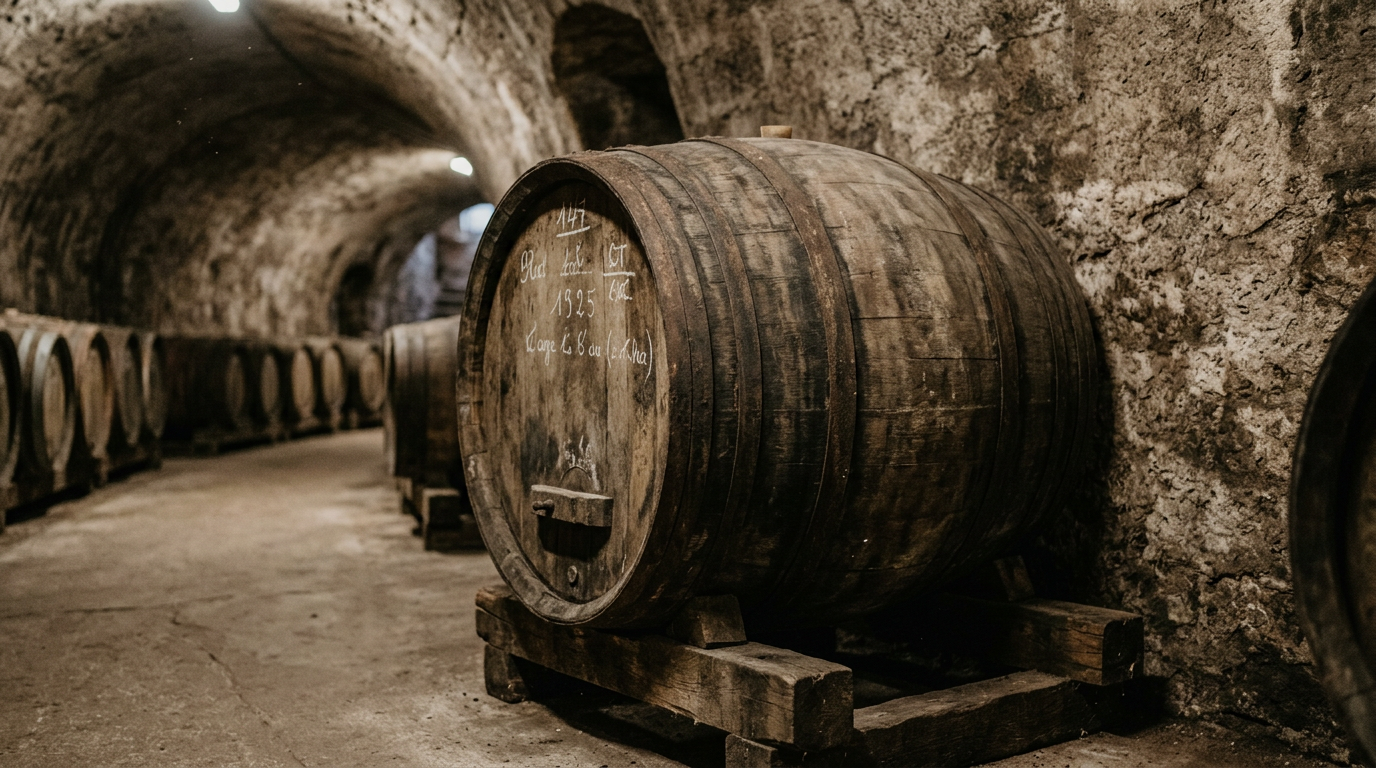
An incredible barrel of wine, sealed in 1472, has apparently only been tasted three times throughout its 550-year existence. Its most recent sampling was in 1944 to mark Strasbourg's liberation. This ancient tipple has witnessed centuries of history, making it a remarkable survivor and a testament to its preservation.
In a hurry? TL;DR
- 1A 1472 white wine barrel in Strasbourg has remained drinkable due to its extremely high acidity (pH 2.28), acting as a natural preservative.
- 2This rare wine has only been officially tasted three times in over 550 years, marking significant historical events.
- 3The latest tasting was in 1944 to celebrate Strasbourg's liberation, with General Philippe Leclerc sampling the vintage.
- 4The wine's survival is a testament to its unique chemical composition and the stable, cool environment of the Strasbourg City Hospital cellar.
- 5In 2014, the wine was moved to a new stainless steel tank within its original wooden barrel to prevent evaporation.
- 6The wine is not for sale or public sampling, preserving its status as a historical artifact and rarity.
Why It Matters
It's surprising that a wine from 1472, with an incredibly low pH, has survived to be tasted only three times in over 500 years, most notably to mark the liberation of Strasbourg.
Housed in the cellar of the Strasbourg City Hospital, a single barrel of white wine from 1472 remains drinkable today. It has been legally tasted only three times in over half a millennium, most notably to celebrate the liberation of Strasbourg in 1944.
The World’s Oldest Barrel-Aged Wine
- Year of vintage: 1472
- Location: Cave Historique des Hospices de Strasbourg, France
- Alcohol content: 9.4 percent
- pH level: 2.28 (extremely acidic)
- Last tasting: 1944 by General Philippe Leclerc
- Volume: Approximately 300 litres
The Survival of the 1472 Vintage
The wine sits in a dark, vaulted cellar beneath the Strasbourg City Hospital, a location that has served as a wine storage facility since 1395. Historically, patients often paid for their medical care by donating land or vineyards to the hospital, leading to a massive accumulation of high-quality wine stocks.
While most wine turns to vinegar within a few decades, this specific batch has survived due to its chemical composition and meticulous maintenance. According to oenologists who analysed the liquid in 1994, the wine maintains its structure through exceptionally high acidity.
The Three Tastes of History
Access to the 1472 vintage is strictly controlled. It is not for sale, nor is it available for public sampling. In its 552-year history, record-keepers note only three official occasions where the wine was served.
The first recorded tasting occurred in 1576 to celebrate a delegation from Zurich. The second took place in 1718 after the hospital burned down, serving as a symbolic gesture of the institution’s resilience.
The third and most famous tasting occurred in 1944. Following the liberation of Strasbourg from Nazi occupation, General Philippe Leclerc was granted a glass to toast the victory. Since then, the barrel has remained sealed to the public.
Why It Has Not Turned to Vinegar
Wine preservation usually relies on tannins, sugar, or alcohol. However, the 1472 vintage is bone-dry and relatively low in alcohol. Its longevity is attributed to its incredibly low pH. At 2.28, the acidity is closer to lemon juice than modern Riesling, which effectively acts as a preservative against bacteria.
The cellar master, Thibaut Baldinger, describes the scent as having notes of vanilla, honey, wax, and dried fruit. However, the taste is reportedly a different story. Because of the extreme acidity, those who have smelled it suggest it possesses a powerful, almost medicinal sharpness that reflects its ancient origins.
Unlike other historical spirits, such as the Speyer wine bottle which is sealed in glass and likely solidified, the Strasbourg wine remains a liquid held in a functioning barrel system.
Practical Applications
- Historical Preservation: The techniques used to maintain the barrel provide insights into how wood and wine interact over centuries.
- Chemical Analysis: Scientists study the 1472 vintage to understand the limits of organic preservation without modern chemicals.
- Cultural Diplomacy: The wine remains a potent symbol of Alsatian identity, used only for the most significant regional milestones.
Can you buy a bottle of the 1472 wine?
No. The wine is considered a historical monument and is not for sale at any price.
Is the wine actually good to drink?
While technically drinkable and safe, it is extremely acidic. Experts suggest it is more of a historical artefact than a culinary pleasure.
How is the wine maintained?
Every few months, the cellar master performs a routine check. In 2014, the wine was moved to a stainless steel vat hidden inside a handmade oak barrel to prevent further evaporation and oxidation.
Key Takeaways
- Provenance: The wine has been stored in the same cellar since it was pressed in the late 15th century.
- Rarity: Only three people in the last five centuries have officially tasted the vintage.
- Preservation: High acidity, rather than high alcohol, is the secret to its 500-year lifespan.
- Symbolism: Its last tasting marked the end of German occupation in 1944.
If you enjoy the intersection of history and gastronomy, you might want to read about the history of the world's oldest restaurants, the chemistry of ancient fermentation, or how champagne was originally a mistake.