
Quick Answer
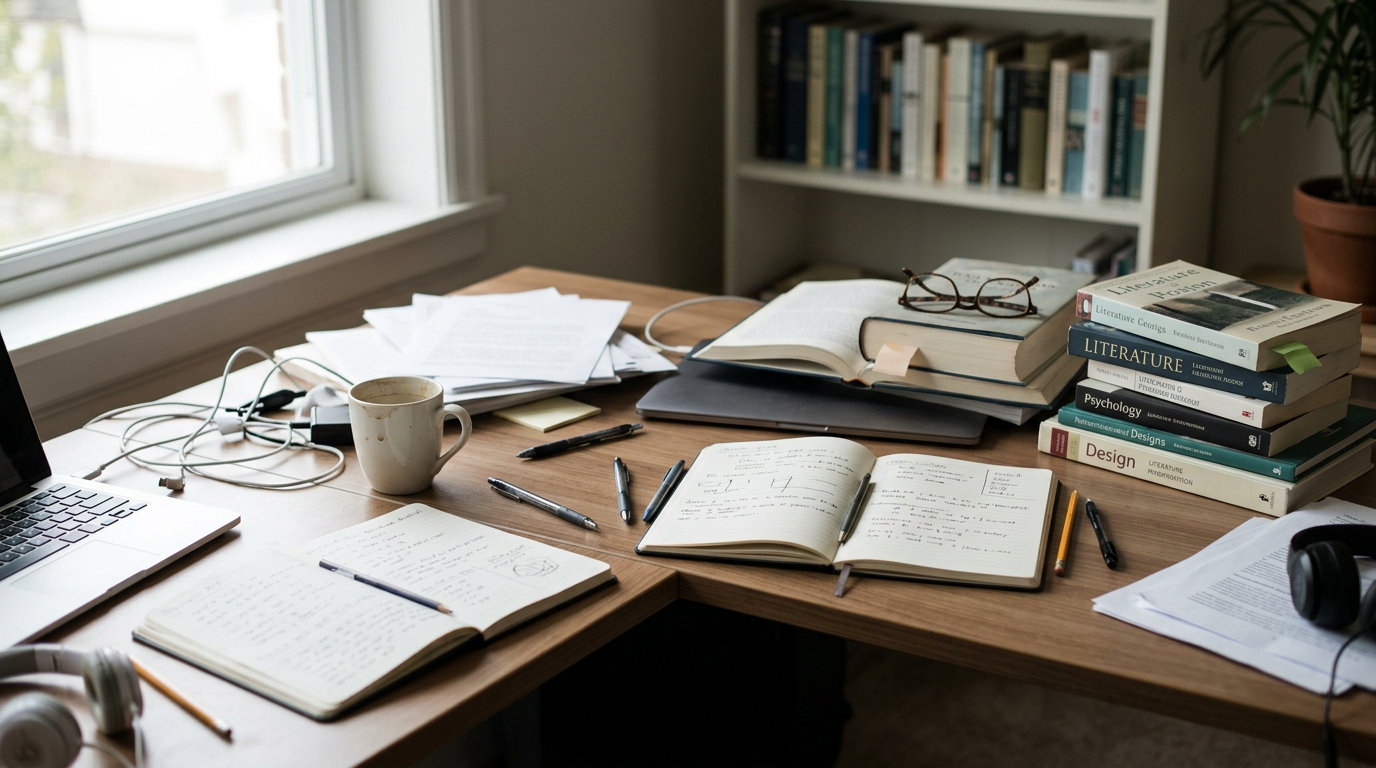
Messy desks aren't a sign of disorganisation; they're linked to boosted creativity. And that colourful language you use? It might actually signal impressive verbal fluency. These findings challenge our assumptions, suggesting that what we often see as negative traits could be indicators of more flexible, creative thinking and a stronger command of language, rather than a lack of intelligence.
In a hurry? TL;DR
- 1Messy workspaces can boost creativity and unconventional thinking by freeing the brain from traditional constraints.
- 2Cluttered environments encourage participants to generate more innovative ideas and choose novel products.
- 3Frequent swearing is linked to greater verbal fluency and a larger overall vocabulary.
- 4Profanity use suggests a nuanced understanding of language, not a lack of intelligence or vocabulary.
- 5Challenging the stigma around messy desks and profanity reveals potential cognitive benefits.
- 6Orderliness promotes convention, while disorder encourages breaking from the status quo.
Why It Matters
It's surprisingly useful to know that a bit of mess and a bit of swearing might actually point to a sharper, more creative mind.
Disorderly environments and colourful language are often dismissed as hallmarks of a lazy or unrefined mind. However, psychological research suggests these traits may actually signal higher cognitive functioning, specifically in areas of creativity and verbal intelligence.
- Messy desks: A University of Minnesota study found that cluttered workspaces encourage unconventional thinking and new ideas.
- Profanity: Researchers from Marist College and Massachusetts College of Liberal Arts discovered that people who can name more swear words generally have a larger overall vocabulary.
- Verbal Fluency: High profanity use correlates with higher scores on the Controlled Oral Word Association Test (COWAT).
- Innovation: Participants in messy rooms chose new products significantly more often than those in tidy environments.
Why It Matters: These findings challenge the traditional social preference for order and politeness, suggesting that eccentric habits often coexist with high-performing brains.
The Science of the Shambolic Desk
The idea that a clean desk equals a clear mind is a persistent corporate myth. In truth, physical chaos can be a catalyst for mental breakthroughs.
In a 2013 study published in Psychological Science, researcher Kathleen Vohs found that while tidy environments encourage social convention and healthy eating, messy environments foster creativity. Vohs and her team asked participants to come up with new uses for ping-pong balls. Those in cluttered rooms generated ideas that were rated as significantly more creative and imaginative than those in the organised group.
The chaotic environment appears to break the subconscious drive for tradition. When surroundings are disordered, the brain feels less constrained by existing rules and is more likely to pursue divergent paths.
The Fluency of the Foul-Mouthed
Equally misunderstood is the use of profanity. For decades, the Poverty of Vocabulary (POV) hypothesis suggested that people swear because they lack the intellectual depth to find better words.
Psychologists Kristi Stephens and Timothy Jay debunked this in 2015. Their research involved asking participants to list as many words as possible starting with a certain letter, followed by as many swear words as possible.
The results showed a positive correlation between the two. Those who were the most fluent in profanity also possessed greater overall linguistic ability. Rather than being a crutch, swearing is used as an efficient, nuanced tool for emotional expression by those who understand the subtleties of language.
Breaking the Stigma of the Unconventional
These traits are often linked to a personality type that values efficiency over appearance. A messy desk is often the result of someone being too deeply immersed in a project to prioritise filing. Similarly, swearing is a high-arousal form of communication that can convey honesty and urgency.
Practical Applications: When to Embrace the Mess
- Brainstorming phases: If you are at the beginning of a project, clear the schedule but leave the desk messy to invite new associations.
- Emotional authenticity: Selective use of profanity in high-stakes environments can actually increase your perceived sincerity and persuasive power.
- Hiring for roles: Do not discount candidates with chaotic workspaces; they may be your most innovative problem solvers.
Interesting Connections
- Taboo power: The amygdala, the brain's emotional centre, is activated by swear words, whereas standard language is processed in the cerebral cortex.
- The 10-minute rule: Vohs noted that it only takes a few minutes in a messy environment for the creative effects to take hold.
- Cultural shift: Modern tech hubs like Google and Pixar often intentionally design chaotic, communal spaces to mimic the messy desk effect on a larger scale.
Key Takeaways
- Clutter and creativity: Messy environments push the brain toward innovation and away from convention.
- Vocabulary depth: A wide range of swear words is an indicator of high verbal fluency, not a lack of education.
- Context matters: Order is better for making healthy choices and following rules, while disorder is better for generating new ideas.
- Don't judge the surface: Socially disapproved habits often mask significant cognitive strengths and intellectual curiosity.
Frequently Asked Questions
Sources & References
- 1Journal for the Education of the GiftedThis study, led by Kathleen D. Vohs, investigated how orderly versus disorderly environments affect consumer choice and creativity, finding that disorderly environments promote creativity.journals.sagepub.com
- 2Appetite JournalThis research article, 'Taboo word fluency and knowledge of taboo words as a psycholinguistic skill,' demonstrates a positive correlation between profanity fluency and overall verbal fluency.sciencedirect.com