
Quick Answer
The new £5 notes aren't vegetarian-friendly because they contain a tiny bit of animal fat, called tallow. This is used to make them more durable. It's a surprising detail that has caused a stir, as many vegetarians and vegans are unhappy about this, even with such a small amount.
In a hurry? TL;DR
- 1British five-pound notes released in 2016 contain trace amounts of tallow, derived from animal fat.
- 2This makes the polymer banknotes unsuitable for vegetarians, vegans, and certain religious groups.
- 3Tallow is used as an anti-static agent to prevent notes from sticking together in machines.
- 4The Bank of England confirmed the ingredient, sparking a petition with over 138,000 signatures.
- 5Currency's mandatory nature makes boycotting the tallow-containing notes ethically challenging for many.
- 6Tallow is a common additive in polymer production, used in various plastic products globally.
Why It Matters
It's surprising that something as everyday as our money contains animal fat, making it a surprisingly difficult issue for vegetarians.
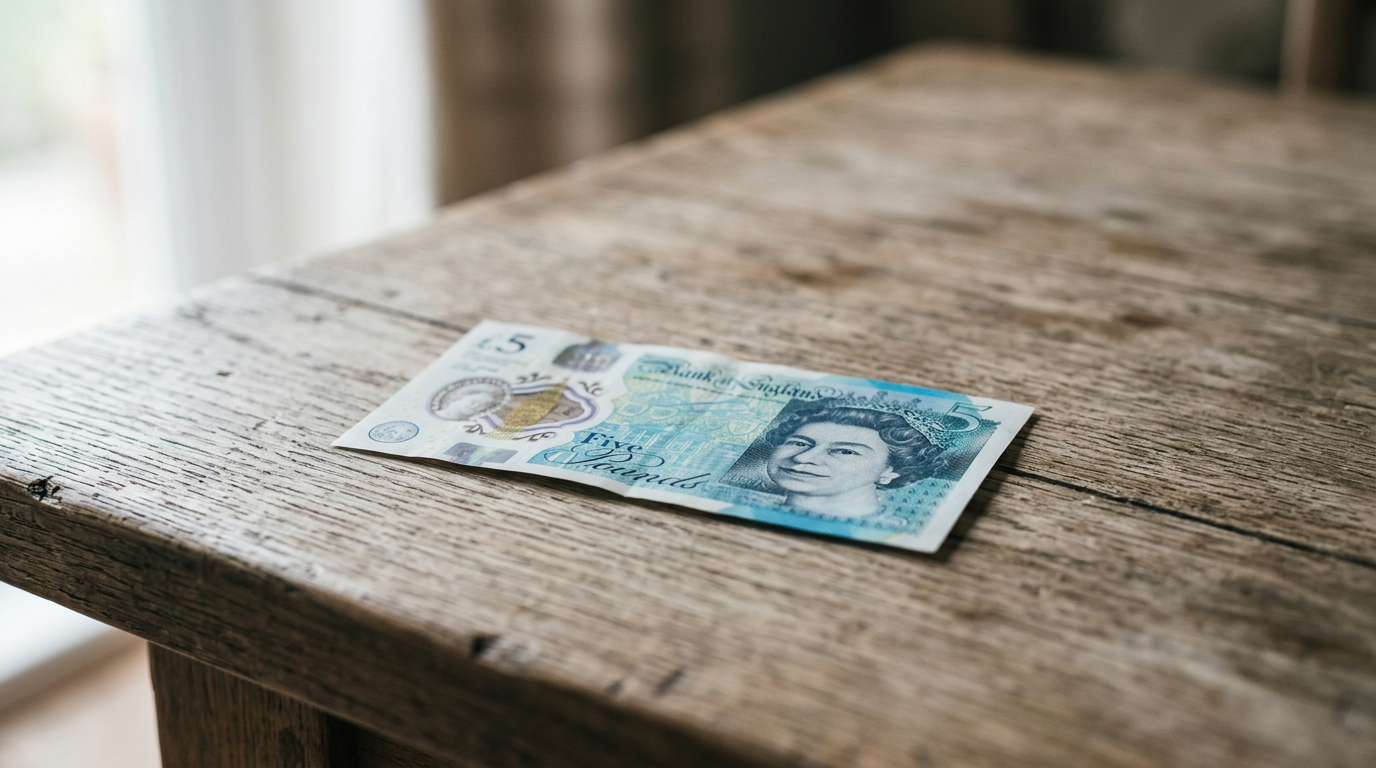
The 2016 introduction of the British five-pound note sparked a dietary debate in an unexpected place: the wallet. These notes contain trace amounts of tallow, a rendered form of animal fat typically sourced from cows or sheep.
The Quick Answer
British polymer banknotes issued since 2016 contain tallow, a substance derived from animal waste products. This composition makes the currency technically non-vegan and unsuitable for certain religious and dietary groups.
Key Facts and Figures
- Release Date: 13 September 2016
- Material: Polypropylene polymer
- Active Ingredient: Tallow (animal fat)
- Concentration: Less than 0.05 percent per note
- Petition Signatures: Over 138,000 people protested the inclusion
Why It Matters
The presence of animal products in a mandatory tool of daily life creates an ethical dilemma for millions who abstain from animal use for moral or religious reasons.
The Secret Ingredient
When the Bank of England moved from paper to polymer, the goal was durability. These notes are cleaner, harder to counterfeit, and can survive a spin in a washing machine. However, the manufacturing process revealed a specific chemical requirement.
The polymer substrate used for the notes contains extremely small amounts of tallow. According to the Bank of England, this animal derivative acts as an anti-static agent, preventing the notes from sticking together or jamming in cash machines.
The Public Backlash
The discovery came to light shortly after the note's release when a tweet from the Bank of England confirmed the tallow content. Within days, a petition on Change.org gained over 100,000 signatures from vegans, Hindus, Sikhs, and Jains.
Unlike other consumer goods, currency is difficult to boycott. This forced nature of the product was the primary driver of the controversy. Groups like the Vegan Society argued that while the amount of fat is negligible, the principle of using animals in state-issued currency is outdated.
The Industrial Reality
The Bank of England was not alone in this choice. Innovia Security, the company that supplied the polymer for the UK as well as Australia, Canada, and dozens of other nations, admitted that tallow was a standard additive in the industry.
The Bank’s Response
Following an investigation into palm oil alternatives, the Bank of England decided to stick with tallow for future prints of the ten and twenty-pound notes. They concluded that switching to palm oil would be more expensive and raise separate environmental concerns regarding deforestation.
A study commissioned by the Bank found that the environmental impact of switching to palm oil would be significantly higher than continuing with the current tallow-based polymer. By 2017, the Bank officially announced that it would not be withdrawing the notes or changing the production method for the rest of the series.
Practical Implications
- Religious Sensitivity: Some Hindu temples and vegan cafes initially refused to accept the new notes.
- International Standard: Many other countries including Canada and New Zealand use the same tallow-inclusive polymer.
- Secondary Uses: The notes are recyclable, but the recycling process must account for the chemical additives.
Which British notes contain animal fat?
The five, ten, and twenty-pound notes all contain trace amounts of tallow. Modern polymer fifty-pound notes also follow this manufacturing standard.
Are there vegan-friendly currencies?
Yes. After the UK controversy, some countries and private banks explored alternatives. For example, some notes issued in polymer-using countries like Australia are now investigating synthetic slip agents.
Why can't they just use plant-based fats?
The Bank of England investigated using palm oil or coconut oil. However, the suppliers noted that these alternatives were not always sustainably sourced and could not guarantee the same long-term durability as tallow-based additives.
Key Takeaways
- Trace amounts: Tallow constitutes less than 0.05 percent of each banknote.
- Functionality: The fat serves as an anti-static agent to keep notes moving through ATMs.
- Global norm: This is an industry-wide standard for polymer currency used in over 30 countries.
- Deadlock: The Bank of England opted to keep tallow over palm oil due to the latter’s link to deforestation.
The five-pound note remains a marvel of engineering, but for many, it serves as a reminder that the global supply chain is rarely as clean as the plastic in our pockets.
