
Quick Answer
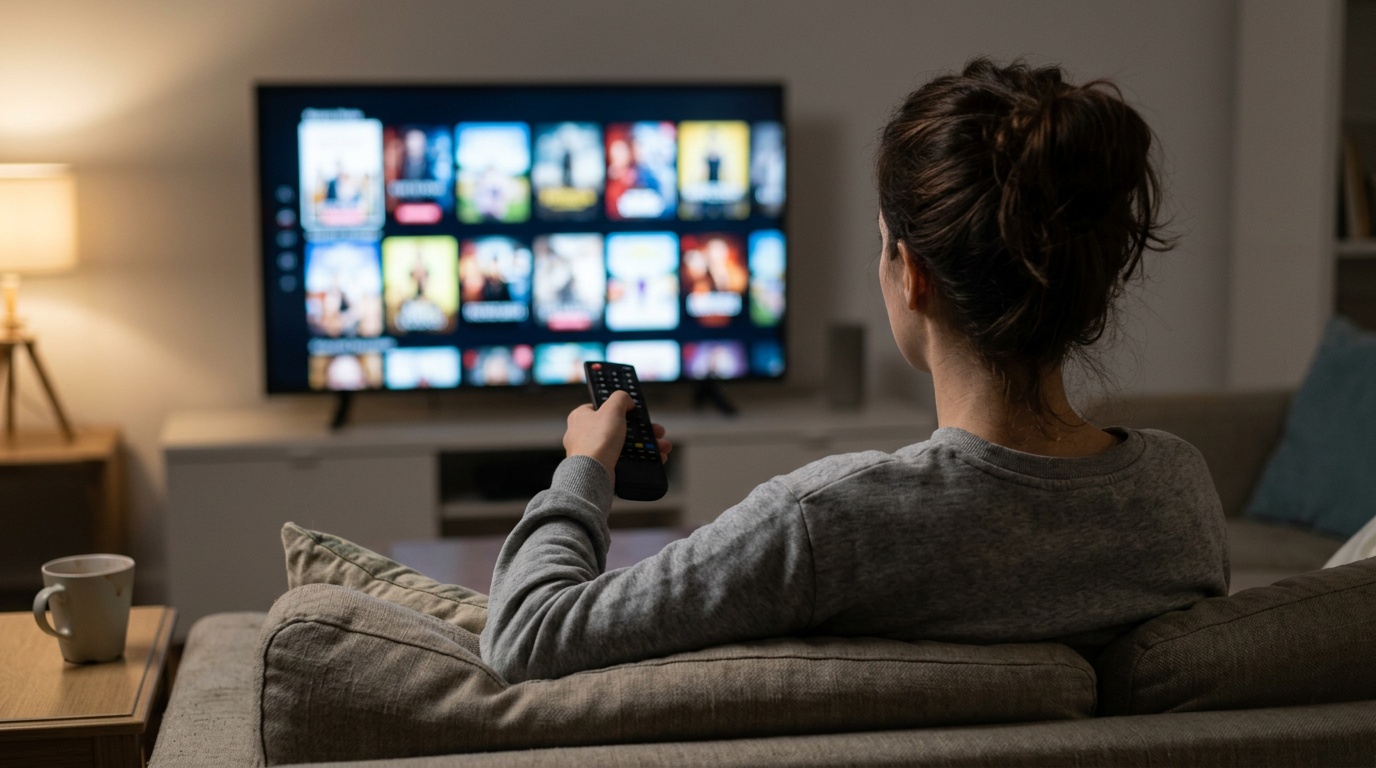
We spend an astonishing 1.3 years of our lives just deciding what to watch on TV! This is fascinating because it shows how all the entertainment choices available today, rather than saving us time, actually eat into our leisure by forcing us to endlessly scroll.
In a hurry? TL;DR
- 1The average person wastes 1.3 years of their life (about 20 minutes daily) deciding what to watch on TV due to streaming overload.
- 2Excessive choices on streaming platforms lead to 'choice paralysis,' increasing anxiety and reducing leisure time.
- 3New linear TV models with curated suggestions could combat choice fatigue and save viewers significant time.
- 4Streaming interfaces are designed to maximize engagement, not necessarily help users quickly find content.
- 5Reduce decision time by pre-selecting shows, using curated lists, or trying a 'watch with me' buddy system.
- 6Consider limiting your streaming subscriptions to lessen the overwhelming amount of content available.
Why It Matters
It's surprising how much of our lives we seemingly waste scrolling through TV options instead of actually watching anything.
The average person spends 1.3 years of their life simply deciding what to watch on television. Rather than enjoying a story, we spend roughly 474 days staring at a digital carousel of posters and trailers.
The Cost of Choice
- Total Time Lost: 1.3 years (approx. 11,388 hours).
- Daily Average: 18 to 24 minutes spent browsing.
- The Culprit: Choice paralysis within streaming interfaces.
- Comparison: This exceeds the time most people spend exercising over a lifetime.
Why It Matters
This statistic reveals the dark side of the Golden Age of Content: we are currently suffering from an abundance of choice that diminishes our actual leisure time.
The Discovery of the Scroll
The figure stems from data analysis quantifying the modern streaming habit. Research conducted by Ericsson ConsumerLab and corroborated by various industry studies, including those by Reelgood and TiVo, consistently finds that viewers spend nearly 20 minutes per session just picking a title.
Unlike the linear TV era, where choices were limited to what was currently airing, the on-demand model requires active decision-making. Researchers at the California Institute of Technology have linked this specific type of fatigue to the brain overtaxing its reward system.
The Mechanics of Choice Paralysis
The 1.3-year figure is a cumulative result of the decision-making loop. According to Nielsen, the average US viewer now has access to over 1.9 million unique titles. In contrast to 2019, the time spent searching has increased significantly as the market fragmented across Netflix, Disney+, Max, and others.
Psychologists refer to this as Choice Overload. When presented with a massive array of similar options, the cost of making the wrong choice feels higher. We scroll through three different crime dramas not because we are interested in all of them, but because we are terrified of wasting two hours on the mediocre one.
The Interface is the Problem
Streaming platforms are designed to keep you on the app, not necessarily to help you finish a film. Features like auto-playing trailers and infinite scrolls are engineered to trigger dopamine, but they often result in a phenomenon known as Netflix Fatigue.
Industry experts note that UK viewers spend roughly 100 days of their lives just reading synopsis text. This suggests that the interface itself has become a form of secondary entertainment, albeit a frustrating one.
Practical Applications
To reclaim that 1.3 years, viewers are increasingly turning to external curation methods. Strategies include:
- The 5-Minute Rule: If you haven't picked a show in five minutes, turn the TV off or pick the very first suggestion.
- Third-Party Curators: Using sites like Rotten Tomatoes or Letterboxd to decide before even opening a streaming app.
- Linear Reversion: The rise of FAST channels (Free Ad-supported Streaming TV) which mimic old-school scheduled programming to remove the burden of choice.
Interesting Connections
- Etymology: The word decide comes from the Latin decidere, meaning to cut off. Choosing one show literally means cutting off all other possibilities.
- Cultural Reference: The term analysis paralysis was popularised in the 1960s but has found its ultimate modern home in the streaming queue.
- Contrast: A person will spend more time deciding what to watch than they will likely spend on their primary education.
How much do we spend watching versus searching?
While we spend 1.3 years searching, the average human will spend roughly 7.8 years actually watching content. The search-to-watch ratio is roughly 1:6.
Does this include social media?
No, the 1.3-year statistic specifically refers to long-form video content like movies and TV shows on streaming platforms or cable.
Is this getting worse?
Yes. As more niche streaming services launch, the search time is expected to rise because users must now navigate multiple apps to find where a specific title is hosted.
Key Takeaways
- Decisions Take Time: 1.3 years is the price of unlimited options.
- Cognitive Load: Too much choice leads to frustration rather than freedom.
- Active Selection: Using external lists can drastically reduce time wasted in the interface.
- Industry Shift: Modern viewers are moving back toward curated, linear feeds to avoid the scroll.
The next time you find yourself twenty minutes deep into a sub-genre menu, remember that the clock is ticking on your 474 days. Sometimes, the best choice is to simply press play on the first thing you see.
Frequently Asked Questions
Sources & References
- 1The ManifestResearch by The Manifest shows that 61% of Americans use at least two streaming services, contributing to decision fatigue.themanifest.com
- 2ReelgoodA 2021 study by Reelgood found that Americans spend an average of 422 days of their lives deciding what to watch on TV, with 12 minutes spent per browsing session.reelgood.com