
Quick Answer
McDonald's Coca-Cola tastes different because they use special steel tanks for syrup, filter their water meticulously, and employ wider straws. These seemingly small details ensure the drink stays fresher and fizzier, creating a surprisingly refined taste experience that many people notice and enjoy.
In a hurry? TL;DR
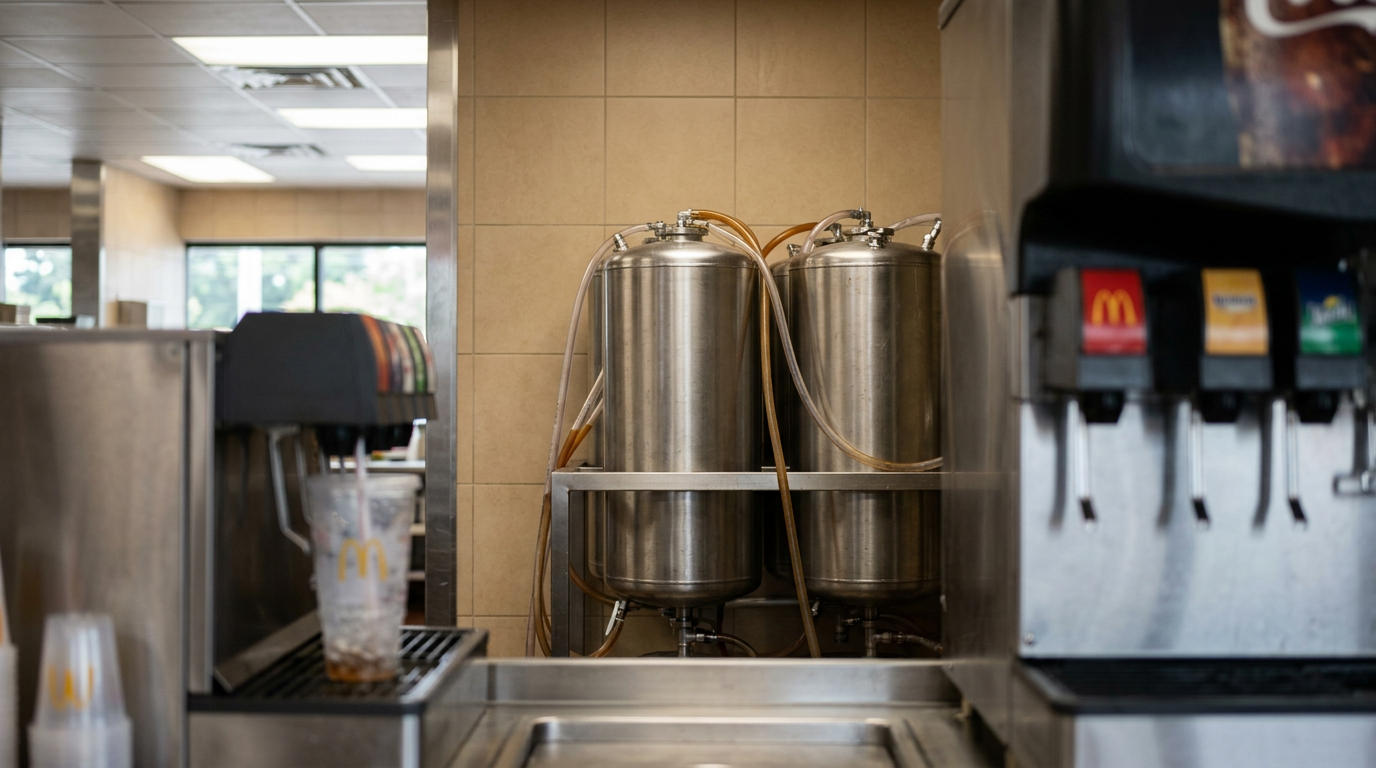
- 1McDonald's stores Coca-Cola syrup in stainless steel tanks for freshness, unlike plastic bags used by competitors.
- 2The chain uses advanced carbon water filtration systems to ensure a pure base for the soda.
- 3Pre-chilling syrup and water before dispensing locks in higher carbonation for a crisper taste.
- 4Wider straws allow more liquid to hit the palate at once, enhancing the drink's flavor impact.
- 5A unique, long-standing partnership with Coca-Cola allows McDonald's to implement these specific quality standards.
- 6McDonald's maintains precise temperature and ratio controls throughout the dispensing process for optimal taste.
Why It Matters
It's surprising that a fast-food giant like McDonald's puts so much effort into the seemingly simple process of serving a fizzy drink.
McDonald’s serves a version of Coca-Cola that many customers insist tastes better than the bottled or canned variety. This is not a collective delusion; the fast-food giant follows a rigid, proprietary set of standards for storing, filtering, and serving the beverage that differs significantly from other retailers.
Quick Answer
The superior taste of McDonald’s Sprite and Coke is the result of a unique supply chain partnership where syrup is delivered in stainless steel tanks rather than plastic bags, combined with advanced water filtration and wider-diameter straws.
Fast Facts: The Golden Arches Standard
- Syrup Storage: High-grade stainless steel tanks
- Temperature: Constant 1 to 2 degrees Celsius
- Straw Diameter: Approximately 15 percent wider than industry standard
- Water Quality: Professional-grade carbon filtration systems
- Ratio Control: Specific gravity calibrated for ice melt
Why it Matters
Understanding the engineering behind a fountain drink reveals how meticulous supply chain management can turn a mass-produced commodity into a curated brand experience.
The Steel Tank Advantage
Most soda fountains rely on the bag-in-box system. This involves plastic bladders of syrup boxed in cardboard, which are susceptible to temperature fluctuations and oxygen exposure.
McDonald’s operates differently. According to the company’s own published quality standards, their Coca-Cola syrup is delivered in large stainless steel tanks. This material is non-reactive and provides a superior barrier against light and air, ensuring the syrup remains fresh from the bottling plant to the dispenser.
Precision Temperature and Carbonation
Temperature is the enemy of carbonation. Carbon dioxide dissolves more effectively in cold liquids, meaning a warmer drink loses its fizz faster.
To combat this, McDonald’s pre-chills both the filtered water and the syrup through insulated tubing before they even reach the fountain head. Unlike other restaurants that mix syrup and water at room temperature, this system ensures the beverage hits the cup at a temperature just above freezing.
This level of control allows for a higher level of CO2 saturation, resulting in the crisp, sharp bubble sensation that fans of the brand often describe as more aggressive than a standard Coke.
The Science of the Straw
The physical interface between the consumer and the product is the straw. McDonald’s uses a wider straw than its competitors.
The logic is simple fluid dynamics: a wider straw allows a larger volume of liquid to hit the palate simultaneously. This ensures the flavour profile of the drink isn’t restricted to a thin stream, but instead coats the taste buds all at once. This design Choice is intentional, meant to maximise the impact of the cold, highly carbonated liquid.
Water: The Invisible Ingredient
About 85 percent of a fountain drink is water. If the local municipal water has a high mineral content or a hint of chlorine, the soda will suffer.
McDonald’s invests heavily in sophisticated carbon filtration systems. While most households use a simple charcoal filter, the industrial-grade systems in these kitchens ensure that the water is a blank canvas. This consistency means a Coke in London tastes identical to one in New York.
Key Takeaways
- Syrup is transported in stainless steel to maintain freshness and protect against oxidation.
- Both water and syrup are pre-chilled to near-freezing levels to maximise carbonation retention.
- Advanced filtration systems remove all trace minerals and chemicals from the local water supply.
- The wider straw is a deliberate ergonomic choice to flood the palate with flavour.
- The entire system is calibrated to account for ice dilution, ensuring the last sip is as strong as the first.