
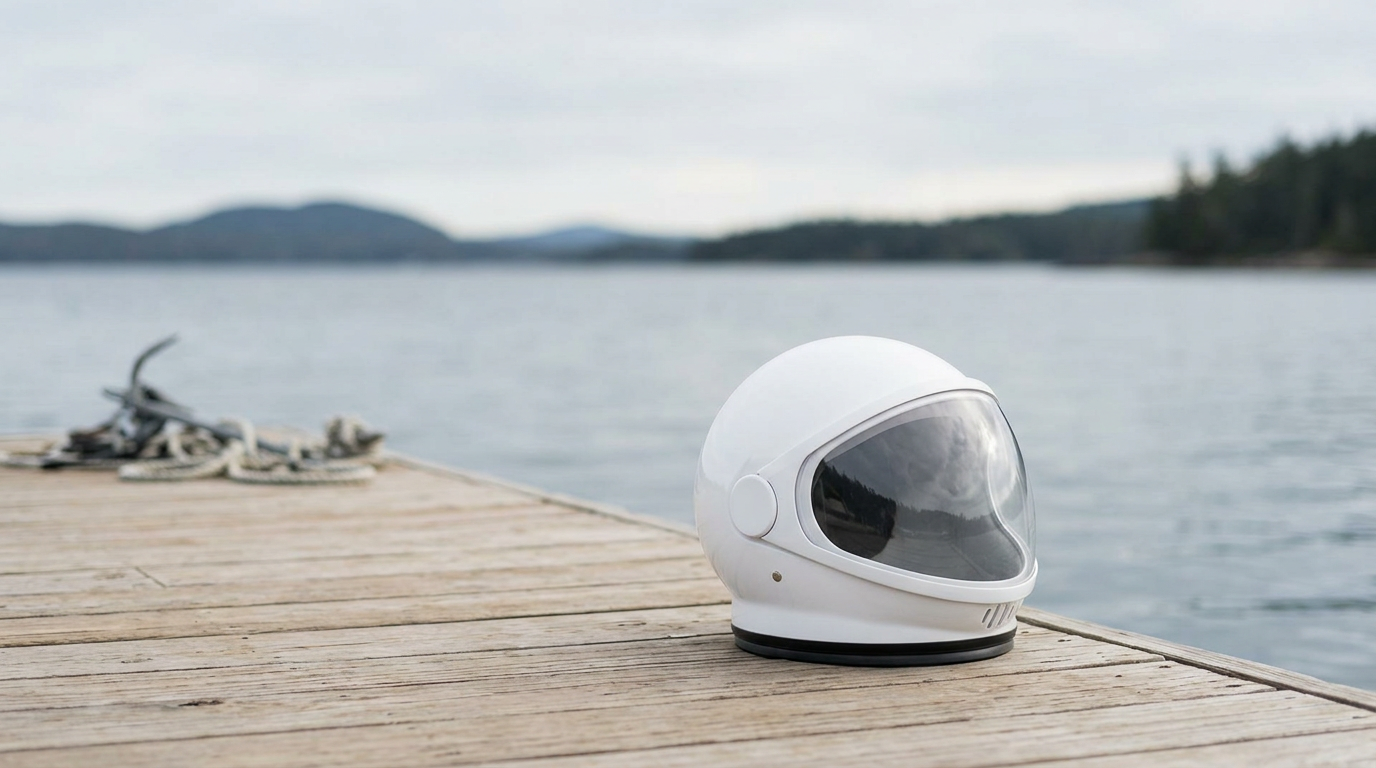
Quick Answer
"Astronaut" literally means "star sailor" from Ancient Greek. This is a poetic way to describe space explorers, framing their journey not as traversing emptiness, but as navigating a vast, cosmic ocean. It conjures images of adventure and discovery, making space travel sound truly epic.
In a hurry? TL;DR
- 1Astronaut, from Greek 'astron' (star) and 'nautes' (sailor), frames space as a sea to navigate, not a vacuum.
- 2The term originated in Victorian sci-fi (1880) and was adopted by NASA in 1958 for its precision.
- 3NASA chose 'astronaut' over 'cosmonaut' (universe sailor) to emphasize reaching specific celestial destinations.
- 4The maritime connection influences spaceflight culture, with spacecraft called 'ships' and command decks termed 'the bridge'.
- 5Navigational commands and directional terms often mirror naval traditions, linking space exploration to historical seafaring.
- 6Using 'astronaut' connects the new frontier of space to humanity's oldest tradition: exploration by sea.
Why It Matters
It's fascinating that "astronaut" frames space beyond just empty void, seeing it instead as a navigable celestial sea.
An astronaut is a star sailor, a title derived from the Ancient Greek words astron (star) and nautes (sailor). This linguistic choice frames space not as a hollow vacuum, but as a celestial ocean to be navigated.
The Linguistic Blueprint
- Etymology: Astron (star) + Nautes (sailor)
- First Literary Appearance: 1880, in Percy Greg’s Across the Zodiac
- NASA Adoption: 1958, shortly after the agency's founding
- Russian Counterpart: Cosmonaut (Kosmos + Nautes), meaning universe sailor
- Shared Root: The suffix nautes also gives us nautical and navy
Why It Matters
The term astronaut shifts our psychological relationship with the cosmos from one of passive observation to active navigation. By categorizing space as a sea, we apply the romanticism of age-of-discovery mariners to the cold physics of orbital mechanics.
The Poet Who Launched a Thousand Ships
While we associate the word with high-tech NASA corridors, it actually began in the realm of Victorian science fiction. Percy Greg used the term in his 1880 novel Across the Zodiac to describe his protagonist's craft.
However, the modern application was solidified by a small committee at the National Advisory Committee for Aeronautics (NACA). In 1958, as the US prepared to put humans into orbit, administrators debated between astronaut and cosmonaut.
According to NASA’s own historical logs, the committee preferred astronaut because it felt more descriptive of the specific task: reaching the stars. Unlike the broader Soviet term cosmonaut, which suggests sailing the entire universe, astronaut implies a specific destination.
The Maritime Connection
The choice of sailor is far more than a metaphor; it dictates the culture of spaceflight. Robert Gilruth, the first director of NASA’s Manned Spacecraft Centre, noted that the sailors of the air faced the same isolation and navigational challenges as the mariners of the 15th century.
NASA continues to use naval traditions today.
- Ships: Spacecraft are referred to as vessels or ships.
- Port and Starboard: Directional commands often mirror maritime terminology.
- The Bridge: The command deck functions under the same hierarchy as a destroyer or frigate.
Global Variations of the Star Sailor
While the West settled on Greek roots, other cultures have developed their own titles for those who leave the atmosphere:
- Taikonaut: Used for Chinese space travellers, combining taikong (space) with the Greek nautes.
- Vyomanaut: A term sometimes used in India, deriving from the Sanskrit vyoman (sky).
- Spationaut: A French variant (spationaute) from the Latin spatium (space).
Who was the first person to be officially called an astronaut?
While the word existed in fiction, the Mercury Seven—including John Glenn and Alan Shepard—were the first humans officially given the title by NASA in 1959.
Is there a difference between an astronaut and a cosmonaut?
Technically, no. The difference is purely political and linguistic. An astronaut is trained by NASA, ESA, JAXA, or CSA, while a cosmonaut is trained by the Russian Space Agency (Roscosmos).
What do names like Taikonaut tell us about language?
They represent a linguistic hybridity. By combining a native word for space with the Greek root for sailor, nations assert their own cultural identity while acknowledging the global scientific tradition.
Key Takeaways
- Etymological Roots: The word is a compound of the Ancient Greek astron and nautes.
- Romantic Framing: It positions space exploration as a continuation of maritime discovery.
- NASA Adoption: The term was officially adopted in 1958 to distinguish American efforts from Soviet ones.
- Global Standard: The sailor suffix is used globally, from taikonauts to spationauts.
- Psychological Impact: Using nautical terms makes the infinite void of space feel like a territory that can be mapped and mastered.
We didn't just invent a way to fly beyond the clouds; we invented a way to talk about it that made us feel at home. To be an astronaut is to acknowledge that while the environment has changed from water to vacuum, the human spirit of the sailor remains exactly the same.
Frequently Asked Questions
Sources & References
 Merriam-Webster DictionaryMerriam-Webster defines 'astronaut' as a person who travels beyond Earth's atmosphere, noting its derivation from Greek 'astron' and 'nautes'.merriam-webster.com
- 2Online Etymology DictionaryThe word 'astronaut' combines the Ancient Greek words 'astron' (star) and 'nautes' (sailor), with its earliest English use recorded in 1927, though the concept appeared earlier.etymonline.com