
Quick Answer
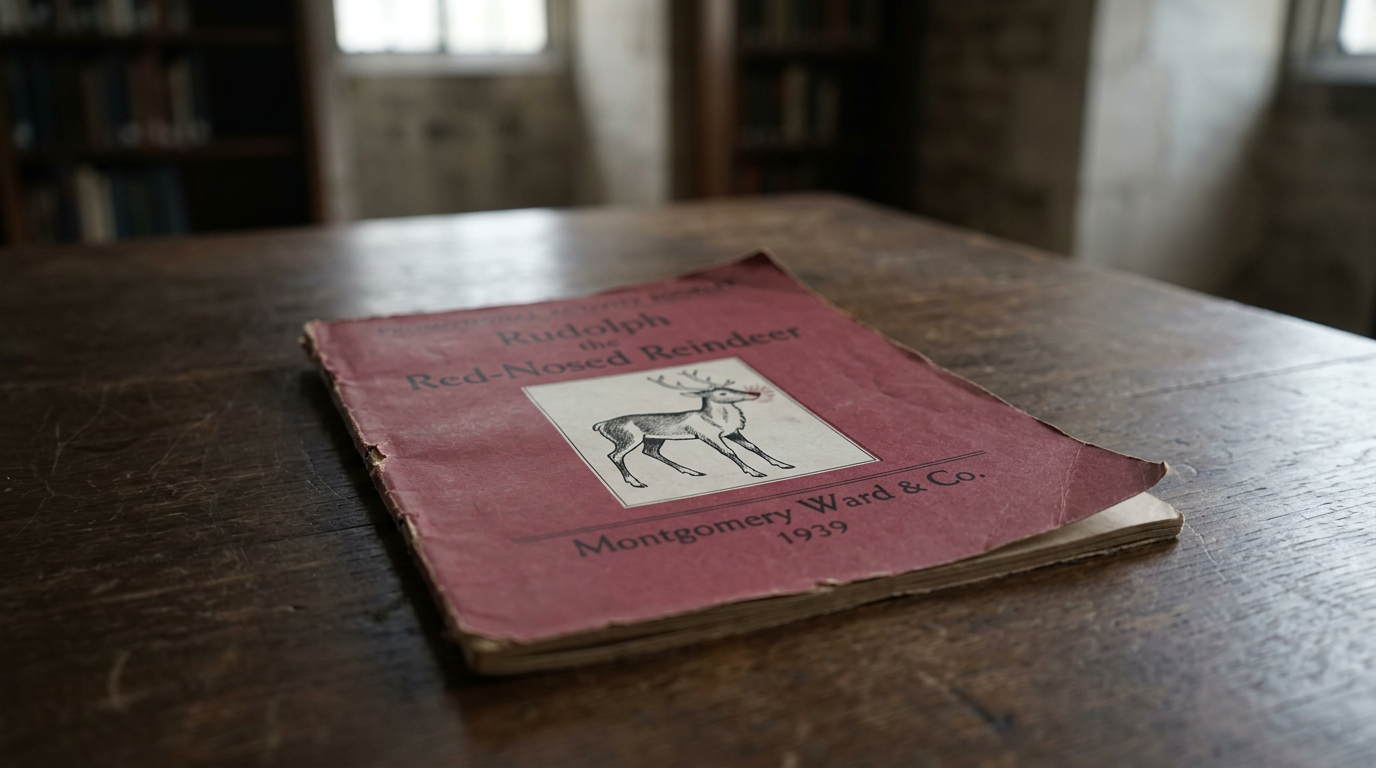
Rudolph the Red-Nosed Reindeer was invented in 1939 for a department store's Christmas giveaway. This ubiquitous, much-loved character and festive icon began life as a clever marketing ploy by Montgomery Ward to boost sales. It’s a fascinating case of a simple advertisement becoming a worldwide phenomenon.
In a hurry? TL;DR
- 1Rudolph the Red-Nosed Reindeer originated in 1939 as a marketing creation for Montgomery Ward department store.
- 2Copywriter Robert L. May developed Rudolph, drawing inspiration from his own experiences of being an underdog.
- 3May's boss initially opposed Rudolph due to the red nose's association with alcoholism, but sketches convinced executives.
- 4The character was intended to reduce costs by replacing purchased giveaway books with custom promotional content.
- 5Rudolph achieved global fame after Johnny Marks wrote the hit song, recorded by Gene Autry in 1949.
- 6Rudolph's story, despite its commercial origins, resonates due to themes of social alienation and redemption.
Why It Matters
It's surprising that the beloved Rudolph the Red-Nosed Reindeer originated not from tradition but as a clever, cost-saving marketing ploy by a US department store.
Rudolph the Red-Nosed Reindeer was not born of ancient folklore or Victorian poetry, but as a 1939 marketing assignment for the American department store Montgomery Ward. Copywriter Robert L. May created the character to save the company money on the free activity books they distributed to children every Christmas.
The Retail Origin of a Legend
Historical data shows that Montgomery Ward had been buying and giving away colouring books for years. In 1939, management decided that creating their own character would be more cost-effective. Robert L. May, a 34-year-old staff writer, was tasked with inventing a story about a relatable animal.
- Year of creation: 1939
- Creator: Robert L. May
- Original medium: A promotional booklet
- Reach: 2.4 million copies distributed in the first year
- Ownership: Montgomery Ward eventually gave the rights to May in a rare act of corporate generosity
Why It Matters: Rudolph is perhaps the only modern mythic figure to transition from a corporate branding exercise into a permanent fixture of global folklore.
From Copywriting to Culture
The genesis of Rudolph was surprisingly melancholic. Robert L. May was grieving his wife, who was dying of cancer during the project. He intentionally drew on the theme of the underdog, using his own childhood experiences of being small and shy to shape Rudolph’s personality.
Unlike other holiday icons like St. Nicholas, who evolved over centuries, Rudolph was a calculated literary creation. May's boss initially hated the idea, fearing that a red nose was too closely associated with chronic alcoholism to be appropriate for a children's book.
To prove the character’s charm, May took an illustrator friend, Denver Gillen, to the Lincoln Park Zoo to sketch deer. These sketches of a friendly, big-eyed reindeer eventually convinced the executives to greenlight the project.
The Metric of Success
The impact was immediate. In its debut year, Montgomery Ward distributed millions of copies of the Rudolph story. However, the character did not become a global behemoth until after World War II.
In 1948, May’s brother-in-law, Johnny Marks, wrote the famous song. When Gene Autry recorded it in 1949, it sold two million copies in its first season, eventually becoming the second best-selling Christmas song of all time, surpassed only by White Christmas.
Cultural Comparisons
In contrast to the reindeer mentioned in Clement Clarke Moore’s 1823 poem A Visit from St. Nicholas, who are portrayed as a disciplined, nameless team, Rudolph introduced individual personality into the Santa Claus mythos.
According to researchers at the University of Victoria, the addition of Rudolph changed the structure of the Santa myth from a static legend into a narrative of triumph. It shifted the focus from the act of giving to the value of being different.
Practical Applications
- Marketing: Rudolph serves as the gold standard for brand storytelling where the character outlives the brand itself.
- Intellectual Property: The Rudolph case is frequently cited in legal discussions regarding work-for-hire and the rare instances of corporate copyright surrender.
- Social Commentary: The story is often used in educational settings to discuss bullying and the utility-based acceptance of outliers.
Was Rudolph part of the original eight reindeer?
No. The original eight reindeer (Dasher, Dancer, Prancer, Vixen, Comet, Cupid, Donner, and Blitzen) were established in the 1823 poem A Visit from St. Nicholas. Rudolph was added 116 years later.
Was the red nose originally a glow-in-the-dark feature?
In May's original draft, Rudolph was not born with a glowing nose but rather discovered the power of his shiny nose when he encountered a thick fog. The biological glow was a later addition for the song and the television special.
Why did Montgomery Ward give away the rights?
While the exact corporate reasoning is debated, it is widely believed that Sewell Avery felt sympathy for May’s financial situation after the death of his wife and believed the character had already served its promotional purpose for the store.
Key Takeaways
- Created as a cost-saving measure: Rudolph was designed to replace expensive third-party colouring books.
- Written by a grieving father: Robert L. May wrote the story while his wife was terminally ill.
- A rare corporate gift: The rights were returned to the author, making him wealthy from royalties.
- Global dominance: The character is now a fixed part of the Christmas canon, despite being younger than many people's grandparents.
Rudolph proves that a marketing department can occasionally produce genuine mythology. While the character was born to sell coats and toys, the story of the misfit who saves the day remains a more valuable export than anything found in a 1939 catalogue.
Frequently Asked Questions
Sources & References
 History.comRudolph the Red-Nosed Reindeer was created in 1939 by Robert L. May for Montgomery Ward as a Christmas promotion.history.com
- 2SnopesMontgomery Ward copyright owner of Rudolph the Red-Nosed Reindeer, generously signed over the copyright to Robert L. May in 1947.snopes.com
 WikipediaThe popular song 'Rudolph the Red-Nosed Reindeer' was written by Johnny Marks and first recorded by Gene Autry in 1949.en.wikipedia.org