
Quick Answer
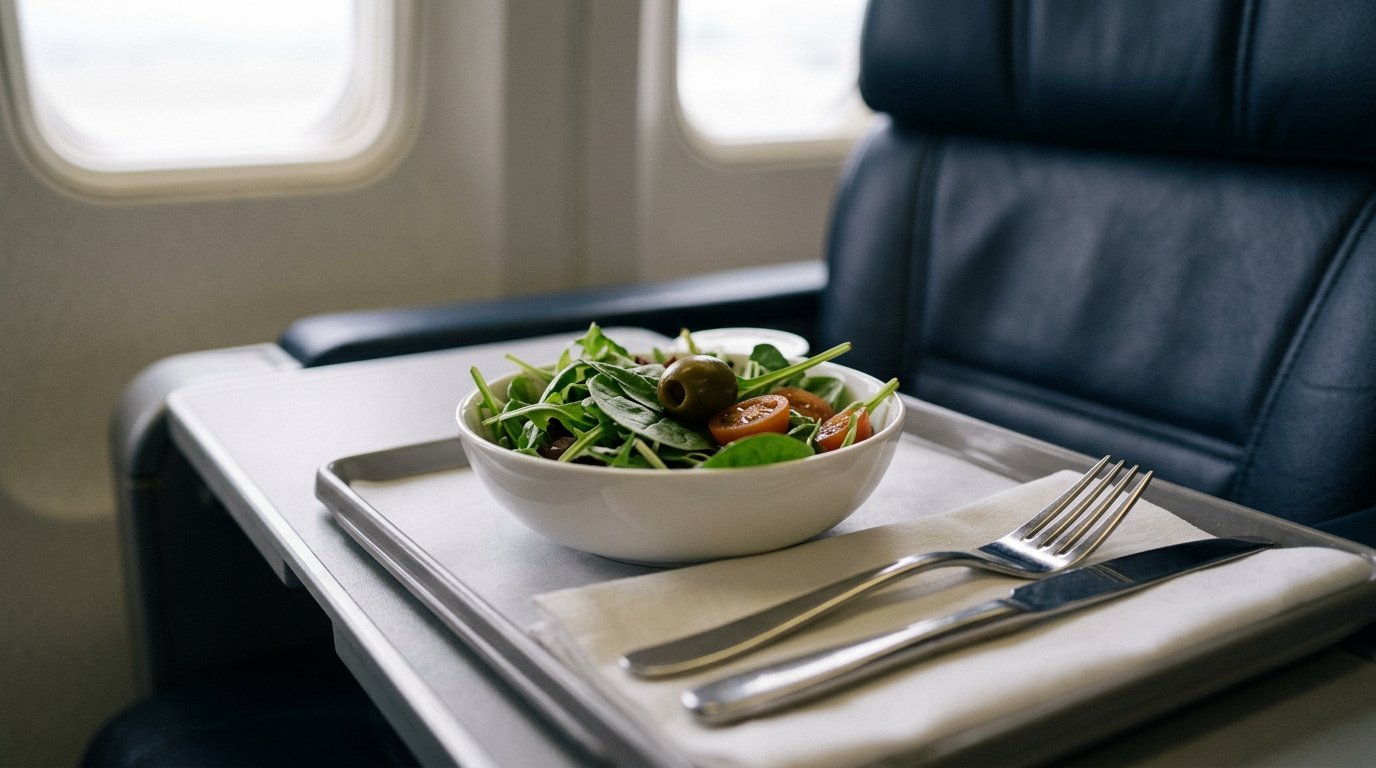
American Airlines saved a whopping £20,000 in 1987 by removing just one olive from every first-class salad. It’s a fantastic illustration of how seemingly insignificant changes can result in substantial savings when applied across a huge operation, showing the power of minor efficiencies.
In a hurry? TL;DR
- 1American Airlines saved $40,000 in 1987 by removing one olive per first-class salad.
- 2This micro-efficiency demonstrates how small changes can yield significant savings at scale.
- 3The cost savings included not just the olive but also reduced fuel and labor expenses.
- 4CEO Robert Crandall spearheaded this initiative, focusing on optimizing bottom-line profitability.
- 5The change was virtually undetectable to passengers, preserving perceived value.
- 6This story illustrates the power of marginal gains and consumer psychology in business.
Why It Matters
It's surprising how saving just one olive per salad generated a substantial saving for American Airlines, highlighting the power of tiny efficiencies in huge operations.
American Airlines saved forty thousand dollars in 1987 by removing a single olive from every salad served in first class. This legendary piece of corporate lore illustrates how micro-efficiencies generate massive returns when applied to industrial-scale operations.
- Year: 1987
- Total Savings: 40,000 USD
- The Change: 1 olive per salad
- CEO at the time: Robert Crandall
- Sector: Aviation logistics
Why It Matters
One olive is a culinary footnote, but multiplied by millions of passengers, it becomes a line item. This remains the definitive case study in marginal gains, proving that in high-volume businesses, the smallest possible subtraction can yield a five-figure windfall.
The Architect of the Olive
The man behind the missing fruit was Robert Crandall, the legendary and abrasive CEO of American Airlines known for his obsession with the bottom line. Crandall did not just want to run an airline; he wanted to engineer a profit machine.
During a routine review of catering costs, Crandall noticed a specific detail: most passengers did not actually eat the olives in their salads. They were garnish, often left at the bottom of the bowl. According to industry records, Crandall calculated that if they removed just one olive from each first-class meal, nobody would notice the difference in quality, but the weight and procurement costs would vanish.
The Mathematics of Minimalism
While forty thousand dollars might seem like a rounding error for a major carrier today, it represented a significant victory in the post-deregulation era of the 1980s. The savings were not just about the cost of the olive itself.
In aviation, every gram matters. Removing an item reduces the weight of the aircraft, which decreases fuel consumption. It also slashes the labour costs involved in sourcing, cleaning, and plating the item. When you scale that across thousands of flights per year, the math becomes undeniable.
Industry Analysis
Unlike other cost-cutting measures that degrade the customer experience, the olive removal was invisible. This distinguishes it from less successful attempts by competitors to save money by reducing seat pitch or charging for water.
Studies published in the Journal of Air Transport Management suggest that passengers are highly sensitive to perceived value but largely unaware of minor ingredient alterations. American Airlines exploited this psychological gap perfectly. By the time the story became public, the savings were already in the bank.
Real-World Applications
- Subscription Services: Removing a single unused feature from a basic tier to save on server maintenance.
- Manufacturing: Shortening a screw by two millimetres to save tons of steel across a million units.
- Logistics: Optimising delivery routes to eliminate left-hand turns, a tactic famously used by UPS to save millions in fuel.
The Dark Side of Dilution
While the olive was a masterstroke, it set off a chain reaction across the industry. Once airlines realised they could cut one item without protest, they kept going. This lead to the eventual disappearance of full meals in economy and the rise of the buy on board model.
Did passengers actually complain?
No record exists of a single passenger noticing the missing olive. The change was so subtle that it bypassed the threshold of consumer awareness entirely.
Is this still a common practice?
Yes. Modern airlines use data analytics to track exactly which food items are returned on trays to decide what to cut next. If everyone leaves the parsley, the parsley is removed.
Was it only about the cost of the fruit?
No. The savings accounted for procurement, refrigeration, weight-related fuel costs, and the logistics of waste management.
Key Takeaways
- Scalability: Small changes become massive when multiplied by a large user base.
- Data-Driven Design: Radical efficiency requires looking at the smallest possible components of a service.
- Perceived Value: You can reduce costs without reducing satisfaction if you target items the customer doesn't value.
- The Crandall Legacy: Robert Crandall’s focus on minutiae helped define the modern, hyper-efficient aviation industry.
If you can find your own olive, you can find a fortune hidden in plain sight.
Frequently Asked Questions
Sources & References
 The New York TimesThis article from The New York Times reports on American Airlines' decision to remove one olive from first-class salads in 1987 to save $40,000 annually.nytimes.com
 WikipediaWikipedia's biography of Robert Crandall mentions his notable cost-cutting measures, including the removal of an olive from salads.en.wikipedia.org