
Quick Answer
Believe it or not, fake hair is North Korea's top export, making up nearly half of their foreign earnings. This is a surprising insight into how the isolated nation manages to generate income, cleverly navigating international sanctions by trading items like wigs and lashes, often via China, to the wider world.
In a hurry? TL;DR
- 1North Korea's largest export is fake hair (lashes, beards, wigs), making up 46.5% of trade ($188M in 2023).
- 2This hair trade highlights a loophole in international sanctions, bypassing restrictions on other goods.
- 3Chinese companies send raw hair to North Korea, where labor-intensive products are made then re-exported.
- 4North Korea's inexpensive, disciplined workforce excels at the manual processes required for hair products.
- 5The hair export business saw a massive 13.4x increase from 2022 to 2023 after the border reopened.
- 6Consumers may unknowingly fund North Korean labor, including potential use of prison camp workers, through these products.
Why It Matters
It's surprising that North Korea's biggest export is fake hair, which helps it bypass international sanctions through a crafty manufacturing arrangement with China.
Almost half of North Korea’s entire export economy is built on false eyelashes, beards, and wigs. Despite heavy international sanctions, the country exported roughly $188 million worth of processed hair products in 2023, making it the nation’s single largest commodity trade.
Key Hair Export Statistics
- Total Export Value: $292 million (estimated total for 2023)
- Hair Product Value: $188 million
- Export Share: 46.5 percent of total outgoing trade
- Primary Buyer: China (receiving 97 percent of hair exports)
- Year-on-Year Growth: 13.4x increase from 2022 levels
Why It Matters
The trade reveals a massive loophole in global sanctions, showing how North Korea uses low-tech, labour-intensive manufacturing to bypass restrictions on minerals and luxury goods.
The China Connection
The global beauty industry generally assumes premium hair products originate in China. However, data from the General Administration of Customs of China suggests a more complex reality. Chinese firms frequently ship raw human hair and synthetic fibres across the border to North Korea.
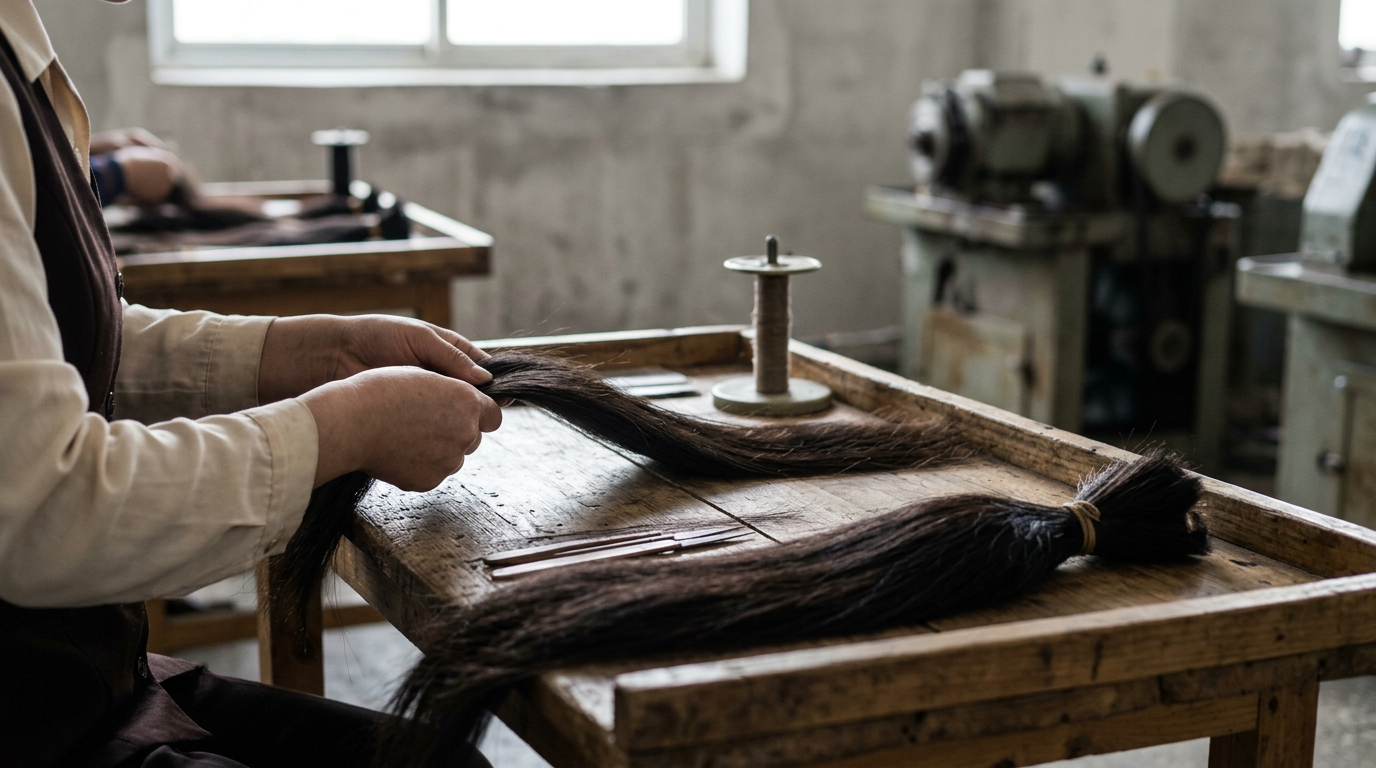
Once there, North Korean workers meticulously hand-tie the lashes and weave the wigs. These finished products are then sent back to China, where they are packaged, branded, and sold to international markets.
The Logistics of a Loophole
The United Nations has imposed strict sanctions on North Korea since 2006, targeting its nuclear programme by banning the export of coal, iron, seafood, and textiles. However, hair products currently do not fall under these specific prohibited categories.
According to reports from Reuters and the Associated Press, this trade surged immediately after the North Korean border reopened following the pandemic. In 2023 alone, North Korea exported 1,680 tonnes of false eyelashes and wigs to China, a massive jump from the 125 tonnes exported during the 2022 lockdown period.
Labour and Production
The production of false eyelashes is particularly suited to the North Korean economic model. It requires no heavy machinery or high-tech infrastructure—only a massive, disciplined, and inexpensive workforce.
Workers use tweezers to sort thousands of individual hairs and tie them into fine silk or plastic bases. This process is so labour-intensive that it is largely avoided by higher-wage economies, leaving a vacuum that Pyongyang has been more than happy to fill.
Real-World Implications
Price Competition: North Korean-made lashes allow retailers to offer high-quality, hand-made products at prices that machine-made alternatives cannot match.
Sanction Resilience: This trade provides the Kim Jong Un regime with a vital source of hard foreign currency, which is essential for importing fuel and food.
Supply Chain Obfuscation: Because the hair enters the global market through Chinese intermediaries, it bypasses the scrutiny usually applied to North Korean goods in the US and Europe.
Common Misconceptions
Misconception: All fake hair is made from human hair. Reality: A significant portion of North Korean exports consists of synthetic fibres or goat hair, though human hair processing remains a major component of their high-end wig production.
Misconception: Sanctions have stopped all North Korean trade. Reality: Sanctions are targeted. While North Korea cannot sell its minerals or seafood to most of the world, it has successfully pivoted to unregulated consumer goods to sustain its economy.
Is it illegal to buy hair products from North Korea?
In the United States, the Countering America’s Adversaries Through Sanctions Act (CAATSA) prohibits the import of goods made with North Korean labour. However, because these items are often labelled as Chinese in origin, enforcement is extremely difficult for customs officials.
Where does the raw hair come from?
North Korea does not produce enough raw hair domestically to sustain this industry. Most of the raw material is imported from China and India before being processed and returned for sale.
Why don't other countries compete in this market?
The profit margins on hand-tied lashes are razor-thin. Unless a country has extremely low labour costs and a highly coordinated manufacturing base, it cannot compete with the sheer volume and low price points provided by the North Korean workforce.
Key Takeaways
- Hair exports: Account for nearly half of North Korea’s total export revenue.
- The China Loophole: Most products are sent to China for rebranding as Chinese goods.
- Sanction Avoidance: Hair products are not currently banned under UN sanctions.
- Labour Intensity: The industry relies on manual, low-tech work that is hard to replicate in higher-wage nations.
- Economic Survival: This trade represents a critical lifeline for the North Korean state's access to foreign cash.
Frequently Asked Questions
Sources & References
- 1Human Rights WatchHuman Rights Watch investigates North Korean labor practices, including the use of state-run factories and prison camp labor for production.hrw.org
- 2ReutersNorth Korea's exports of processed hair products, including false eyelashes and wigs, reached $167 million in 2023, making it the country's largest export.reuters.com
- 3United Nations Security CouncilThe United Nations Security Council has imposed sanctions on North Korea since 2006, targeting its nuclear program by banning exports of items like coal, iron, and textiles.un.org