
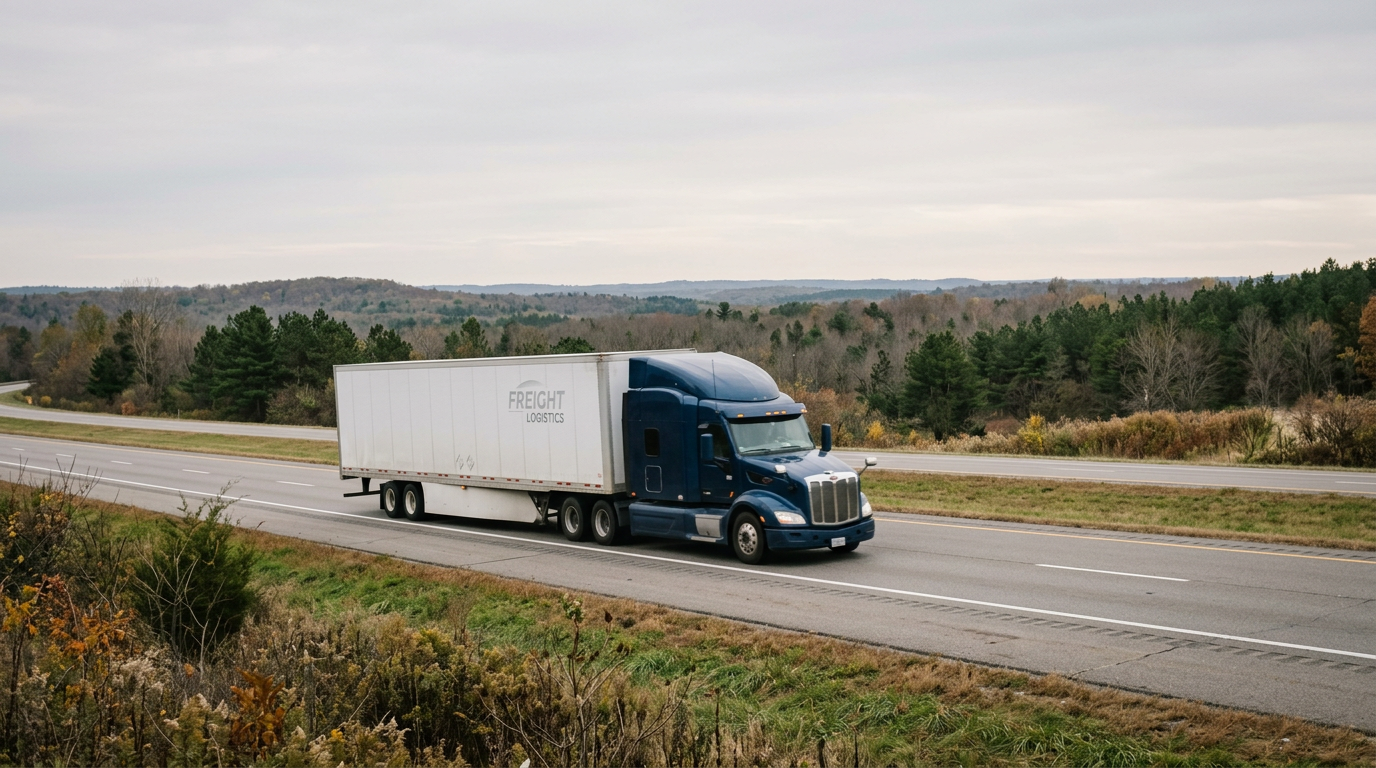
Quick Answer
Tractor-trailers typically manage only about six miles per gallon. This is because they're hauling immense loads and battling air resistance, demanding significant engine power. Consequently, fuel expenses are a major overhead for haulage firms, meaning any gains in efficiency could bring substantial savings nationwide.
In a hurry? TL;DR
- 1Semi-trucks average about 6.5 MPG due to the physics of moving heavy loads, a stark contrast to cars achieving 40+ MPG.
- 2Aerodynamic drag accounts for over 50% of a semi-truck's fuel consumption at highway speeds, highlighting its impact on efficiency.
- 3Fuel costs significantly impact trucking operations, often exceeding £50,000 annually per vehicle, making MPG a critical metric.
- 4Modern advancements like high-pressure fuel injection and automated transmissions have slowly improved MPG from historical lows.
- 5The weight of the cargo significantly impacts fuel economy, but even empty trucks consume substantial fuel due to their own weight.
- 6Improving truck MPG even by 1 MPG could yield substantial global carbon and cost savings for the logistics industry.
Why It Matters
It's surprising that improving a semi-truck's fuel efficiency by just 1 mile per gallon could significantly impact the global economy.
A standard semi-truck in the United Kingdom or United States averages roughly 6.5 miles per gallon (MPG). While a modern passenger car might easily achieve 40 MPG, the sheer physics of moving 36 tonnes of freight keeps heavy goods vehicles (HGVs) in single-digit territory.
Key Efficiency Metrics
- Average fuel consumption: 6.5 MPG (approx. 43 litres per 100km)
- Weight capacity: Up to 44 tonnes (UK limit)
- Fuel tank size: 450 to 1,100 litres
- Annual fuel cost: Commonly exceeding £50,000 per vehicle
- Aerodynamic drag: Responsible for up to 50 percent of fuel use at motorway speeds
Why It Matters
This figure represents the precarious balance of global logistics: if every semi-truck improved by just 1 MPG, the carbon and cost savings would fundamentally alter the global economy.
The Physics of Failure (and Success)
The average semi-truck is a victim of Newton’s second law. Moving a massive object from a standstill requires immense force, but even at cruising speeds, the engine is constantly fighting two invisible enemies: rolling resistance and air displacement.
Unlike a sleek sports car, a semi-truck is essentially a brick being pushed through a wall of air. According to research from the Lawrence Livermore National Laboratory, over half of the energy generated by a truck's engine is lost simply overcoming aerodynamic drag once the vehicle exceeds 50 mph.
The 6 MPG Standard
For decades, the 6 MPG figure was a stagnant ceiling. In the 1970s, many trucks struggled to hit 4 MPG. The incremental climb to 6.5 or 7 MPG has been won through obsessive engineering rather than a single breakthrough.
Modern improvements rely on high-pressure fuel injection and automated manual transmissions (AMTs). These systems take the guesswork away from the driver, ensuring the gear ratio is always perfectly matched to the load and incline.
The Weight Divide
A critical distinction in these numbers is the difference between gross weight and fuel economy. A truck carrying 20 tonnes of steel will have a drastically different MPG than one carrying 2 or 3 tonnes of crisp packets.
However, even when empty, a tractor-trailer unit is incredibly heavy. The tractor unit alone weighs around 8 to 9 tonnes. This means the engine is working harder than a passenger car just to move its own skeleton before a single kilogram of cargo is added.
Improving the Odds
To combat the 6 MPG plateau, logistics companies have turned to external modifications. You may have noticed these on the motorway:
- Side Skirts: Panels between the front and rear wheels that prevent air from swirling under the trailer.
- Boat Tails: Extension panels on the rear door that reduce the vacuum-like drag behind the truck.
- Gap Reducers: Plates that close the space between the cab and the trailer to keep airflow smooth.
“Efficiency in trucking isn't about speed; it's about the relentless elimination of turbulence.”
Practical Implications
- Consumer Pricing: When diesel prices rise, the low MPG of delivery trucks means the cost of milk and bread rises almost instantly to offset the narrow margins.
- Route Planning: Logistics firms use AI to map routes that avoid steep inclines, as a single hill can drop a truck's instantaneous MPG to 1.5.
- Electric Future: The 6 MPG benchmark is the primary reason for the push toward hydrogen and electric trucks, though battery weight remains a massive hurdle for long-haul freight.
Interesting Connections
- Platoon Technology: Some companies are testing convoys where trucks drive inches apart, using sensors to act as a single unit, which saves fuel for the following trucks by reducing drag—similar to slipstreaming in cycling.
- Idle Time: A truck burns about one gallon of fuel per hour just idling. In cold climates, drivers often leave engines running overnight for heat, which can drop their total trip average significantly.
- The Engine Life: Despite their low MPG, these engines are built to last over a million miles, far outliving the life expectancy of high-MPG passenger cars.
Why don't semi-trucks use petrol engines?
Petrol engines lack the torque required to move 40-tonne loads from a standstill. Diesel engines provide the massive low-end power needed for heavy hauling and are generally 30 percent more efficient than petrol equivalents for heavy-duty work.
Does driving slower actually help a truck save fuel?
Yes. Drag increases with the square of speed. A truck traveling at 55 mph uses significantly less fuel than one at 70 mph. Many fleet owners "govern" their trucks to keep top speeds low for this reason.
Could electric trucks solve the MPG problem?
While they eliminate fuel, current battery technology is so heavy that an electric truck would have to sacrifice several tonnes of cargo capacity just to carry the batteries needed for a long-haul trip.
Key Takeaways
- Average Efficiency: Most heavy trucks operate between 6 and 7 MPG.
- Drag is the Enemy: Aerodynamics account for half of fuel consumption at high speeds.
- Economic Impact: Fuel is the second-largest expense for trucking companies after labour.
- Incremental Gains: Moving from 6 to 7 MPG represents a massive 16 percent reduction in fuel costs.
The humble 6 MPG figure is a reminder that while digital technology moves at the speed of light, the physical world still operates under the heavy, expensive thumb of friction and mass.
Frequently Asked Questions
Sources & References
- 1Transportation Research BoardThis report discusses how fuel efficiency improvements in heavy-duty vehicles have been achieved through various engineering advancements.nap.nationalacademies.org
- 2Commercial Carrier Journal (CCJ)This article discusses the importance of fuel economy for trucking fleets and methods for improving it, such as automated manual transmissions.ccjdigital.com