
Quick Answer
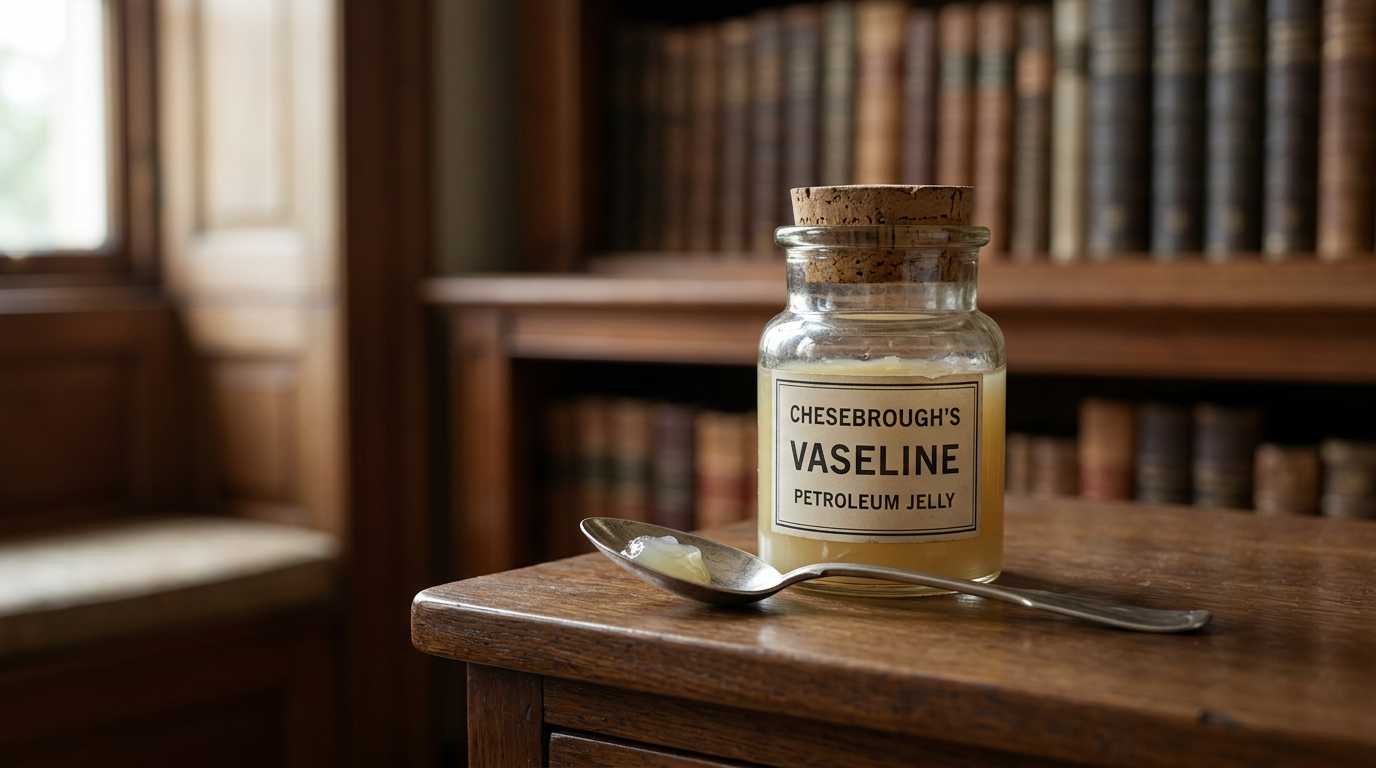
Robert Chesebrough, the inventor of Vaseline, reportedly ate a spoonful of his creation daily and lived to a ripe old age of 96. This curious habit, while certainly not advisable now, served as a remarkable testament to his product's perceived efficacy and became an ingenious, albeit unusual, form of advertising for Vaseline.
In a hurry? TL;DR
- 1Robert Chesebrough, inventor of Vaseline, claimed to eat a spoonful daily and lived to 96.
- 2He developed Vaseline from oil rig residue (rod wax) after observing its healing properties.
- 3Chesebrough promoted Vaseline by demonstrating its healing effects on his own burns and cuts.
- 4He believed Vaseline had internal healing properties and treated illnesses with it, even typhoid fever.
- 5Modern science suggests his habit was likely harmless due to Vaseline's inert, non-absorbable nature.
- 6Unlike other 19th-century remedies, Chesebrough's refined Vaseline was non-toxic and pure.
Why It Matters
It's surprising that the inventor of Vaseline lived to 96 after reportedly eating a spoonful of it daily, suggesting an unexpected benefit from his bizarre habit.
Robert Chesebrough, the chemist who distilled petroleum jelly into Vaseline, claimed to eat a spoonful of his own invention every single morning. He maintained this regimen for decades and lived to the age of 96, an extraordinary feat for a man born in 1837.
Key Facts: The Life and Diet of Robert Chesebrough
- Subject: Robert Augustus Chesebrough
- Invention Date: 1872 (Patented as Vaseline)
- Daily Habit: One spoonful of petroleum jelly consumed orally
- Age at Death: 96 years old
- Primary Claim: Petroleum jelly possesses internal healing properties
Why It Matters
This is the ultimate example of a founder high on his own supply. In an era of dangerous patent medicines, Chesebrough’s survival until 1933 suggests that while his snack was bizarre, his obsession with purity actually worked.
The Rod Wax Revelation
In 1859, a 22-year-old Chesebrough travelled to Titusville, Pennsylvania, following the first American oil strike. He observed oilmen complaining about a paraffin-like residue called rod wax that clogged their drilling rigs.
While the workers hated the muck, they also noticed it sped up the healing of cuts and burns on their hands. Chesebrough, a chemist by trade, saw an opportunity. He spent a decade refining the black sludge into a clear, odourless gel.
To prove its safety, he famously turned himself into a human pincushion. He would burn his skin with acid or open flames in front of audiences, then apply his jelly to demonstrate the rapid recovery.
The Daily Spoonful
Chesebrough’s belief in the product was not merely skin deep. He was convinced that petroleum jelly could treat pleurisy and other internal ailments.
He reportedly consumed one spoonful of Vaseline every morning until his death. While modern medicine would never recommend ingesting petroleum products, Chesebrough’s longevity became a walking advertisement for the brand.
According to historical records from the Unilever archives, which now owns the brand, Chesebrough’s faith in the substance was so absolute that he reportedly had himself covered from head to toe in Vaseline when he fell ill with typhoid fever in his fifties. He credited the treatment with his survival.
Supporting Evidence and Safety
Is there a scientific reason he lived so long? Not exactly. Petroleum jelly is chemically inert, meaning it does not react with other substances in the body.
Research published in the Journal of Cosmetic Science notes that the refining process Chesebrough pioneered—using charcoal filtration—resulted in a purity level that far exceeded other petroleum products of the time. While it offered no nutritional value, it carried no pathogens or poisons.
Real World Implications
Chesebrough’s legacy is the transition from folk medicine to standardised manufacturing. Before Vaseline, wound care was a gamble involving grease, lard, or unrefined oils that often caused infection.
Today, petroleum jelly remains a staple in every hospital and household. While we no longer eat it for breakfast, its role as an occlusive barrier—locking in moisture to allow the body to heal itself—is still the gold standard in dermatology.
Common Misconceptions
- Nutritional value: Many assume there must be a vitamin or mineral involved. There isn't. It is an industrial byproduct.
- Toxicity: Modern fears of petroleum products often conflate raw crude oil with the highly refined medical grade used in brands like Vaseline.
- Medicinal active ingredients: Vaseline does not actually medicate or heal a wound. It simply creates a seal that prevents bacteria from entering and moisture from escaping.
Related Reading
- The History of 19th Century Patent Medicines
- Why We Stopped Using Mercury in Medicine
- The Accidental Inventions of the Industrial Revolution
Key Takeaways
- Robert Chesebrough viewed his invention as a panacea, not just a topical cream.
- He consumed a spoonful daily and lived to age 96, dying in 1933.
- The product is chemically inert, meaning his habit was likely harmless but medically useless.
- His success was built on a obsession with purity that was revolutionary for the 1870s.
- Vaseline remains virtually unchanged in its composition over 150 years later.
If you want to be the most interesting person in the room, remember this: the man who gave the world its most famous skin balm didn't just rub it on his skin; he treated it like a morning vitamin.
Frequently Asked Questions
Sources & References
- 1Journal of Cosmetic ScienceThis abstract from the Journal of Cosmetic Science discusses the refinement process of petroleum jelly, indicating its purity and inert nature.library.scconline.org
- 2Unilever ArchivesThis article from Unilever, the current owner of the Vaseline brand, states that Robert Chesebrough reportedly ate a spoonful of Vaseline every day and attributed his recovery from typhoid fever to being covered in it.unilever.com
 History.comThis source corroborates that Robert Chesebrough consumed a spoonful of Vaseline daily and lived to the age of 96, and details his discovery of rod wax and the refinement process.history.com