
Quick Answer
Until 2011, Russia didn't legally classify beer as alcohol, but as a foodstuff if it was under 10% ABV. This is interesting because it meant beer could be sold much more freely, like a fizzy drink, rather than being subject to the same strict regulations as spirits. It highlights a peculiar period where the government seemingly didn't count beer among its alcoholic beverage concerns.
In a hurry? TL;DR
- 1Until 2011, Russian law classified beer (<10% ABV) as a foodstuff, not alcohol, enabling wider sales.
- 2This 10% ABV threshold allowed beer to be sold in kiosks and petrol stations without strict spirit regulations.
- 3The government aimed to shift consumption from vodka to beer, but beer consumption dramatically increased instead.
- 4In 2011, Russia reclassified beer as alcohol, restricting sales locations and advertising, aligning it with spirits.
- 5The policy change addressed public health concerns arising from unchecked beer consumption among youth.
Why It Matters
It's surprising that for years Russia sold beer legally as a foodstuff, making it as accessible as soft drinks.
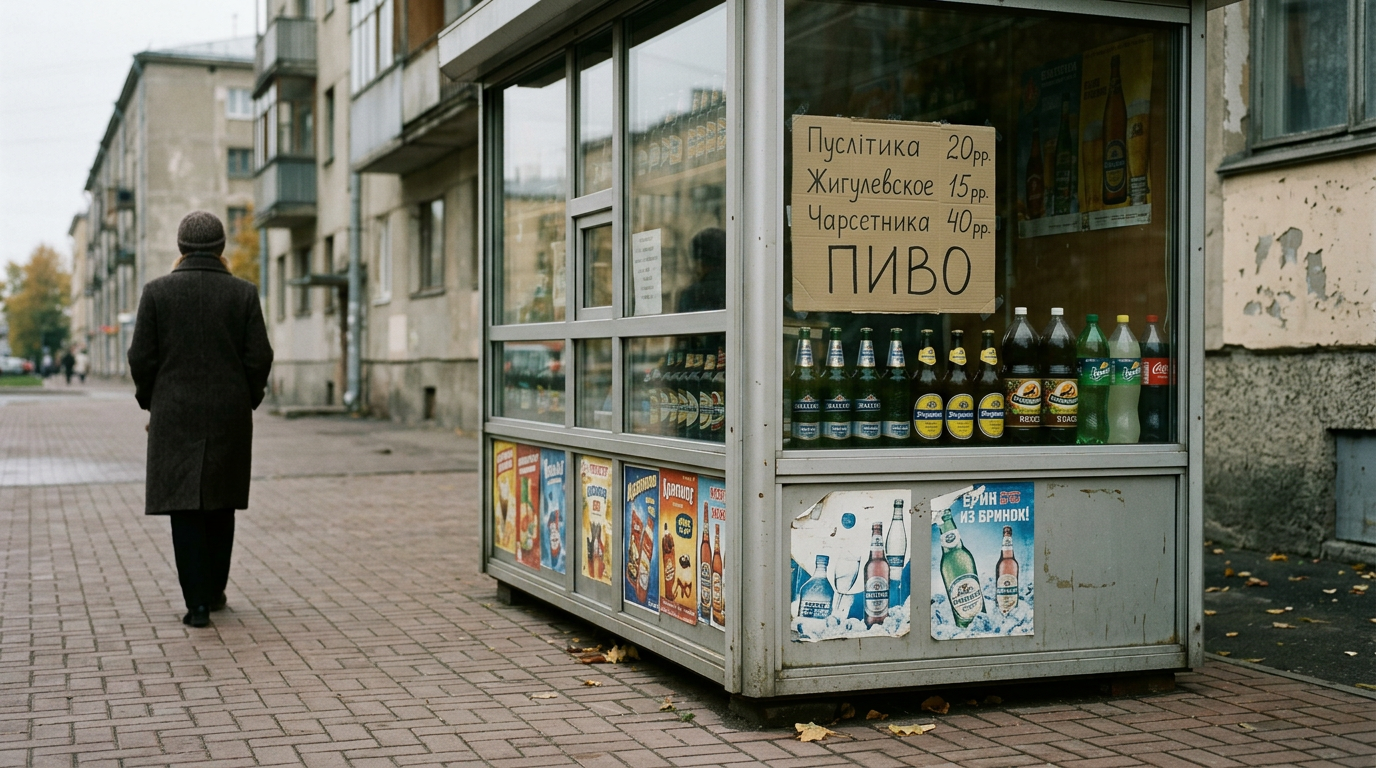
Before 2011, Russian law classified any beverage with an alcohol content below 10 percent as a foodstuff rather than an intoxicating liquor. This meant beer was legally equivalent to fruit juice or soda, allowing it to be sold in kiosks, street stalls, and petrol stations without the restrictions applied to vodka.
Key Facts: The Russian Beer Paradox
- Regulation Change: Signed into law by President Dmitry Medvedev in July 2011
- Implementation Date: Full enforcement began on 1 January 2013
- Old Alcohol Threshold: 10 percent ABV (Alcohol by Volume)
- Market Impact: Sales from unlicensed street kiosks previously accounted for 30 percent of the market
Why It Matters
The delayed classification of beer highlights a unique cultural schism where fermented grains were viewed as a harmless alternative to hard spirits. For decades, the Russian state prioritised fighting vodka addiction by essentially ignoring the rise of beer consumption, creating a regulatory blind spot that allowed the beer market to triple in size between 1995 and 2005.
The Beverage that Wasn't Booze
Until a little over a decade ago, you could buy a cold pilsner in a Moscow metro station as easily as a bottle of water. This was not a lapse in enforcement, but a deliberate legislative choice. Under Federal Law No. 171-FZ, beverages under the 10 percent threshold were regulated as food products.
Legislators originally maintained this distinction to encourage citizens to switch from heavy spirits to lighter drinks. The theory was that beer would act as a gateway away from the devastating health impacts of cheap vodka. However, the plan backfired. According to a report by the World Health Organisation, while spirits consumption remained high, beer consumption surged as it became the default social lubricant for the youth, sold without age verification at thousands of 24-hour street stalls.
The 2011 Reckoning
The shift began when the Russian government realised that the light alcohol strategy was failing to address a burgeoning public health crisis. Dmitry Medvedev, who was president at the time, spearheaded a campaign to treat all ethanol-containing products with the same level of scrutiny.
The 2011 law did more than just change a definition. It stripped beer of its privileged status, banning its sale at street kiosks, bus stops, and petrol stations. It also introduced a ban on television advertising and prohibited sales between 11 pm and 8 am, mirroring the restrictions long held by the vodka industry.
Real-World Implications
- Urban Landscape: The thousands of metal kiosks that once cluttered Russian pavements vanished or pivoted to selling cigarettes and snacks, as beer had been their primary profit driver.
- Youth Consumption: Studies published in the journal Alcohol and Alcoholism noted a significant drop in underage drinking accessibility following the 2013 full implementation.
- Industry Consolidation: The law favoured large supermarkets over independent vendors, fundamentally changing how Russians shopped for groceries.
Could children buy beer before 2011?
While technically illegal to sell alcohol to minors, the classification of beer as food meant that kiosks were rarely checked by inspectors. Enforcement was much more relaxed compared to that of spirits.
Was Russian beer stronger than Western beer?
No, the strength was comparable. However, some traditional Russian beverages like Kvass (0.5 to 1.5 percent ABV) also fell under the food category, and they remain classified as soft drinks today.
Did the law work?
According to the World Health Organisation, total alcohol consumption in Russia fell by 43 percent between 2003 and 2016. The 2011 reclassification is cited as a major turning point in that trend.
Key Takeaways
- Legal Status: Beer was legally a foodstuff in Russia until the law was amended in 2011.
- Market Accessibility: Before the change, beer was sold everywhere from kiosks to street corners with almost zero oversight.
- Public Health: The reclassification was part of a larger state effort to reduce alcohol-related deaths, which were among the highest in the world.
- Cultural Shift: The law marked the end of an era where fermented beverages were viewed as fundamentally different from distilled spirits.
While it seems absurd to a modern onlooker, the Russian beer-is-food era illustrates how legal definitions can shape national habits. When the state decided beer was no longer a snack, the country’s entire relationship with the bottle began to change.