
Quick Answer
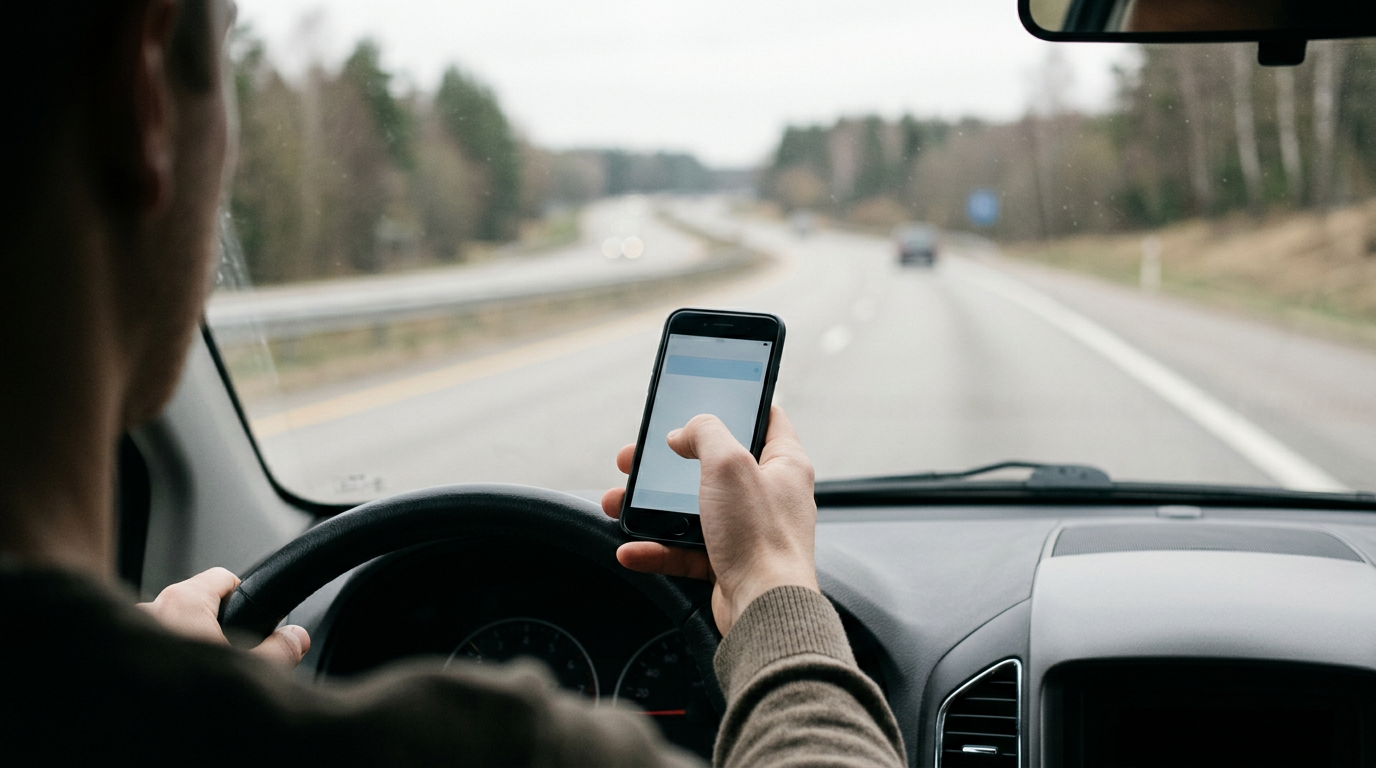
Using your phone while driving makes you four times more likely to crash. This is startling because it highlights that the real danger isn't just holding the phone, but the mental distraction of the conversation itself, affecting even hands-free calls.
In a hurry? TL;DR
- 1Using a phone while driving, even hands-free, quadruples your crash risk, comparable to drunk driving.
- 2Phone use causes an 18% slower braking response and significant reduction in driving-related brain activity.
- 3It takes up to 27 seconds to fully regain focus after sending a voice text, leaving you impaired.
- 4Inattention blindness means drivers on phones miss crucial visual cues like pedestrians and traffic lights.
- 5Hands-free systems aren't safer; voice-activated tech can be more distracting due to error correction needs.
- 6The danger is cognitive distraction; your brain can't effectively process both driving and phone communication.
Why It Matters
It's surprising that even hands-free phone use quadruples your risk of a car crash, the same level as being drunk, because our brains can't fully focus on driving and talking at the same time.
Using a mobile phone while driving increases your risk of a crash by four times, a statistic that holds true whether you are holding the device or using a hands-free system. This risk level is equivalent to driving at the legal blood-alcohol limit in many jurisdictions.
The Core Statistics
- Risk Increase: 400 percent (4x)
- Reaction Delay: 18 percent slower braking response
- Cognitive Load: Up to 37 percent reduction in brain activity associated with driving
- Recovery Time: 27 seconds to fully regain focus after sending a voice text
Why It Matters: This fact dismantles the myth of the safe multitasker, proving that our brains prioritise linguistic processing over spatial awareness, regardless of where our hands are.
The Science of Inattention Blindness
The four-fold risk increase was famously highlighted in a study by the University of Utah, led by David Strayer. His team found that the impairment caused by mobile phone use is often indistinguishable from the effects of being legally intoxicated. This happens because of a phenomenon known as inattention blindness.
When you engage in a conversation or scroll through a feed, your eyes may be looking at the road, but your brain is not seeing it. Researchers found that drivers on phones miss up to half of the visual cues in their environment, including traffic lights and pedestrians.
Unlike talking to a passenger, who can see the road and will naturally pause the conversation during a difficult merge or heavy rain, the person on the other end of a phone call provides no such safety buffer. They continue to demand cognitive resources regardless of the driving conditions.
The Hands-Free Fallacy
Many drivers believe that Bluetooth or voice-to-text systems mitigate the danger. However, the 4x risk factor persists even when the phone is tucked away.
The primary issue is the switching cost. Every time your attention moves from the road to a digital interface, your brain incurs a penalty. It takes several seconds to re-engage with the complex physical task of operating a vehicle at speed, meaning that even after you put the phone down, you are still driving impaired for nearly half a minute.
Real-World Implications
This research has fundamentally changed how insurance companies assess risk and how lawmakers draft road safety acts. In the UK and many other regions, the shift from banning hand-held phones to tighter restrictions on all interactive use reflects this scientific consensus.
- High-Speed Impact: At 70mph, a three-second glance at a screen means you have travelled 100 yards while essentially blind.
- Insurance Premiums: Drivers with phone-related convictions see some of the highest spikes in annual costs, often exceeding those for speeding.
- Fleet Management: Many global corporations now ban employees from using hands-free devices while on company time to reduce liability.
Is texting worse than talking?
Yes. While talking increases risk by four times, texting can increase the risk of a crash by up to 23 times because it combines manual, visual, and cognitive distraction simultaneously.
Does the risk apply to a quick glance at GPS?
Any glance away from the road for more than two seconds doubles your risk of a collision. Mounted GPS devices are safer than hand-held ones, but pre-programming your route is essential.
How does phone use compare to drink-driving?
Studies show that the reaction times of phone users are often slower than those of drivers with a 0.08 percent blood alcohol level, making the two behaviours comparable in terms of immediate danger.
Key Takeaways
- Cognitive distraction: The brain’s processing power for driving drops by over a third during a call.
- Hands-free is not risk-free: The mental effort of a conversation is the primary source of danger.
- The 27-second hangover: Focus does not return the moment the phone is put down; there is a significant lag in situational awareness.
- Peripheral loss: Phone users effectively develop tunnel vision, ignoring the sides of the road where hazards often emerge.
The evidence suggests that the most interesting thing on your screen is never as important as the split-second decision-making required to stay on the road.