
Quick Answer
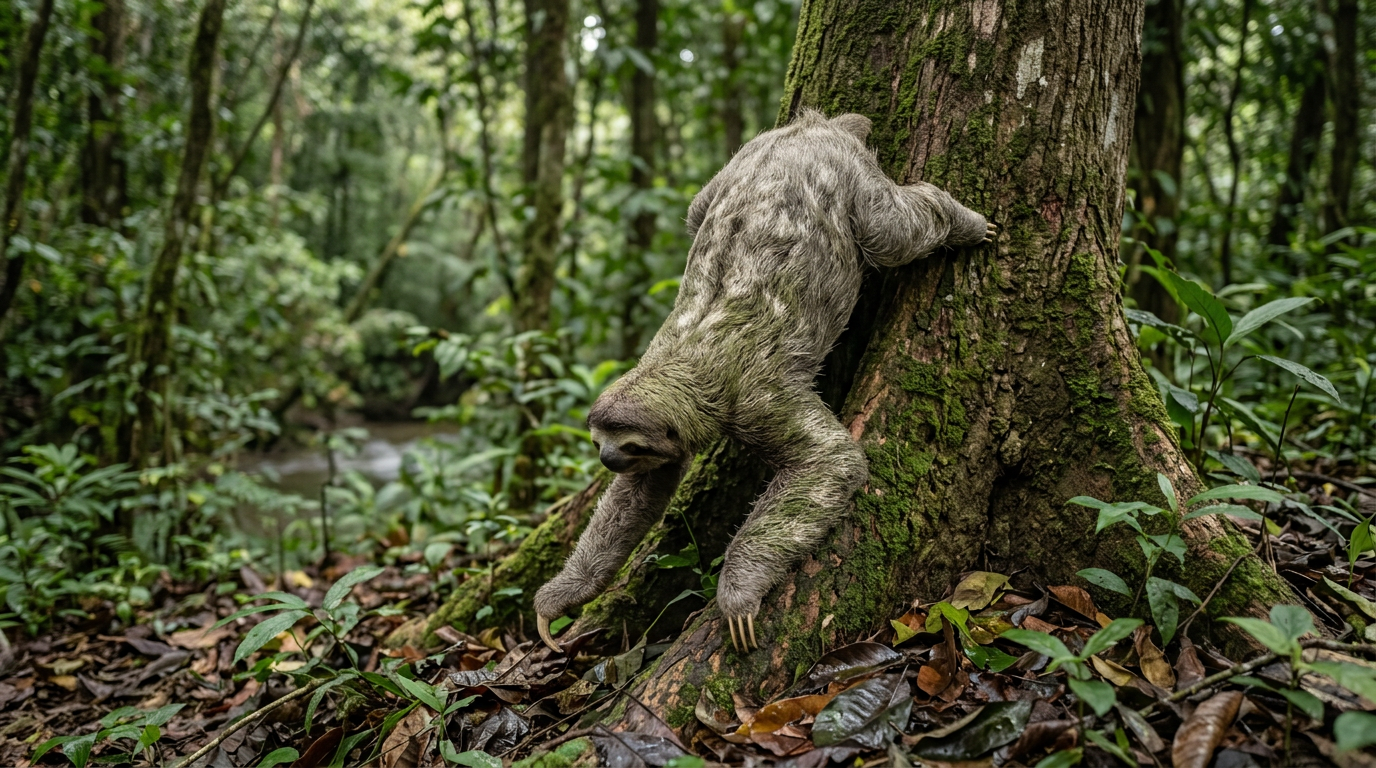
Sloths risk their lives for a toilet break, bravely descending from trees to poop on the ground where predators can easily find them. This bizarre habit is believed to be connected to a unique relationship with moths living in their fur, which might help them gain essential nutrients from algae.
In a hurry? TL;DR
- 1Sloths descend trees weekly to poop, risking death as predators find them vulnerable on the ground.
- 2This risky bathroom break accounts for over half of all adult sloth fatalities.
- 3Sloths have extremely slow metabolisms, taking up to 30 days to digest a single leaf.
- 4The poop expeditions facilitate a symbiotic relationship with moths and algae in their fur.
- 5Moths lay eggs in sloth dung, and the resulting moths help algae grow in the sloth's fur.
- 6Sloths consume the algae for essential nutrients, a vital supplement to their low-energy diet.
Why It Matters
It's surprising that sloths risk their lives descending from trees just to poop, a behaviour linked to a complex symbiotic relationship with moths and algae in their fur.
Sloths descend from the safety of the canopy once a week for a high-stakes bathroom break, exposing themselves to predators on the forest floor. This bizarre ritual accounts for over half of all adult sloth deaths.
The Risky Business of Sloth Hygiene
While most arboreal creatures simply let gravity do the work, the three-toed sloth spends significant energy climbing down to the ground to defecate. Once there, they are clumsy, slow, and vulnerable to jaguars and ocelots.
- Mortality: Roughly 50 percent of adult sloth predations occur while they are on or near the ground.
- Frequency: They only make this trek about once every seven to ten days.
- Weight Loss: A sloth can lose up to one-third of its body weight in a single bathroom session.
- Digestion: They have the slowest metabolic rate of any non-hibernating mammal.
Why the Descent Matters
This behaviour is an evolutionary enigma. In the canopy, sloths are camouflaged and out of reach for most ground-based hunters. By leaving the trees, they abandon their primary defence mechanism for a task that could easily be accomplished from a branch.
The Moth Connection: A Sophisticated Eco-System
Researchers at the University of Wisconsin-Madison, led by Jonathan Pauli, have proposed a fascinating reason for this suicidal laundry run. It involves a three-way symbiotic relationship between the sloth, a specific species of moth, and the algae growing in the sloth's fur.
When a sloth descends to poop, female sloth moths (Cryptoses choloepi) crawl off the sloth to lay their eggs in the fresh dung. The larvae feed on the waste and, once they mature into moths, fly back up into the canopy to find a resident sloth host.
The moths provide a critical service: they increase the nitrogen levels in the sloth’s fur. This nitrogen fuels the growth of Trichophilus algae. The sloth then consumes this nutrient-dense algae while grooming, supplementing its poor diet of rubbery, low-energy leaves.
Energy Constraints and Evolution
Unlike other mammals, sloths cannot afford to waste energy. Their diet provides so little caloric value that they must remain sedentary to survive. This makes the energy expenditure of climbing down a forty-metre tree even more perplexing.
If the trip were merely about hygiene, gravity would suffice. The fact that they endure the climb and the risk of death suggests the nutritional payoff from the moths and algae is essential to leur survival.
Real World Implications
- Nutrient Cycling: The sloth’s routine helps distribute nutrients from the canopy to the forest floor.
- Conservation: Understanding these specific needs helps biologists protect the corridors sloths use.
- Biodiversity: A single sloth can be its own moving ecosystem, hosting thousands of individual organisms.
Comparative Context
Unlike the two-toed sloth, which is slightly more flexible in its habits and occasionally eases its standards, the three-toed sloth is more strictly bound to this ritual. Whereas most monkeys or birds contribute to a constant rain of organic matter from above, the sloth’s surgical delivery of nutrients to the base of the tree is a specialized niche.
Why don't they just poop from the branches?
While some two-toed sloths do this, three-toed sloths likely descend to maintain their relationship with the sloth moth, which requires the dung for its life cycle.
How long does the process take?
The entire excursion, including the slow climb down, the act itself, and the climb back up, can take several hours, leaving them exposed for an entire morning or afternoon.
Do they ever get caught?
Yes. Harpy eagles might grab them from the canopy, but the forest floor is where they meet terrestrial predators they have no way of outrunning.
Key Takeaways
- Fatal Ritual: Half of all recorded sloth deaths happen during or around their weekly bathroom break.
- Symbiosis: The trip supports moths that help grow nutritious algae in the sloth's fur.
- Internal Economy: A sloth may lose 30 percent of its mass in one sitting.
- Unique Niche: This behaviour turns the sloth into a mobile, self-sustaining garden.
The next time you feel like your morning routine is a chore, remember the three-toed sloth. It isn't just dealing with a slow start to the day; it is putting its life on the line for the sake of a very specific, very risky ecosystem.