
Quick Answer
The famously green Chartreuse liqueur is crafted from a secret recipe involving 130 plants and herbs, a formula known only to a select pair of Carthusian monks at any time. It's intriguing because in our era of transparency, this ancient, closely guarded monastic secret producing a globally recognised drink is truly remarkable.
In a hurry? TL;DR
- 1Chartreuse liqueur's 130-plant recipe, dating to 1605, is a guarded secret known to only two Carthusian monks.
- 2The monks manually prepare herbal mixtures and supervise distillation and aging in oak casks.
- 3Its complex flavor profile, achieved through numerous botanicals and high alcohol, resists reverse-engineering.
- 4Chartreuse defies modern trends by maintaining a low-scale production and relying on monastic tradition.
- 5The liqueur, originating as a medicinal elixir, was adapted for enjoyment in the 18th century.
- 6Chartreuse improves with age in the bottle, a rare quality among spirits.
Why It Matters
It's surprising that a globally recognised liqueur's 400-year-old recipe, using 130 plants, is still a closely guarded secret known only to two monks at a time.
Chartreuse is more than just a cocktail ingredient or a shade of green; it is a 400 year old secret guarded by a silent order of monks. The liqueur is composed of 130 different plants and flowers, but the precise recipe and distillation process are known to only two Carthusian monks at any given time.
Quick Answer
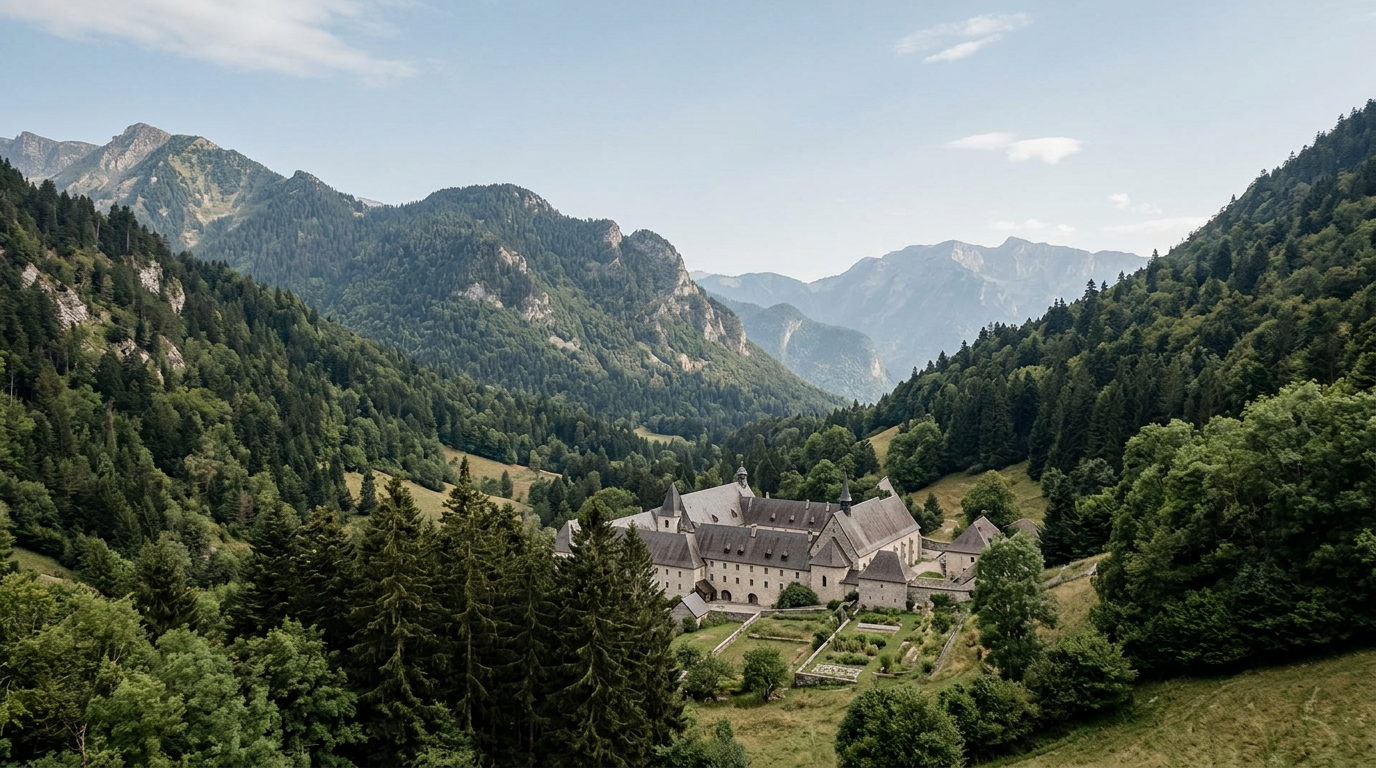
Chartreuse is a complex herbal liqueur produced by Carthusian monks using a secret 1605 manuscript. Only two monks at the Grande Chartreuse monastery know the full recipe of 130 botanicals and the specific aging process required to create it.
Key Facts and Numbers
- Year of Source Manuscript: 1605
- Number of Botanicals: 130
- Total Secret Keepers: 2
- Alcohol Content: 55 percent (Green), 40 percent (Yellow)
- Monastery Location: Saint Pierre de Chartreuse, France
Why It Matters
In an era of industrial food science and corporate transparency, Chartreuse remains a defiance of modern logic. It is a commercially successful global brand that refuses to scale up, refuses to market itself traditionally, and relies entirely on the oral tradition of a secluded religious order.
The Long Game of the Carthusians
The story begins in 1605 when Francois Hannibal d’Estrées, a marshal of King Henri IV, presented the Carthusian monks at Vauvert with a manuscript titled An Elixir for Long Life. The recipe was so complex that it sat largely unused for over a century until it was sent to the Mother House, the Grande Chartreuse, in the Alps near Grenoble.
By 1737, Brother Jérôme Maubec, the monastery apothecary, finally unravelled the formula. What he created was a potent medicinal tonic. By 1764, the monks adapted the recipe to create a milder, more palatable beverage strictly for enjoyment: the Green Chartreuse we recognise today.
Unlike modern spirits brands that use lab-synthesised flavours, the monks hand-prepare the herbal mixtures in the monastery’s herb room. The bags of dried plants are then delivered to the distillery in Voiron, where the two designated monks supervise the distillation and the years of ageing in massive oak casks.
The Science of Secrecy
The complexity of Chartreuse makes it nearly impossible to reverse-engineer. While gas chromatography can identify some chemical markers of the plants involved, the specific proportions and the interaction between 130 different botanicals create a chemical profile that baffles imitators.
The flavour profile is uniquely volatile. It shifts from sharp, herbaceous notes of peppermint and citrus to deep, earthy tones of pine and cloves. According to researchers at the University of Gastronomic Sciences in Italy, the high alcohol content of the Green variety acts as a preservative for the delicate aromatic compounds, allowing the liqueur to develop tertiary flavours over decades, much like a fine Bordeaux wine.
Real World Implications
The scarcity of Chartreuse has turned it into a cult object for bartenders. It is the backbone of the Last Word, a pre-Prohibition cocktail that enjoyed a massive revival in the 2000s. Because the monks have limited production to protect their monastic lifestyle, bottles have become increasingly difficult to find, leading to a secondary market of vintage Chartreuse that can fetch thousands of pounds at auction.
What is the difference between Green and Yellow Chartreuse?
Green Chartreuse is 55 percent ABV and uses the original 130 plants. Yellow Chartreuse was introduced in 1838; it is 40 percent ABV, sweeter, and uses a different proportion of herbs, including saffron to provide its distinct hue.
Can the recipe be found online?
No. While many people have attempted to guess the 130 ingredients, the exact proportions, maceration times, and the specific order of entry into the still remain a closely guarded secret.
Why are there only two monks who know the secret?
This is a security measure designed to ensure the recipe survives while minimising the risk of a leak. When one of the two monks becomes elderly or ill, he selects a successor from within the order and trains him in the herb room.
Key Takeaways
- Botanical Complexity: The recipe contains 130 different plants, herbs, and flowers.
- Monastic Control: Production is managed by the Carthusian Order, with only two monks knowing the full process.
- Natural Colour: It is one of the only liqueurs in the world with a completely natural green colour derived from chlorophyll.
- Intentional Scarcity: The monks have recently restricted production to focus on their religious duties rather than profit.
- Historical Resilience: The recipe has survived revolutions, exiles, and government seizure for over 400 years.
The next time you see a bottle of the green liquid behind a bar, remember you aren't just looking at a spirit. You are looking at a four-century-old botanical puzzle that only two people on Earth can solve.
Frequently Asked Questions
Sources & References
- 1Behind the Scenes of Chartreuse, the Original Herbal LiqueurThis article details the history of Chartreuse, noting that the recipe originated from a 1605 manuscript given to Carthusian monks and was eventually refined into the Green Chartreuse known today.liquor.com
- 2Chartreuse: a liqueur that continues to mystifyThis article discusses the origins of Chartreuse from a 1605 manuscript for an 'Elixir for Long Life' and its development into the milder liqueur by 1764.foodandwine.com