
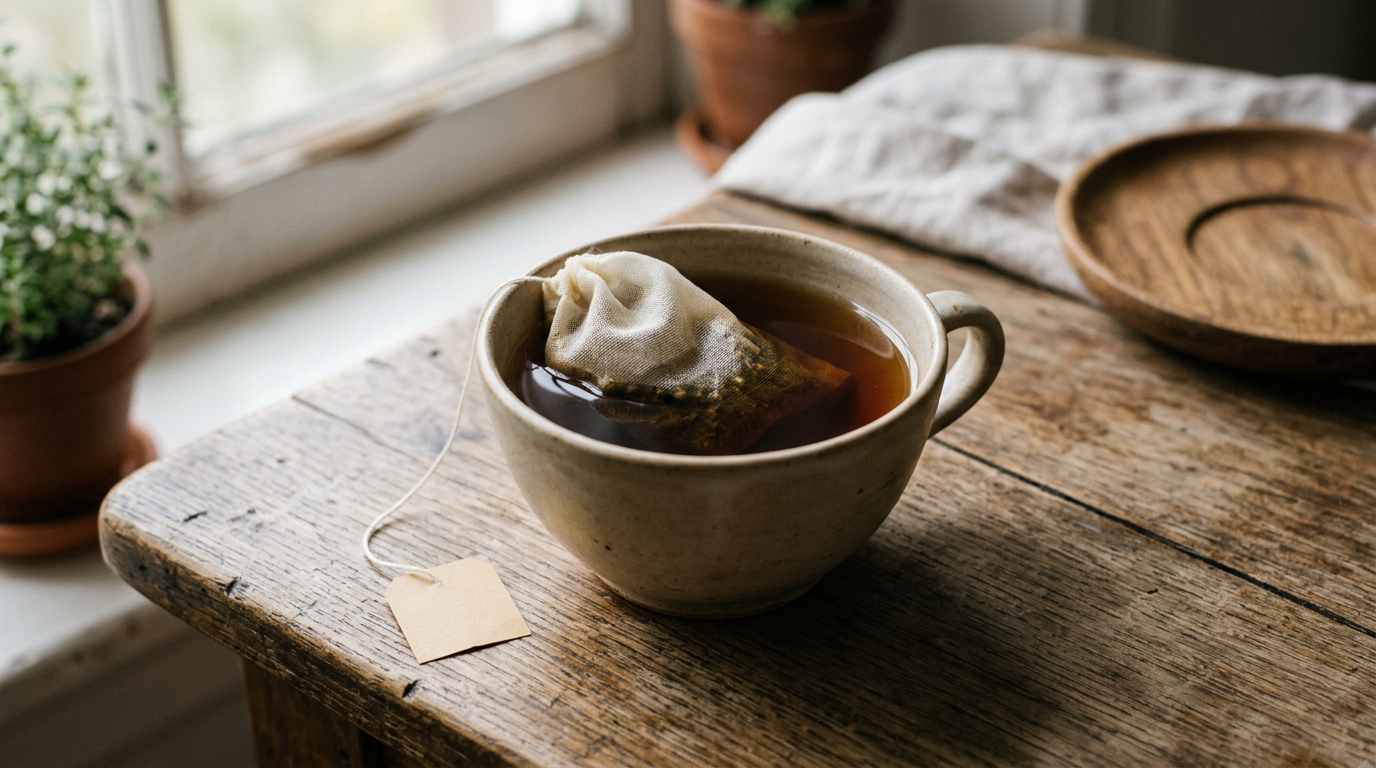
Quick Answer
Tea bags were a happy accident! In 1908, a tea seller sent samples in small silk bags, but customers found it easier to just dunk the whole bag in hot water. This handy, unintentional discovery revolutionised tea making, making it super convenient and helping it become a beloved drink worldwide.
In a hurry? TL;DR
- 1Tea bags originated unintentionally in 1908 when customers dunked silk sample pouches instead of opening them.
- 2Thomas Sullivan's cost-saving packaging experiment led to a cleaner, more efficient brewing method for customers.
- 3This user error transformed tea preparation from a ritual to a convenient, portable beverage.
- 4Heat-sealed paper tea bags, invented in 1930, replaced silk and gauze for better infusion and lower cost.
- 5Tea bags now dominate the market, accounting for over 96% of tea brewed in Britain.
- 6The tea bag's success highlights how observing user behavior can redefine product design and markets.
Why It Matters
The humble tea bag, a seemingly obvious modern convenience, actually owes its existence to a 1908 packaging mishap.
The tea bag was never intended to be a product. In 1908, New York tea merchant Thomas Sullivan sent samples of his blends to customers in small hand-sewn silk pouches, intending for them to be cut open and emptied into a pot; instead, confused clients dropped the entire bag into boiling water.
Quick Answer
Tea bags were a serendipitous mistake born in 1908 when customers misunderstood the packaging of samples sent by merchant Thomas Sullivan. Rather than brewing loose leaves, they found dunking the silk bags directly into cups was cleaner and more efficient.
Key Facts and Timeline
- Year of Invention: 1908
- Original Material: Hand-sewn silk
- Inventor: Thomas Sullivan (Tea Merchant)
- First Commercial Patent: Roberta Lawson and Mary Molaren (1901, though not widely adopted)
- Modern Material: Heat-sealed paper (introduced in 1930)
Why It Matters
This accidental pivot shifted tea from a high-effort ritual involving strainers and clean-up into an instant, portable commodity. It represents one of the most successful examples of user error redefining a global industry. Without Sullivan’s packaging shortcut, the modern fast-casual beverage market might look entirely different.
The Happy Accident of Thomas Sullivan
In the early 1900s, it was standard practice for tea wholesalers to send samples in expensive, bulky tin cans. Seeking a more cost-effective way to distribute his New York blends, Sullivan switched to small silk bags.
He didn't provide instructions because the purpose seemed obvious: the silk was merely a vessel for transport. However, his clients preferred the lack of mess. By keeping the leaves contained during the steep, they eliminated the need for a tea strainer.
When Sullivan realised his customers were specifically asking for their orders to be pre-packaged in silk, he leaned into the trend. He eventually swapped the fine silk for gauze, and later paper, as it allowed for better infusion.
The Evolution of the Mesh
While Sullivan is credited with the popularisation of the tea bag, he wasn't the first to think of it. According to records from the United States Patent Office, Roberta Lawson and Mary Molaren of Milwaukee filed a patent for a tea leaf holder in 1901. Their design used mesh fabric to hold leaves together, but it failed to gain commercial traction.
The real shift occurred in 1930 when William Hermanson, an engineer at the Boston-based Technical Papers Corporation, invented heat-sealed paper tea bags. Unlike silk or gauze, which could sometimes impart a fabric taste to the brew, paper was neutral and cheaper to produce.
Practical Implications
Modern tea bags have evolved far beyond Sullivan's silk pouches. Today’s industry focuses on geometry and material science to improve flavor:
- Pyramid Bags: Designed to give leaves more room to expand, mimicking the movement of loose-leaf brewing.
- Sustainability: Most premium brands are moving away from plastic-based sealants toward compostable polylactic acid (PLA) derived from corn starch.
- Extraction Speed: The fannings used in bags allow for a 30-second steep, whereas high-quality loose leaf often requires three to five minutes.
Interesting Connections
- The String: The iconic string and tag were added later to make the bags easier to remove without burning fingers.
- Tazo and Starbucks: The modern revival of high-end tea bags in the 1990s helped re-introduce luxury blends to the mass market.
- Iced Tea: The 1904 World’s Fair in St. Louis is where iced tea was also reportedly popularised by accident, when a merchant added ice to his hot tea during a heatwave to attract customers.
Key Takeaways
- User Misinterpretation: The tea bag is a prime example of a product shaped by the consumer rather than the manufacturer.
- Cost Efficiency: It began as a way for a merchant to save money on shipping tins.
- Design Evolution: The transition from silk to paper was the bridge that made tea a daily staple for the working class.
- Global Dominance: What started as a New York sample kit now dictates how the vast majority of the world consumes its second-most popular drink after water.
The next time you dunk a bag into a mug, remember you are participating in a century-old misunderstanding that worked out for the better.
Frequently Asked Questions
Sources & References
 WikipediaThis source corroborates the 1908 accidental invention of the tea bag by Thomas Sullivan, who used silk bags to send samples to customers.en.wikipedia.org
 History.comThis article credits Thomas Sullivan with popularizing the tea bag in 1908 after customers mistakenly steeped the silk pouches he used for samples.history.com