
Quick Answer
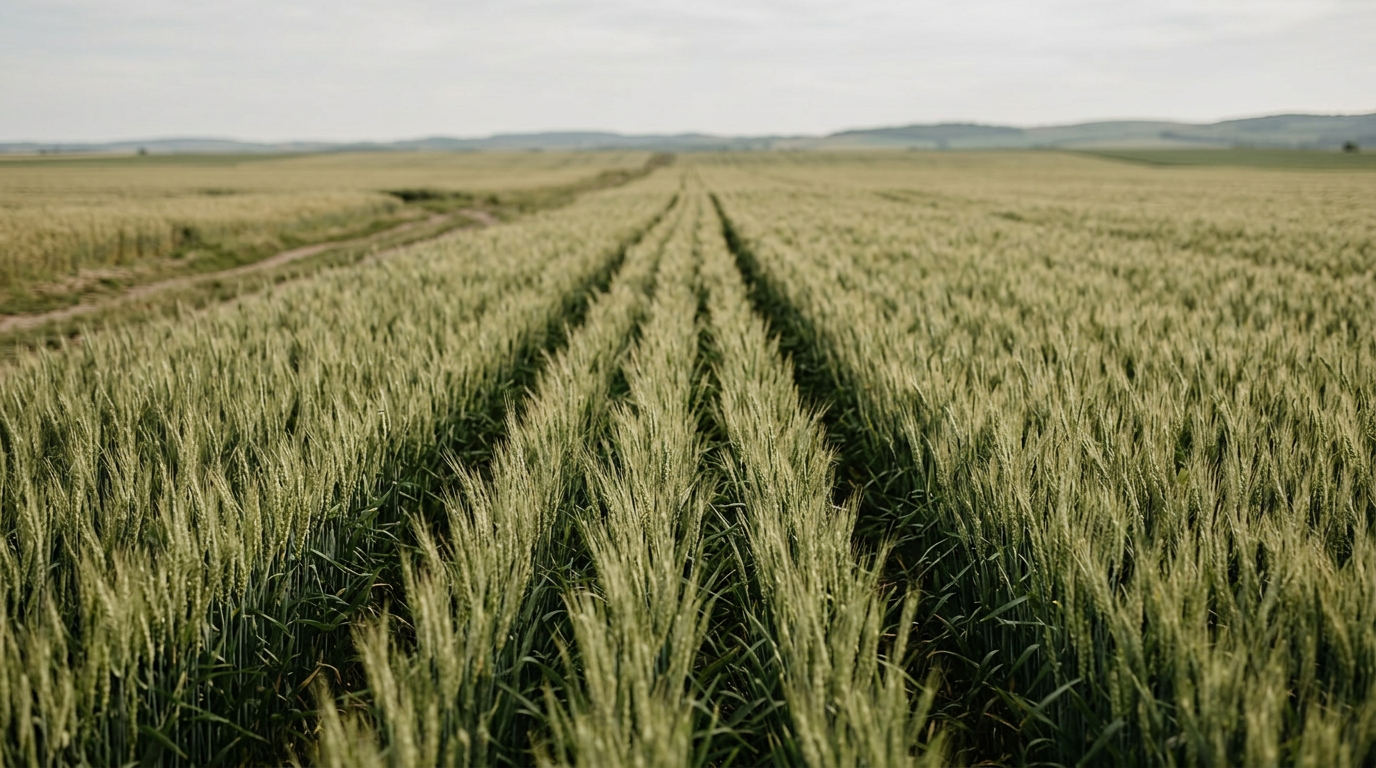
Most plants, including essential crops like rice and wheat, can't do photosynthesis above 40°C. This is worrying because it means our food supply is vulnerable to heatwaves. It could even turn plants from carbon absorbers into carbon emitters, worsening climate change.
In a hurry? TL;DR
- 1C3 plants, critical for 95% of Earth's biomass and major crops like rice and wheat, shut down photosynthesis around 40°C.
- 2Rising temperatures above 35°C decrease C3 photosynthesis efficiency, with 40°C often being a shutdown point.
- 3At high temperatures, the enzyme Rubisco in C3 plants mistakenly binds oxygen instead of CO2, hindering growth.
- 4Leaf temperatures can exceed air temperatures in direct sunlight, meaning even moderate heat poses a risk to C3 plants.
- 5Agricultural vulnerability is high as monocultures lack shade diversity, leading to significant yield drops for crops like wheat.
- 6C4 plants, like maize, have a different mechanism that allows them to better tolerate higher temperatures.
Why It Matters
It's surprising that the plants responsible for most of the Earth's biomass, including our main food crops, shut down their essential energy production process at a temperature only slightly higher than a very hot summer
At approximately 40°C, the biological machinery for photosynthesis begins to fail in C3 plants. This threshold threatens nearly 95% of Earth's plant biomass, including essential food staples like wheat, rice, and soy.
The 40-Degree Failure State
- Percentage of biomass: C3 plants account for 95% of all green life on Earth.
- Tipping point: Photosynthesis efficiency drops significantly above 35°C and often ceases at 40°C.
- Global staples: Rice, wheat, soybeans, and most trees are categorised as C3 plants.
- The alternative: C4 plants, like maize and sugarcane, use a separate mechanism to survive higher heat.
Why It Matters
This biological ceiling creates a hard limit for global food security, as the primary mechanism for turning sunlight into energy is fundamentally incompatible with a warming climate.
The Mechanics of Metabolic Failure
Photosynthesis is not a single action but a complex assembly line. In C3 plants, the first product of carbon fixation is a three-carbon compound. Central to this process is an enzyme called Rubisco.
Under normal conditions, Rubisco grabs carbon dioxide to build sugars. However, at temperatures around 40°C, the enzyme loses its selectivity. It begins grabbing oxygen instead, a wasteful process called photorespiration.
When a plant hits this heat wall, it essentially begins to breath out the carbon it worked so hard to collect. It stops growing and starts consuming its own reserves. If the heat persists, the cellular machinery breaks down entirely.
The Tropical Tipping Point
According to researchers at Northern Arizona University, leaf temperatures do not always match air temperatures. In direct sunlight, a leaf can be several degrees hotter than the surrounding breeze.
Current data suggests that while forest canopies average lower temperatures, individual leaves are already hitting the 40.6°C failure mark. This is not a distant threat but a localized reality in the upper layers of tropical rainforests.
Agricultural Vulnerability
The impact on global dining tables is direct. Unlike wild forests, mono-crop agriculture lacks the shade diversity to protect itself from heat spikes.
- Wheat: Yields drop by roughly 6% for every degree Celsius rise above the optimum growing temperature.
- Rice: High night-time temperatures are particularly damaging, as the plant burns through energy it should be storing in the grain.
- Soybeans: Heat stress during the flowering stage can lead to total pod loss.
Unlike desert-adapted succulents or C4 grasses, our most important crops are biologically trapped in a cooler evolutionary era.
Real-World Scenarios
The Breadbasket Heatwave
If a major producing region like the American Midwest or the Ukrainian steppe experiences a sustained 40°C heatwave during the grain-filling stage, yields can collapse regardless of water availability. The plant simply stops producing food.
Tropical Forest Dieback
In the Amazon, the canopy acts as a giant air conditioner. However, as loggers thin the forest, the remaining trees are exposed to more sun, pushing their leaves past the 40°C threshold and accelerating forest loss.
Interesting Connections
- Evolution: The C3 pathway is named because the first stable molecule has three carbon atoms.
- Etymology: Rubisco stands for Ribulose-1,5-bisphosphate carboxylase/oxygenase—the most abundant enzyme on Earth.
- Thermal Imaging: Scientists now use drones with infrared cameras to map which parts of a forest are literally "running a fever."
Can plants adapt to higher temperatures?
Some C3 plants show minor acclimation, but the fundamental chemistry of the Rubisco enzyme is a rigid biological constraint that has remained largely unchanged for millions of years.
Why don't we just grow C4 crops instead?
While we do grow C4 crops like maize, most of our culinary and nutritional history is built on C3 plants. You cannot easily replace the protein profile of wheat or the caloric density of rice with maize alone.
Does more CO2 help?
Higher CO2 levels can temporarily offset the inefficiency of photorespiration, but this benefit is quickly wiped out once the physical heat reaches the point of protein denaturation.
Key Takeaways
- Critical Limit: 40°C is the thermal ceiling for the majority of Earth's plant life.
- Enzyme Error: The failure is caused by the enzyme Rubisco mistakenly processing oxygen instead of carbon dioxide.
- Food Security: The world's most vital crops (rice and wheat) are the most vulnerable to this specific temperature spike.
- Leaf vs Air: Leaf surfaces often reach this fatal temperature before the official weather station air temperature does.
Biology has a speed limit, and in a warming world, we are rapidly approaching the point where the engine cuts out.
Frequently Asked Questions
Sources & References
- 1PNASPhotosynthesis in C3 plants is severely inhibited at around 40°C, and this phenomenon can already be observed in tropical forests today.pnas.org
- 2ScienceResearch indicates that tropical forests are approaching a critical temperature threshold where their leaves can no longer effectively perform photosynthesis, potentially shifting them from carbon sinks to carbon sources.science.org