
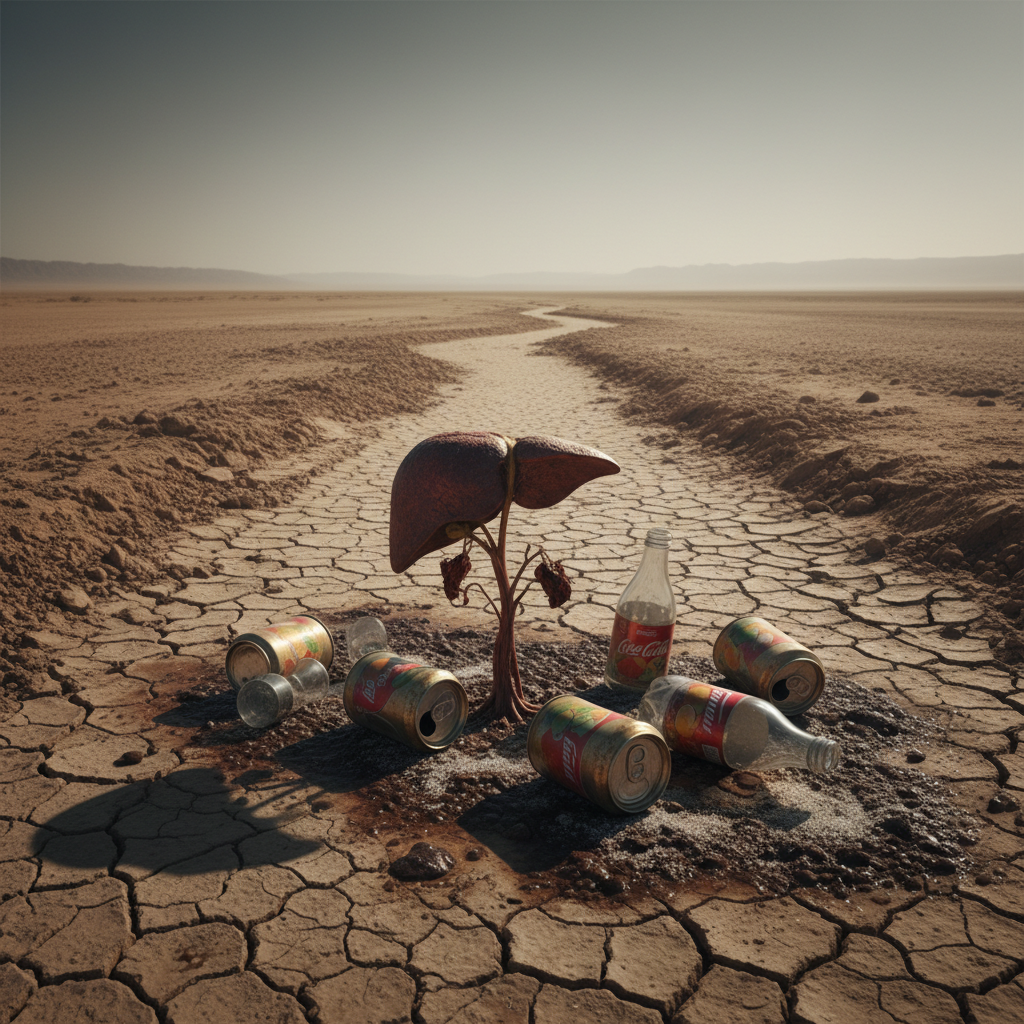
Quick Answer
Drinking just one sugary drink daily significantly raises your risk of liver cancer. A study found an 85% increased risk for women, showing that regularly consuming sugar can directly damage your liver, even if you're not overweight. It's a stark reminder of how everyday choices impact our health.
In a hurry? TL;DR
- 1Drinking one sugary beverage daily increases liver cancer risk by 85% in postmenopausal women.
- 2Daily sugary drink consumption also raises chronic liver disease mortality risk by 68%.
- 3This risk is linked to direct liver toxicity, not just overall weight gain.
- 4Liquid sugar overwhelms the liver, causing fat accumulation and inflammation (NAFLD).
- 5NAFLD is a precursor to cirrhosis and liver cancer, with sugary drinks accelerating this process.
- 6Reducing daily intake of sodas and sugary fruit drinks is crucial for liver health.
Why It Matters
It's surprising that drinking just one sugary beverage daily significantly raises liver cancer risk, potentially through direct organ toxicity rather than just weight gain.
Drinking just one sugar-sweetened beverage a day significantly increases the risk of developing liver cancer and dying from chronic liver disease. According to research published in JAMA, postmenopausal women who consumed at least one sugary drink daily faced an 85 percent higher risk of liver cancer compared to those who drank fewer than three a month.
The Data at a Glance
Dietary habit: Consuming 1+ sugary drinks per day Increased risk of liver cancer: 85 percent higher Increased risk of chronic liver disease mortality: 68 percent higher Study duration: Nearly 21 years of follow-up data Primary demographic: Postmenopausal women aged 50 to 79
Why It Matters
This research shifts the conversation from obesity to direct organ toxicity. While we often associate soda with weight gain, these findings suggest that liquid sugar acts as a specific metabolic trigger for liver malignancy, regardless of a person's total caloric intake or body mass index.
The Study: Two Decades of Data
In 2023, researchers at Brigham and Women's Hospital in Boston published a defining study in the Journal of the American Medical Association (JAMA). They analysed data from 98,786 postmenopausal women enrolled in the Women's Health Initiative.
The goal was simple: track whether the consumption of sugar-sweetened beverages—including sodas and fruit drinks—correlated with liver outcomes over a median of 20.9 years. The results were stark. Women consuming one or more sugary servings daily were not just slightly more at risk; they were drastically more likely to develop hepatocarcinoma.
The Biological Mechanism
The liver is the primary site for fructose metabolism. When you consume a sugary drink, the portal vein delivers a massive dose of sugar directly to the liver. Unlike other cells in the body, liver cells are the only ones that can handle fructose in significant amounts.
When the liver is overwhelmed by this sugar surge, it begins to accumulate fat. This leads to Non-Alcoholic Fatty Liver Disease (NAFLD), which creates a state of chronic inflammation. Long-term inflammation is the perfect breeding ground for DNA mutations that eventually lead to cancerous tumours.
Industry Recognition and Validation
The findings align with a growing body of evidence from the American Association for the Study of Liver Diseases. Their experts have long warned that the rapid absorption of liquid sugars is more damaging than the slower absorption of sugars found in whole fruit, which contains fibre to buffer the metabolic hit.
Researchers at Harvard T.H. Chan School of Public Health have noted that while overall soda consumption has decreased in some demographics, the intake of energy drinks and sweetened coffees has risen, maintaining the high-sugar baseline that drives these cancer statistics.
Practical Applications
- Swap the habit: Replacing one soda with water or unsweetened tea reduces the specific liver cancer risk profile by nearly half.
- Read the labels: Many fruit juices contain as much sugar as cola; the liver does not distinguish between organic cane sugar and high-fructose corn syrup in liquid form.
- Frequency over volume: The study suggests that daily consistency is the problem. Reducing consumption to less than three times a month moves an individual into the lowest risk category.
Interesting Connections
- Historical shift: In the 1960s, liver cancer was relatively rare in the US and predominantly linked to hepatitis or alcohol; today, metabolic dysfunction is a primary driver.
- Etymology: The word "liver" comes from the Old English "lifer," which is related to the word "live," reflecting the ancient understanding that this organ is the seat of vitality.
- Fructose vs Glucose: While every cell in your body can use glucose for energy, fructose is processed almost exclusively by the liver, making it a targeted metabolic stressor.
Does diet soda have the same risk?
The JAMA study looked at artificially sweetened beverages as well but did not find the same statistically significant increase in liver cancer risk, suggesting the sugar itself is the primary carcinogen.
Is fruit juice safer than soda?
Not necessarily. While juice contains vitamins, it lacks the fibre of whole fruit. In liquid form, the liver processes the fructose in orange or apple juice similarly to the sugar in a soft drink.
Does this apply to men as well?
While this specific study focused on postmenopausal women, separate research in the Journal of Hepatology has shown similar metabolic pathways and increased risks for men who consume high levels of sugar-sweetened beverages.
Key Takeaways
- Critical risk: One sugary drink a day increases liver cancer risk by 85 percent.
- Mortality: Death from chronic liver disease rises by 68 percent with daily consumption.
- Metabolic impact: Liquid sugar triggers fat accumulation in the liver more aggressively than solid food.
- Simple fix: Moving from daily consumption to occasional treats significantly lowers the risk profile.
Frequently Asked Questions
Sources & References
- 1National Institutes of Health (NIH)Provides information on Non-Alcoholic Fatty Liver Disease (NAFLD), explaining it as a condition where fat accumulates in the liver, which can lead to inflammation and cirrhosis.niddk.nih.gov
- 2JAMA NetworkThe study published in JAMA found an 85% higher risk of liver cancer among postmenopausal women who consumed at least one sugar-sweetened beverage daily.jamanetwork.com