
Quick Answer
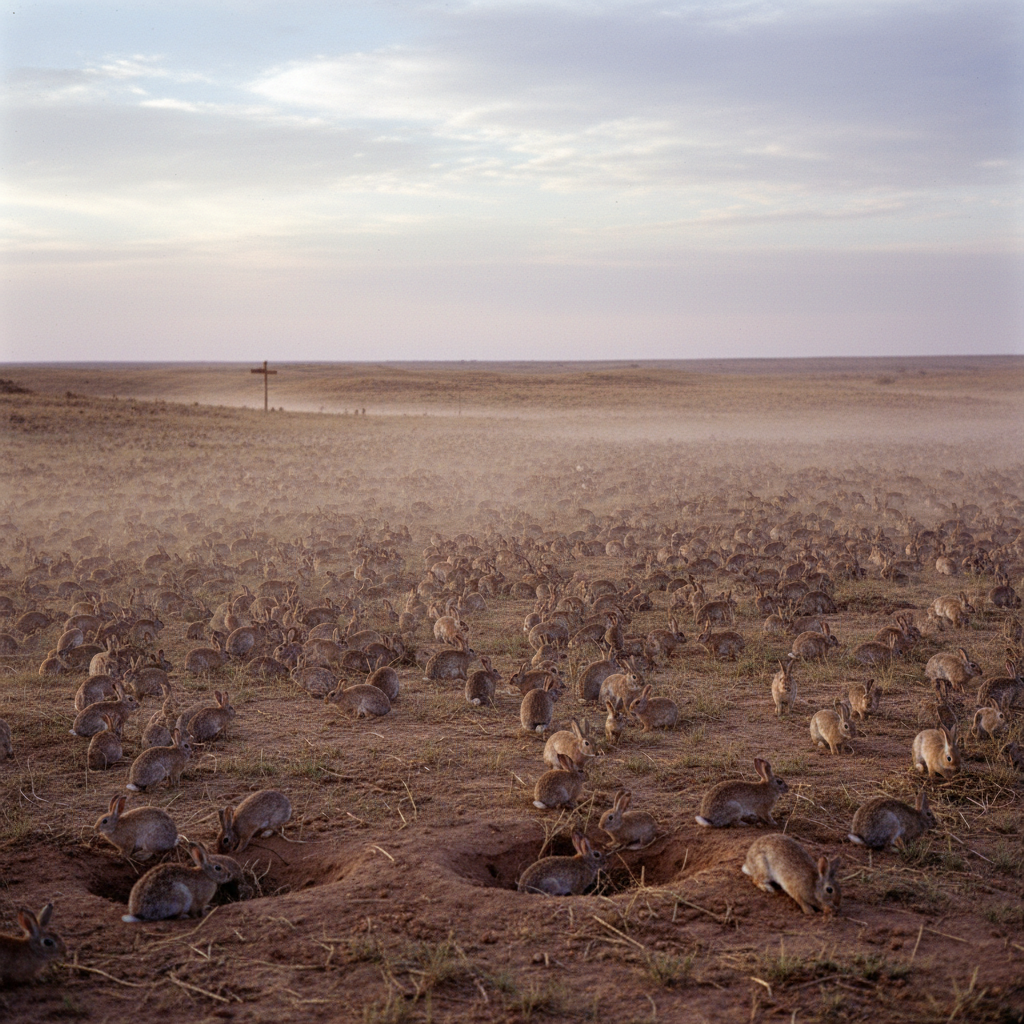
Just 24 rabbits released in Australia in 1859 exploded to a population of 10 billion within 70 years. This highlights the devastating impact of introduced species, showcasing how rapidly they can multiply and wreak havoc on local ecosystems and agriculture. It's a stark lesson in unintended consequences.
In a hurry? TL;DR
- 1Introduce non-native species with extreme caution due to unpredictable ecological consequences.
- 2Assess potential environmental impacts and existing predators before introducing any new species.
- 3A small rabbit population exploded to 10 billion in Australia due to a lack of natural predators.
- 4Unchecked invasive species can cause widespread land degradation and economic devastation.
- 5Thomas Austin's introduction of 24 rabbits in 1859 led to a massive ecological disaster.
- 6Vigilance against invasive species is crucial to protect native ecosystems and biodiversity.
Why It Matters
It's astonishing how 24 rabbits released for a bit of sport hunting in Australia ended up colonising a continent and reaching a population of 10 billion.
In 1859, Victorian settler Thomas Austin released 24 European rabbits on his estate in Victoria, Australia, for sport hunting. By the 1920s, that initial group had exploded into a population of roughly 10 billion, representing the fastest colonisation by a mammal ever recorded.
The Rabbit Numbers
- Initial Population: 24 rabbits
- Year Released: 1859
- Peak Population: 10 billion (estimated by 1926)
- Spread Rate: 130 kilometres per year
- Land Affected: Over 2.5 million square miles
Why It Matters
This event is the ultimate case study in ecological unintended consequences. It demonstrates how a lack of natural biological checks can turn a minor hobby into a continental catastrophe that reshapes an entire nation's economy and landscape.
The Sport That Ate a Continent
Thomas Austin was a member of the Acclimatisation Society of Victoria, a group dedicated to introducing European species to make Australia feel more like England. He requested his nephew send over a few dozen rabbits, specifically 24 wild specimens, noting that the introduction of a few rabbits could do little harm and might provide a touch of home, in addition to a spot of hunting.
He underestimated the intersection of biology and geography. Unlike the harsh winters and numerous predators of Europe, the Australian landscape offered mild winters, vast grazing lands, and an absence of natural enemies like foxes or weasels.
According to a 2022 study published in the Proceedings of the National Academy of Sciences (PNAS), genetic analysis confirmed that the 10-billion-strong plague originated specifically from Austin’s 1859 shipment. While other rabbits had been brought to Australia earlier, they were mostly docile, hutch-bred varieties. Austin’s rabbits were wild, possessing the genetic vigour required to survive and thrive in the outback.
The Environmental Fallout
By the late 19th century, the rabbits were stripping the land of vegetation, leading to massive soil erosion. They didn't just eat the grass; they ate the seeds and seedlings, preventing forests from regenerating. This led to the collapse of local populations of pygmy possums and several species of bandicoots, which could not compete for resources.
For Australian farmers, the rabbits were a biological wildfire. They competed with sheep and cattle for pasture, leading to the abandonment of thousands of acres of formerly productive land.
Practical Applications and Lessons
- Invasive Species Management: The Australian rabbit crisis remains the primary reference point for why strict biosecurity protocols exist at international borders today.
- Genetic Bottlenecks: Scientists use the rabbit expansion to study how a small genetic pool can adapt to a massive range of new environments with startling speed.
- Ecological Restoration: Current conservation efforts in Australia focus on reintroducing apex predators, like dingoes, to help manage rabbit numbers where fences and viruses fail.
Interesting Connections
- The Rabbit-Proof Fence: The massive construction inspired the 2002 film of the same name, though the film focuses on the Stolen Generations rather than the rabbits themselves.
- Easter Bilby: To combat the negative image of rabbits, many Australians celebrate Easter with the Easter Bilby, promoting a native marsupial instead of the invasive long-eared mascot.
- Genetic Resilience: Despite the 10 billion peak, the population fluctuates wildly based on drought and disease, yet they remain one of the most resilient invasive species on Earth.
Why didn't Australian predators eat them?
Australia lacked placental mammalian predators like foxes or wolves. While dingoes and birds of prey did hunt rabbits, they could not consume them fast enough to match the rabbits’ reproductive rate, which allows a single pair to produce up to 30-40 offspring a year.
Are there still 10 billion rabbits in Australia?
No. The introduction of the Myxoma virus and later the RHDV (Rabbit Haemorrhagic Disease Virus) decimated the population. Today, the number is estimated at roughly 200 million, which is still considered an environmental crisis.
Could this happen again with another species?
It does. Similar patterns have been seen with cane toads in Australia and kudzu vines in the United States. The pattern of a small introduction leading to a continental takeover is a recurring theme in global ecology.
Key Takeaways
- Source: The entire multi-billion rabbit plague traces back to a single shipment of 24 wild rabbits in 1859.
- Speed: They spread across the continent at a rate of roughly 80 miles per year, the fastest recorded for any mammal.
- Impact: The rabbits caused more ecological and economic damage than almost any other invasive species in history.
- Prevention: Modern biosecurity laws are built on the hard lessons learned from Thomas Austin's desire for a weekend hunt.
Thomas Austin wanted a taste of the English countryside; he ended up accidentally re-engineering the ecology of an entire continent. His 24 rabbits proved that in biology, there is no such thing as a small change.
Frequently Asked Questions
Sources & References
 WikipediaThis article provides an overview of the introduction of rabbits to Australia, their rapid spread, and the ecological and economic damage they caused.en.wikipedia.org
- 2PNASThis study from 2022 uses genetic analysis to confirm that the rabbit plague in Australia originated from Thomas Austin's 1859 shipment.pnas.org