
Quick Answer
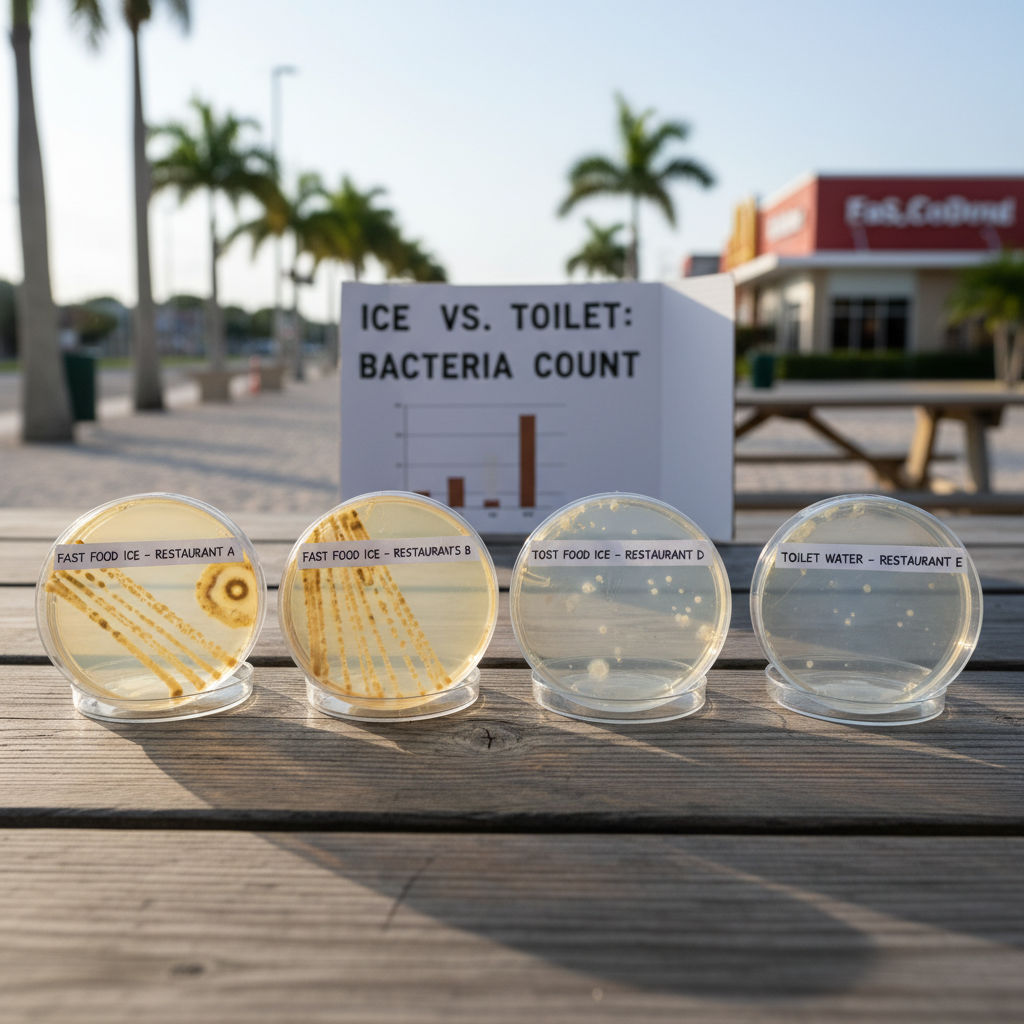
School kids found fast food ice often had more bacteria than toilet water. This is surprising because we expect toilets to be germ-ridden, but it turns out the ice we drink might be a bigger threat, highlighting potential hygiene issues in places we wouldn't expect.
In a hurry? TL;DR
- 170% of South Florida fast-food ice samples had more bacteria than toilet water in a science project.
- 2Ice machines are often overlooked for cleaning, allowing bacteria like coliforms to grow.
- 3Toilet water is regularly treated, making it cleaner than infrequently cleaned ice machine systems.
- 4Biofilm in ice machines protects bacteria from cold and cleaning agents, creating a hazard.
- 5Ice is often treated as a garnish, leading to less stringent hygiene standards than expected.
- 6Studies indicate a significant percentage of food outlet ice samples exceed safe bacterial limits.
Why It Matters
It's surprising that the ice served in fast-food restaurants is often dirtier than their toilet water due to overlooked ice machines.
In 2006, a middle-school science project in South Florida revealed that ice served in fast-food restaurants contained more bacteria than the water found in the same establishments' toilets. Specifically, the study found higher bacterial counts in the ice at 70 percent of the locations tested.
The Dirty Truth About Ice
This discovery remains a staple of hygiene trivia because it subverts our basic instincts regarding sanitation. While we view restrooms as the epicentre of germs, they are also the most rigorously cleaned areas in a restaurant. Ice machines, by contrast, are often overlooked or difficult to sanitise, allowing microbial colonies to flourish in the cold.
Key Findings by the Numbers
- Frequency: 70 percent of tested restaurants had dirtier ice than toilet water.
- Sample Size: Five major fast-food chains in South Florida.
- Primary Culprit: Coliform bacteria, often an indicator of poor sanitation.
- Comparison Point: Toilet water in the same buildings was found to be cleaner due to regular chemical treatment.
Discovery: The 12-Year-Old Scientist
The experiment was conducted by Jasmine Roberts, a 12-year-old student at Benito Middle School. Roberts collected ice samples and toilet water samples from five different fast-food restaurants. She then tested them for bacteria at the University of South Florida.
The results were stark: in four out of five cases, the ice contained more bacteria than the toilet water. In several instances, the ice tested positive for E. coli, a bacteria typically associated with faecal contamination. Roberts received a top award at her school’s science fair, but the real impact was the national media storm that followed.
Why Ice Machines Fail the Test
The disparity between the ice and the toilet water isn't necessarily because the toilets are exceptionally clean, but because the ice machines are rarely emptied and scrubbed. According to experts at the Journal of Food Protection, ice is often treated as a garnish rather than a food product, leading to more relaxed handling standards.
Technicians frequently find Biofilm—a sticky, protective layer of bacteria—inside the tubing and bins of commercial ice makers. Once this film takes hold, it protects bacteria from cold temperatures and even mild cleaning agents.
Supporting Evidence and Research
Unlike the controlled environment of a municipal water system, which feeds the toilets, ice machines are open systems. They are subject to human contact via unwashed hands, contaminated scoops, and airborne particles.
A larger-scale investigation conducted by the BBC’s Watchdog programme later mirrored Roberts’ findings. They tested branches of major international coffee chains and found significant levels of faecal coliforms in the ice. This suggests that the Florida school project wasn't a fluke but a symptom of a systemic maintenance gap in the food service industry.
Real-World Implications
This fact serves as a reminder of the importance of the Cleanliness Paradox. We are most likely to get sick not from the things that look dirty, but from the things we assume are clean.
- Hand Hygiene: Most ice contamination occurs when employees use their hands or a dirty cup to scoop ice instead of a dedicated, sanitised scoop.
- Equipment Design: Many older ice machines have crevices that are nearly impossible to reach without a full professional teardown.
- Regulatory Focus: Health inspectors have increased their scrutiny of ice machines following these viral reports, yet they remain a common point of failure in health audits.
“Ice is food, but we rarely treat it with the same microbial respect as a piece of raw chicken.”
Is the toilet water actually safe to drink?
No. While it may contain fewer bacteria than the ice in these specific studies, toilet water contains chemicals and potential pathogens not covered in a standard coliform test. The study highlights the filth of the ice, not the purity of the toilet.
Why don't the freezing temperatures kill the bacteria?
Many types of bacteria do not die when frozen; they simply become dormant. Once the ice melts in your drink or enters your body, the bacteria warm up and become active again.
How can I tell if an ice machine is dirty?
Look at the vents and the dispensing chute. If you see dark spots, slime, or a "yeasty" smell near the machine, it is likely harbouring a biofilm that is contaminating the ice inside.
Key Takeaways
- Routine Maintenance: Toilets are cleaned daily; ice machines are often cleaned quarterly or less.
- The Human Factor: Most bacteria enter the ice through human handling, not the water source itself.
- Visual Deception: Clear ice can still be home to millions of microscopic organisms.
- Food Status: Treating ice as a food product rather than a cooling agent is the first step toward better safety.
Knowing this won't necessarily stop you from ordering a soda, but it might make you look twice at the person holding the scoop. In the hierarchy of restaurant cleanliness, the most dangerous thing in the room is often the one you catch in your glass.