
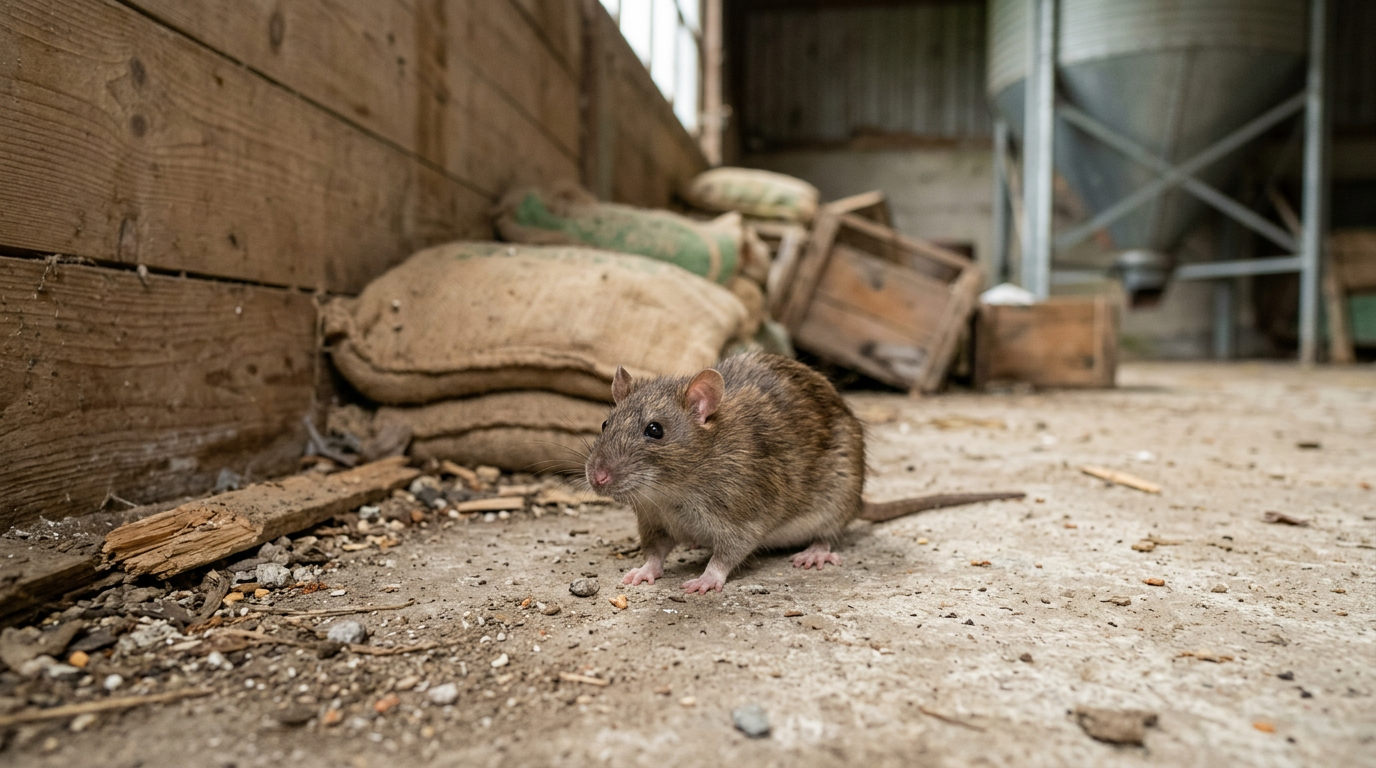
Quick Answer
Rats can't vomit, so if they eat poison, they're stuck with it. Their unique anatomy prevents them from throwing up, making them highly vulnerable to rodenticides. This might explain why they're so wary of new food sources, preferring to sample only a small amount before committing.
In a hurry? TL;DR
- 1Rats cannot vomit due to a biological inability to reverse stomach contents, making poisons extremely dangerous.
- 2Their anatomy features a strong limiting ridge between the esophagus and stomach, acting as a one-way valve.
- 3Lacking a vomit reflex, rats compensate with neophobia, cautiously tasting new foods in tiny amounts.
- 4Research shows rats have weaker diaphragm muscles, preventing them from generating the pressure needed to vomit.
- 5Instead of nausea, poisoned rats may exhibit pica, consuming dirt or clay to potentially bind toxins.
- 6Understanding this prevents vomiting helps explain their cautious foraging and effectiveness as pest control targets.
Why It Matters
It's fascinating that rats' inability to vomit explains both their cautious foraging habits and their susceptibility to rodenticides.
Rats cannot vomit. Unlike humans and many other mammals, these rodents possess a biological one-way street between their throat and stomach, meaning once they swallow something toxic, they have no physiological way to expel it.
The Biological Dead End
- No Vomit Reflex: Rats lack the neural pathways and muscle coordination required to regurgitate.
- Toxic Risk: This inability makes rats exceptionally vulnerable to man-made poisons.
- Pre-tasting Strategy: To compensate, rats exhibit neophobia, eating tiny amounts of new food to test for illness.
- Anatomical Barrier: A powerful limiting ridge between the oesophagus and stomach acts as a physical seal.
Why It Matters
Understanding this biological quirk explains why rats are both incredibly cautious foragers and the primary targets of the global pest control industry.
The Mechanics of a One-Way Stomach
The inability to vomit, known as emesis, is not a choice but a complex anatomical restriction. Research led by biological scientists at the University of Pittsburgh, including studies by Charles Horn, indicates that the rodent brainstem lacks the motor programmes necessary to coordinate the muscles involved in vomiting.
Whereas a human or a dog can trigger a swift abdominal contraction to void the stomach, a rat’s diaphragm and stomach muscles are not wired to work in reverse.
Physically, the culprit is the limiting ridge. This thin piece of tissue sits at the junction where the oesophagus meets the stomach. In rats, this ridge is positioned in a way that makes it impossible for pressure from the stomach to force food back up. It effectively acts as a high-pressure valve that only opens inward.
Precise Scientific Findings
In a 2013 study published in the journal PLOS ONE, researchers compared the anatomy of rats with species that can vomit, such as ferrets. They found that rats have a significantly smaller and weaker set of muscles in the hiatus of the diaphragm.
This means they lack the physical strength to create the pressure needed to overcome the cardiac sphincter. Furthermore, rats do not experience the sensation of nausea in the same way we do. Instead of feeling the urge to throw up, they experience pica, a condition where they consume non-food items like clay or dirt to help bind toxins in their gut.
The Survival Strategy: Sampling and Social Learning
Because they cannot rely on a lucky escape through vomiting, rats have developed some of the most sophisticated feeding habits in the animal kingdom.
- Neophobia: The fear of anything new. A rat encountering a chocolate bar for the first time will not gorge. It will take a microscopic nibble and wait.
- Social Cues: Rats smell the breath of their peers. If a fellow rat smells like grain and is still active, the grain is deemed safe.
- Pica Response: If a rat does feel ill after eating something, it will instinctively eat kaolin clay. This clay absorbs toxins in the stomach, acting as a primitive internal filter since the exit is blocked.
Practical Applications in Pest Control
This biological limitation is the entire foundation of modern rodenticide design. Most rat poisons are formulated as slow-acting anticoagulants.
Because the rat cannot vomit, and because it is inherently suspicious of new food, the poison must be bait that tastes pleasant and does not cause immediate distress. If a rat felt sick immediately, it would never touch the bait again. By the time the rat realizes something is wrong, the physiological one-way door has already sealed its fate.
Can mice vomit?
No. Like rats, mice lack the neural and muscular capacity to vomit. Most small rodents share this trait.
Do rats get nauseous?
They experience a version of malaise, but it does not manifest as the urge to gag. They simply become lethargic and seek out clay or soil to settle their stomachs.
Is this why they eat everything?
Actually, it makes them more selective. While they are scavengers, they are incredibly precise about what they consume compared to less cautious animals like dogs.
Key Takeaways
- Anatomical Block: The limiting ridge prevents food from moving backward out of the stomach.
- Neurological Lack: The rat brain lacks the software to trigger the vomiting reflex.
- Defensive Eating: Rats use small-scale sampling and social observation to avoid poisoning.
- Pest Strategy: Human rodenticides exploit this weakness by using slow-acting toxins.
If you ever wondered why it is so hard to trick a rat, remember that they survive by assuming every first bite might be their last.
Frequently Asked Questions
Sources & References
 WikipediaDefines pica as an eating disorder characterized by an appetite for non-nutritive, non-food substances, which rats exhibit when ill.en.wikipedia.org
 Merriam-WebsterProvides the definition of 'emesis' as the act or process of vomiting.merriam-webster.com
- 3PLOS BiologyThis study details the anatomical and neurological reasons why rats cannot vomit, including the presence of a limiting ridge and the absence of a proper vomit reflex.journals.plos.org
- 4University of PittsburghResearch by Charles Horn from the University of Pittsburgh indicates that the rodent brainstem lacks the motor programs necessary to coordinate the muscles involved in vomiting.eurekalert.org
- 5Appetite JournalExplains neophobia as the avoidance of novel foods, a common trait in rodents like rats.sciencedirect.com