
Quick Answer
Believe it or not, we're living in an ice age! Even though it feels warm now, huge ice sheets still cover Greenland and Antarctica. This means we're actually in a temporary warm phase, or 'interglacial', within a much longer, colder ice age period. It's pretty mind-bending to think our everyday weather is a fleeting exception in Earth's long history!
In a hurry? TL;DR
- 1Earth is currently in a long ice age (Quaternary Glaciation) that started 2.58 million years ago.
- 2An ice age is geologically defined by the presence of permanent ice sheets at the poles, like in Antarctica and Greenland.
- 3We live in a warm interglacial period (Holocene) within this larger ice age, which has lasted about 11,700 years.
- 4Most of Earth's history was much warmer, without polar ice, allowing tropical life to exist near the poles.
- 5The planet's glacial and interglacial cycles are naturally driven by Milankovitch Cycles, affecting solar radiation.
- 6Human activity is now influencing the timeline of these natural climate cycles.
Why It Matters
It's surprising that despite our seemingly mild weather, we're technically living through a vast ice age due to permanent polar ice.
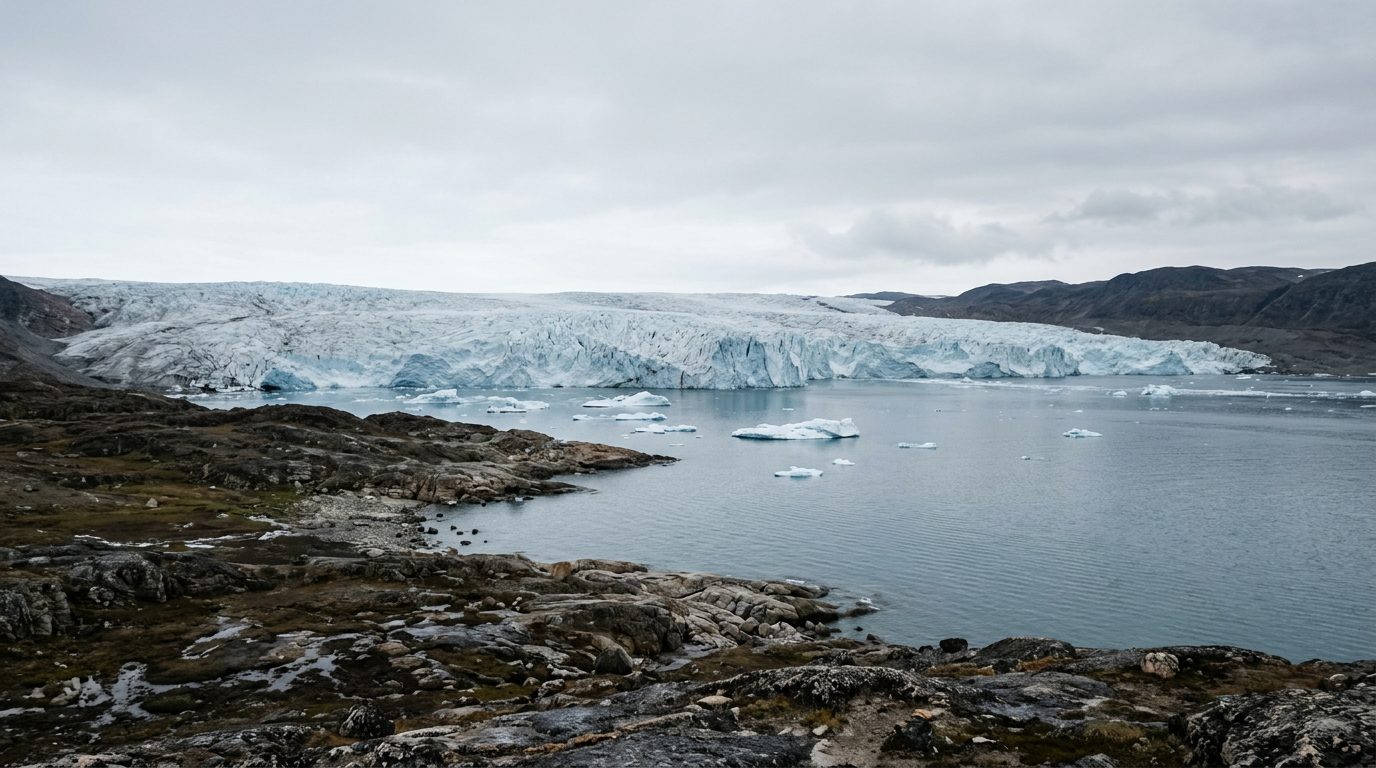
Earth is currently in the grip of the Quaternary Glaciation, an ice age that began 2.58 million years ago. While we enjoy a relatively mild climate today, the presence of permanent ice sheets in Greenland and Antarctica means the geological definition of an ice age is still being met.
The Cold Reality
- Current Status: Earth is in the Holocene epoch, a warm interglacial period within a much longer ice age.
- Definition: A geological ice age is defined by the presence of year-round ice sheets at the poles.
- Historical Context: For most of Earth's 4.5 billion-year history, the planet was entirely free of polar ice.
- Future Outlook: Naturally, the next glacial pulse would arrive in about 50,000 years, though human activity is altering that timeline.
The Interglacial Illusion
The confusion stems from our perspective. We live in an interglacial, a brief holiday between glacial advances. According to the United States Geological Survey (USGS), we are currently in the Holocene, which began roughly 11,700 years ago when the massive Laurentide and Fennoscandian ice sheets finally retreated.
Louis Agassiz, a Swiss-American biologist and geologist, was the first to propose the concept of a Great Ice Age in 1837. He observed that erratic boulders and glacial striations in the Alps could only be explained by massive moving sheets of ice. His work shifted the scientific consensus from a world shaped by floods to a world sculpted by frost.
The Mechanisms of Ice
The rhythm of our current ice age is dictated by Milankovitch Cycles. These are subtle shifts in Earth’s orbit, tilt, and wobble that change how much solar radiation reaches the northern hemisphere.
- Eccentricity: The shape of Earth's orbit around the sun changes from circular to elliptical over 100,000 years.
- Obliquity: The tilt of Earth's axis varies between 22.1 and 24.5 degrees every 41,000 years.
- Precession: The earth wobbles on its axis like a spinning top every 26,000 years.
When these cycles align to reduce summer heat in the north, snow from the previous winter fails to melt. It piles up, compresses into ice, and begins to flow under its own weight. This process turns a mild interglacial back into a full-scale glacial period.
Why This Matters Today
Understanding that we are in an ice age changes how we view climate change. We are not just warming a neutral planet; we are rapidly exiting a glacial state that has lasted for over two million years.
Unlike previous transitions, the current warming is occurring at a rate far exceeding the natural orbital triggers. If the Greenland and Antarctic ice sheets melt completely, the Quaternary Glaciation officially ends. This would result in a sea-level rise of approximately 70 metres, redrawing every coastline on the map.
Is the ice age over?
No. Because permanent ice still exists in the Arctic and Antarctic, we are geologically still in the Quaternary Ice Age. We are simply in a warm interval called an interglacial.
When was the last glacial maximum?
The last time ice was at its most extensive was roughly 20,000 years ago. At that time, ice sheets three kilometres thick covered much of North America and Northern Europe.
What causes an ice age to start?
It usually requires a combination of tectonic shifts, like the closing of the Isthmus of Panama which altered ocean currents, and orbital changes that reduce the amount of sunlight hitting the poles.
Key Takeaways
- Earth is technically in an ice age because polar ice caps exist.
- We live in the Holocene, a warm interglacial period that began 11,700 years ago.
- For the majority of Earth's history, the planet had no permanent ice at all.
- Orbital cycles usually dictate the arrival of the next big freeze, but carbon emissions are disrupting this pattern.
- The disappearance of the Greenland ice sheet would mark the end of our current geological age.