
Quick Answer
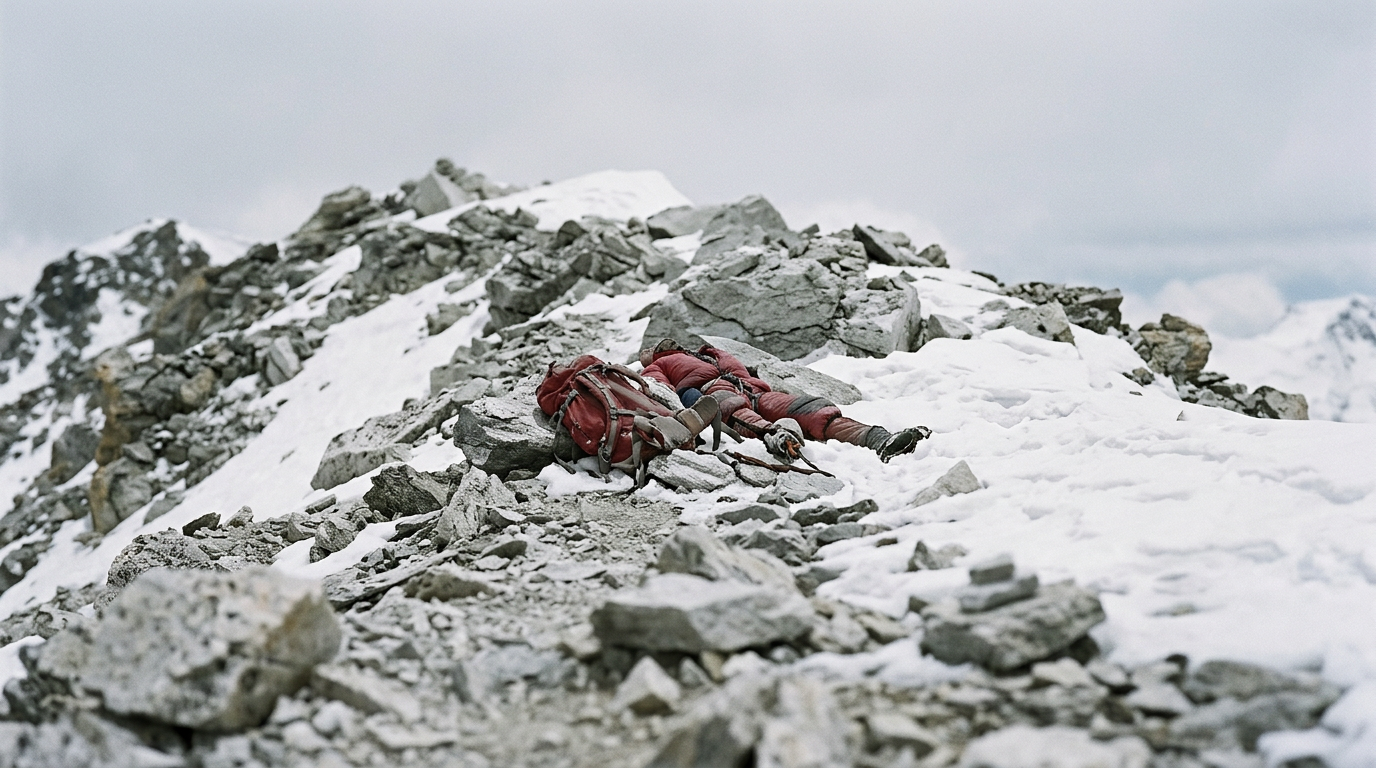
Over 200 bodies still lie on Mount Everest, with some becoming recognisable landmarks for climbers. This is because the extreme cold and lack of oxygen incredibly preserve the remains, meaning they can stay on the mountain for decades, serving as grim but useful waypoints on a dangerous ascent.
In a hurry? TL;DR
- 1Mount Everest is a 'graveyard' with over 200 bodies, preserved by the cold and thin air, remaining on the mountain.
- 2Many bodies are left in situ due to extreme recovery costs (over £50,000) and the high risk to rescue teams.
- 3Some deceased climbers, like 'Green Boots', became landmarks used by others for navigation on the dangerous ascent.
- 4Most fatalities occur during the descent, often due to exhaustion, altitude sickness, or depleted oxygen supplies.
- 5Climate change is beginning to affect the frozen landscape, potentially shifting the locations of these remains.
- 6The presence of bodies serves as a stark reminder of the risks and a 'memento mori' for climbers.
Why It Matters
It's surprising that the bodies of fallen climbers on Mount Everest have become landmarks, helping others navigate the perilous ascent.
Mount Everest functions as the world highest open-air graveyard, holding the remains of more than 200 climbers who perished in the Death Zone. Due to the extreme difficulty of recovery, many bodies remain exactly where they fell, occasionally serving as morbid navigational waypoints for those attempting the summit.
The Reality of the Death Zone
Mount Everest is home to over 200 permanent residents who never checked out. At altitudes above 8,000 metres, the human body cannot acclimatise; cells begin to die, and the air carries only a third of the oxygen found at sea level. In this environment, the logistics of body recovery become nearly impossible.
- Total Deaths: Over 310 recorded fatalities since 1922.
- The Landmarks: Famous corpses like Green Boots and The Sleeping Beauty once served as distance markers.
- Recovery Costs: A single body retrieval can cost upwards of £50,000 and require a team of 10 Sherpas.
- Preservation: The freezing temperatures and low humidity mummify remains, keeping clothing and equipment intact for decades.
Why It Matters
The presence of these remains transforms a natural wonder into a memento mori, forcing every climber to confront the literal physical cost of their ambition while navigating the narrow path to the top.
The Geography of the Fallen
For years, the most famous landmark on the Northeast Ridge was Green Boots. Widely believed to be Indian climber Tsewang Paljor, who died in the 1996 blizzard, the body lay in a limestone cave at 8,500 metres. His bright neon climbing boots became a standard reference point for climbers to gauge how close they were to the summit.
Moving these bodies is not a matter of simple respect; it is a matter of physics. At that altitude, a frozen human body can weigh over 100 kilograms. Combined with the treacherous terrain and thin air, attempting to carry a body down often puts the recovery team at high risk of joining the deceased.
According to records from the Himalayan Database, the majority of these deaths occur during the descent. Exhaustion, cerebral oedema, and the simple depletion of supplemental oxygen turn a successful summit into a final resting place. Unlike other mountaineering challenges, Everest forces climbers to walk past the visual evidence of failure every few hundred metres.
The Ethics of Recovery
The Nepalese government and various expedition organisers face a constant moral dilemma. While families often desire the return of their loved ones, the Sherpa community frequently argues against the risk. In 1984, two Nepalese climbers died while attempting to recover the body of Hannelore Schmatz, the first woman to die on the upper slopes.
The Changing Face of the Mountain
Climate change is beginning to shift this frozen landscape. As glaciers melt and ice thins, bodies that were buried for decades are beginning to reappear. According to the Nepal Mountaineering Association, dozens of remains have emerged near the Khumbu Icefall and the South Col in recent years, creating a new logistical and ethical crisis for the tourism industry.
Practical Implications for Climbers
Climbing Everest today requires more than just physical stamina; it requires a specific type of psychological shielding.
- Mental Prep: Climbers must be briefed on the fact that they will see remains, often dressed in gear similar to their own.
- Navigational Hazards: Remains located on the fixed ropes can cause traffic jams, increasing the time climbers spend in the oxygen-depleted Death Zone.
- Legal Protocols: Most modern permits now include clauses regarding what should happen to a climber's body in the event of their death.
Interesting Connections
- George Mallory: His body was discovered in 1999, 75 years after he disappeared. His skin was perfectly white, preserved by the sun and cold like marble.
- Rainbow Valley: An area below the summit named for the bright, multi-coloured down jackets of the many fallen climbers gathered there.
- Burial at Sea: Many mountaineers consider the mountain a fitting final resting place, similar to how sailors view the ocean.
Why don't they just use helicopters for recovery?
Helicopters struggle to fly in the thin air above 6,000 metres. While high-altitude rescues have occurred, hovering long enough to lift a body at 8,000 metres is currently beyond the mechanical limits of most aircraft.
Are the bodies still used as landmarks today?
Many have been moved or covered out of respect. Green Boots was reportedly moved or buried under stones in 2014, and The Sleeping Beauty (Francys Arsentiev) was moved out of sight in 2007.
Does every dead climber stay on the mountain?
No. If a death occurs at a lower camp or the Khumbu Icefall, recovery is much more feasible. Only those who perish in the highest reaches are typically left behind.
Key Takeaways
- Everest Remains: Over 200 bodies are scattered across the upper slopes, mostly in the Death Zone.
- Navigation: Remains like Green Boots were historically used as unofficial trail markers.
- Physical Cost: Recovery is often too dangerous and expensive to be practical, costing upwards of £50,000.
- Environmental Impact: Melting ice is currently revealing more bodies that were previously hidden for decades.
- Psychological Burden: Modern climbers must navigate a path lined with the visible consequences of the mountain's hazards.
The presence of these fallen adventurers serves as a stark, frozen reminder that on Everest, the margin for error is non-existent. The mountain remains one of the few places on Earth where the dead are not buried, but instead become part of the terrain itself.
Frequently Asked Questions
Sources & References
 WikipediaThis source provides a detailed overview of the fatalities on Mount Everest, including the total number of deaths and the challenges associated with body recovery in the 'death zone'.en.wikipedia.org
- 2The Himalayan DatabaseThis database is a primary source for expedition facts and statistics, including details on deaths and ascents on Himalayan peaks like Everest.himalayandatabase.com