
Quick Answer
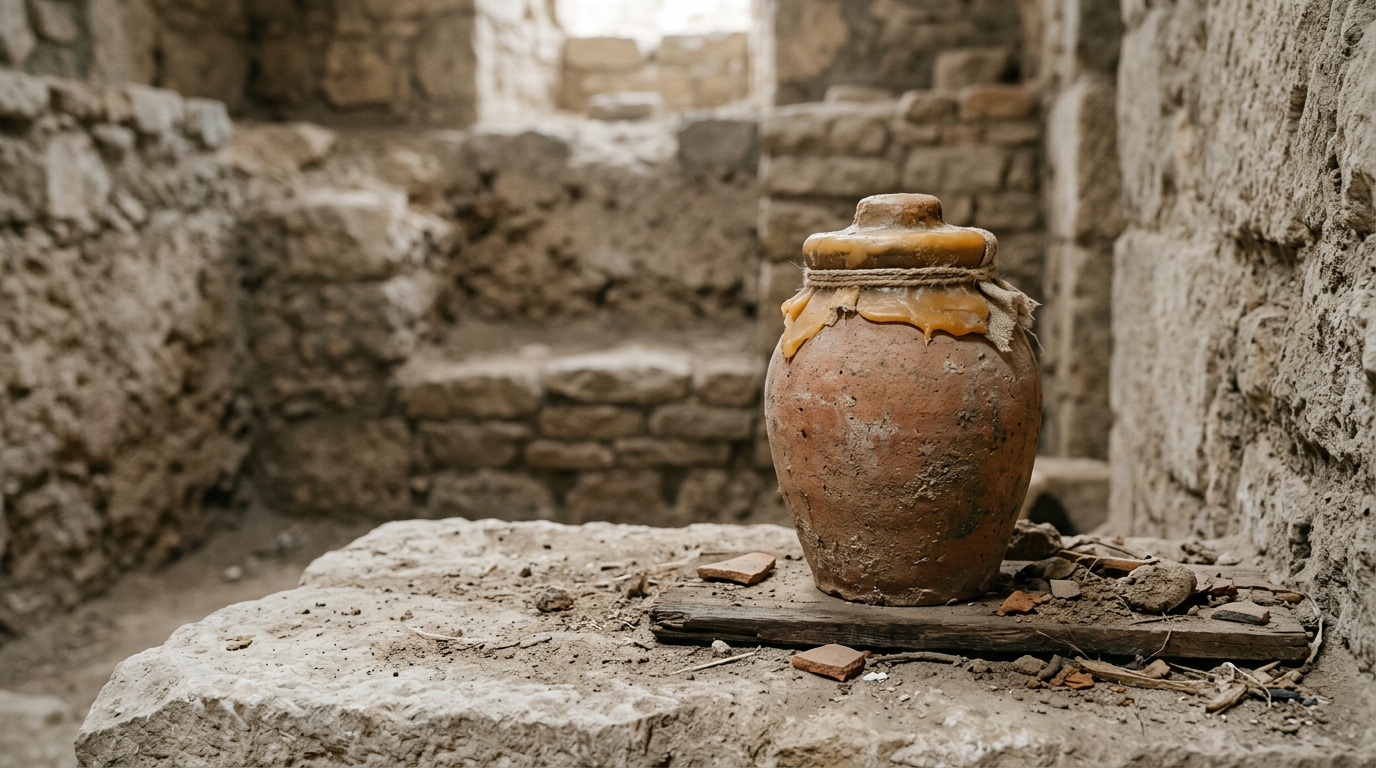
Honey can last for thousands of years, remaining perfectly edible, as long as it's sealed and kept dry. This isn't just a historical curiosity; archaeologists have unearthed ancient honey that's still good to eat! It's a testament to honey's natural preservative qualities, demonstrating how a simple, natural substance can defy time and decay.
In a hurry? TL;DR
- 1Honey's indefinite shelf life stems from low moisture, high acidity, and natural hydrogen peroxide production.
- 2Ancient Egyptian tombs and Georgian graves have yielded edible honey thousands of years old.
- 3Honey's hygroscopic nature dehydrates and kills spoilage microorganisms via osmosis.
- 4Its acidic pH (3.2-4.5) creates a hostile environment for bacteria and fungi.
- 5The enzyme glucose oxidase in honey produces gluconic acid and hydrogen peroxide, acting as an antiseptic.
- 6Properly sealed honey preserves itself, unlike other dried foods vulnerable to pests or oxidation.
Why It Matters
It's fascinating that honey, thanks to its unique chemical makeup, can remain perfectly edible for thousands of years, outlasting even the most sophisticated modern preservation methods.
Honey is the only food source that truly never expires. When kept in a sealed container, its unique chemical makeup creates an indefinite shelf life that defies the standard laws of biological decay.
The Eternal Food
- Shelf Life: Indefinite
- Oldest Sample: Approximately 3,000 years old
- Key Factors: Low moisture, high acidity, and hydrogen peroxide
- Archaeological Context: Found in ancient Egyptian tombs
- Modern Utility: Used in wound care and long-term food storage
Why It Matters
Honey serves as a biological anomaly that bridges the gap between ancient chemistry and modern food science, proving that nature perfected preservation long before refrigeration.
The Discovery of Liquid Gold
In 1922, during the excavation of King Tutankhamun’s tomb, archaeologists unearthed jars of honey that were still recognisably liquid. Despite being buried for over three millennia, the substance remained edible.
This was not an isolated incident. Excavations at the Nobles of Thebes and other sites across the Nile Valley have consistently revealed honey caches that look and smell like the modern product found on supermarket shelves.
The Chemistry of Immortality
The secret to this longevity lies in a perfect trifecta of chemical properties. First, honey is naturally low in moisture. In its finished state, it is roughly 18 percent water.
Because honey is so hygroscopic, it actively draws moisture out of its environment. Any bacteria or microorganism that lands in the jar is essentially dehydrated to death through osmosis before it can cause spoilage.
Acidity and Enzymes
Honey maintains a pH level between 3.2 and 4.5. This acidic environment is hostile to almost all forms of life that typically rot food.
Additionally, bees contribute a specific enzyme called glucose oxidase. When bees regurgitate nectar to make honey, this enzyme mixes with the liquid and creates two byproducts: gluconic acid and hydrogen peroxide.
Comparison to Other Preservatives
Unlike salt or sugar, which are used to preserve other foods, honey is a finished food product that preserves itself. While dried grains can last decades, they eventually succumb to weevils or oxidation. Honey, if sealed against humidity, remains chemically stable.
According to researchers at the Honey and Pollination Center at Robert Mondavi Institute, the only real threat to honey is water. If the lid is left off, honey absorbs moisture from the air, allowing yeast to ferment the sugars into alcohol.
Practical Applications
- Wound Care: Medical-grade honey, such as Manuka, is used in hospitals today to treat antibiotic-resistant infections.
- Survivalism: It remains a top-tier calorie source for long-term emergency stockpiles.
- Natural Sweetener: It serves as a shelf-stable alternative to syrups that may crystallise or mould over time.
Interesting Connections
- Bee Flight: A honey bee must visit two million flowers to produce just one pound of honey.
- Mead History: The oldest fermented beverage, mead, exists because honey can be diluted with water to kickstart fermentation.
- Etymology: The word honey comes from the Old English hunig, which has cognates in almost all Germanic languages, reflecting its ancient importance.
“Honey is the only instance where a biological organism creates a product that is effectively immune to time.”
Key Takeaways
- Biological Barrier: Honey’s low moisture and high acidity prevent bacterial growth.
- Historical Proof: Edible honey has been recovered from tombs thousands of years old.
- Natural Antiseptic: The enzyme glucose oxidase produces hydrogen peroxide, a natural disinfectant.
- Storage Secret: As long as it remains sealed from air and water, honey will never expire.
Frequently Asked Questions
Sources & References
- 1The Spruce EatsThis source corroborates that honey has an indefinite shelf life due to its unique chemical composition, including low water content and high acidity.thespruceeats.com
 WikipediaThis Wikipedia section provides an overview of honey's shelf life, noting its resistance to spoilage due to its chemical properties and reports of ancient honey discoveries.en.wikipedia.org