
Quick Answer
There are more public libraries in the United States than McDonald's restaurants. This is surprising because it highlights how much we value community and education, with thousands of these crucial resources available even in small towns, proving access to knowledge remains a priority.
In a hurry? TL;DR
- 1Public libraries outnumber McDonald's locations in the US, with roughly 17,000 libraries vs. 13,500 fast-food outlets.
- 2Over 90% of Americans live within a public library service area, highlighting widespread accessibility.
- 3Libraries are intentionally distributed to serve even small and rural communities, unlike commercial chains.
- 4Many rural libraries are crucial hubs providing internet access, workspace, and early literacy programs.
- 5The current library system's scale was significantly shaped by Andrew Carnegie's funding for 1,689 library buildings.
- 6Modern libraries have evolved beyond books, offering vital social infrastructure and community services.
Why It Matters
It's surprising that Britain's public libraries, not fast-food chains, are more widespread and accessible, particularly in rural areas.
The United States is home to more public libraries than McDonald’s restaurants, a geographic reality that persists despite the ubiquity of the Golden Arches. While fast food often defines the American landscape, there are approximately 17,000 public library buildings compared to roughly 13,500 McDonald’s locations.
The Core Data
- Total Public Libraries: Approximately 17,458 including central branches and bookmobiles
- Total McDonald’s Locations: Approximately 13,500 across all fifty states
- Ratio: Roughly 1.3 libraries for every one McDonald’s
- Accessibility: Over 90 percent of the U.S. population lives within a library service area
Why It Matters: This statistic upends the narrative of American commercialism, proving that civic infrastructure remains more physically prevalent than the world’s largest fast-food chain.
The Geographic Footprint of Knowledge
The sheer volume of libraries is often invisible because they do not share the uniform, neon-lit branding of a franchise. However, data from the Institute of Museum and Library Services (IMLS) confirms that these institutions outnumber not just McDonald’s, but also Starbucks outlets and retail hubs like Walmart.
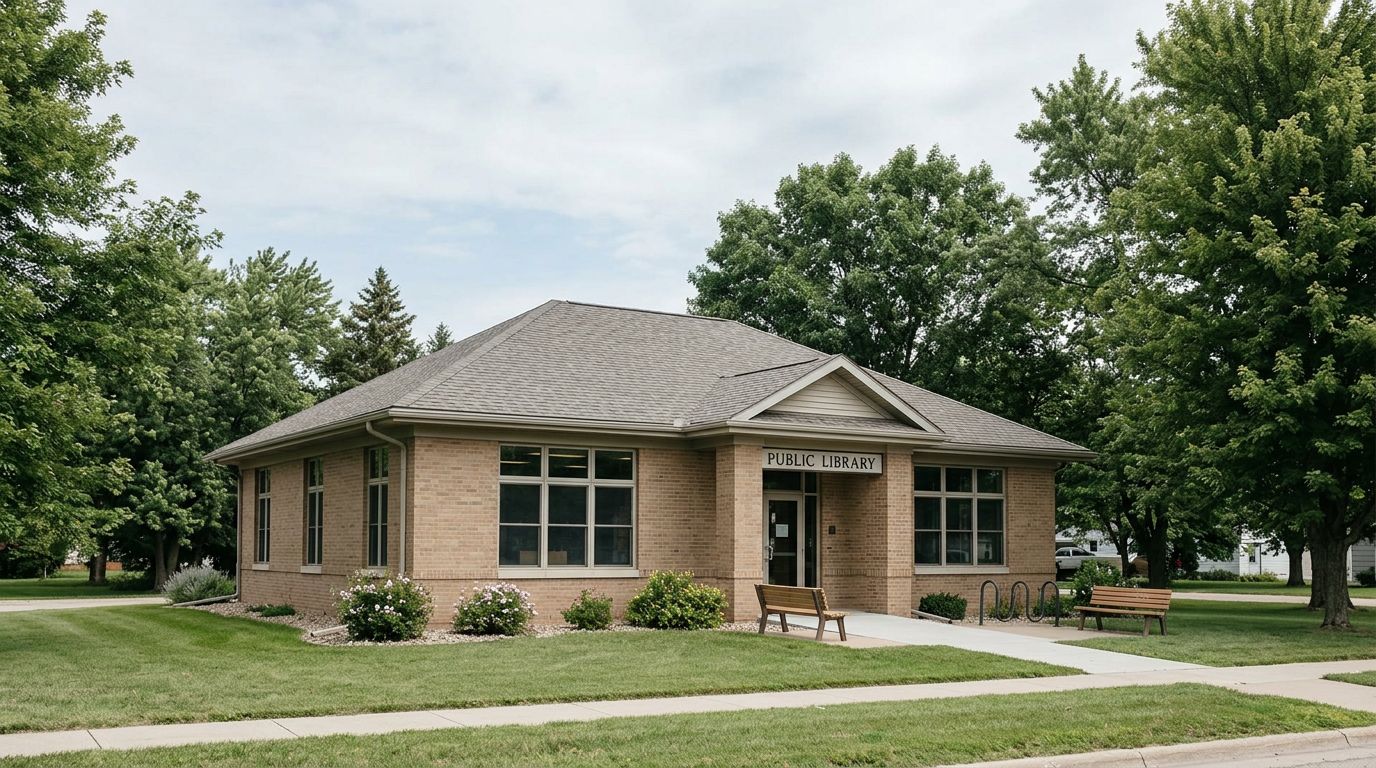
Unlike commercial chains that cluster in high-traffic urban corridors to maximise profit, libraries are intentionally distributed to serve low-density areas. In rural America, the library is frequently the only provider of high-speed internet, climate-controlled workspace, and early childhood literacy programmes.
The Carnegie Legacy
The modern American library system owes its scale to a massive injection of private capital in the late 19th and early 20th centuries. Steel magnate Andrew Carnegie funded the construction of 1,689 libraries across the United States, establishing a blueprint for local government-funded operations.
Carnegie’s philosophy of the Gospel of Wealth suggested that the rich had a moral obligation to distribute their wealth for the public good. By requiring towns to provide the land and commit to annual operating budgets, he ensured these institutions would outlast his initial donation.
Evolving Beyond Books
The reason these 17,000 locations remain relevant in a digital age is their transition into social infrastructure. According to sociologist Eric Klinenberg in his research on social infrastructure, libraries serve as palaces for the people, providing essential services that have nothing to do with paper books.
Modern library usage statistics show a shift toward digital resources and community services:
- Digital Downloads: Circulation of e-books and streaming media has increased by over 200 percent in the last decade.
- Workforce Development: Libraries are primary hubs for resume building, job applications, and small business support.
- Crisis Management: During extreme weather events, libraries serve as official cooling or warming centres for vulnerable populations.
Real World Implications
The presence of a library in a small town affects more than just literacy rates. In contrast to commercial zones, library locations correlate with higher levels of civic engagement and social trust. When a library opens in a neighborhood, it acts as a physical anchor that stabilises property values and encourages foot traffic for nearby small businesses.
Industry Recognition: According to reports by the American Library Association (ALA), public libraries see over 1.3 billion visits annually. This level of engagement dwarfs the attendance of professional sporting events and theme parks combined.
Common Misconceptions
Digital obsolescence: Many assume the internet has made physical libraries redundant. In reality, libraries have become the primary access point for the internet for millions of Americans who lack reliable home broadband.
Funding myths: There is a common belief that libraries are primarily federally funded. In fact, over 90 percent of library funding comes from local and state sources, meaning their survival is a direct reflection of community priority.
Does this count include school libraries?
No, the 17,000 figure refers specifically to public libraries. If school, university, and private research libraries were included, the number would exceed 100,000.
Are library visits declining?
While physical book checkouts have fluctuated, total library usage—including digital resources, programme attendance, and computer use—has remained high or increased in many jurisdictions.
Which state has the most libraries?
New York and Illinois consistently rank at the top, partly due to the high number of independent library districts serving smaller municipalities.
Key Takeaways
- Physical Presence: Public libraries outnumber McDonald’s by a margin of nearly 4,000 locations.
- Social Infrastructure: Libraries provide essential non-literary services like internet access and disaster relief.
- Local Investment: The vast majority of these institutions are funded and maintained by local taxpayers, not the federal government.
- Enduring Value: Despite the digital revolution, the library remains the most accessible civic space in American life.
