
Quick Answer
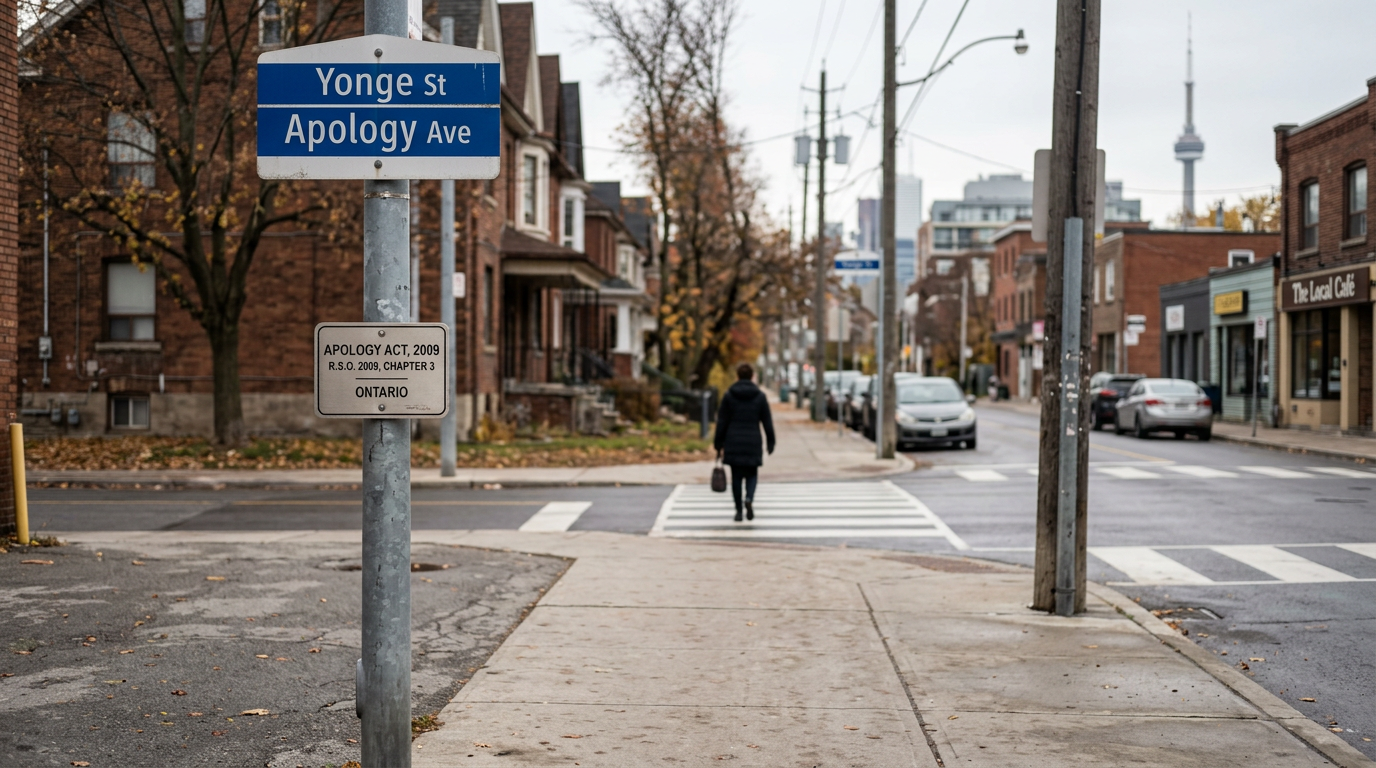
Canadians are famously apologetic, so much so that Ontario passed a law in 2009. This Apology Act states that saying "sorry" can't be used as evidence of guilt in court. It's a fascinating example of how a deeply ingrained cultural habit led to a legal protection, ensuring politeness doesn't accidentally translate into legal liability.
In a hurry? TL;DR
- 1Ontario's 2009 Apology Act protects expressions of regret, preventing them from being used as legal proof of fault in civil cases.
- 2The Act legally defines an apology as sympathy or regret, not an admission of wrongdoing, reflecting Canadian cultural politeness.
- 3This legislation aims to balance social harmony with legal accountability, preventing reflexive apologies from being weaponized in court.
- 4Prior to the Act, lawyers advised silence after accidents; the law now allows empathy without admitting legal liability.
- 5Ontario's apology protection is broad, covering various situations and not just limited to healthcare providers like in many US states.
- 6The law ensures an apology cannot be used to void insurance coverage or serve as the sole basis for a liability claim.
Why It Matters
It's fascinating that Canadian politeness led to a law protecting apologies from being used as legal admissions of guilt.
In Ontario, Canada, the word sorry is legally protected under the Apology Act of 2009, which ensures that expressing regret cannot be used as an admission of legal liability or guilt in a civil court.
The Canadian Conundrum
The Apology Act, 2009, was a direct legislative response to the Canadian tendency to apologise reflexively. It prevents a simple sorry from being used against a defendant as evidence of fault or an admission of negligence in civil proceedings, insurance claims, or administrative hearings.
- 2009: The year the Apology Act was passed in Ontario.
- Civil Liability: The specific area of law where apologies are protected.
- Legal Definition: Under the Act, an apology is an expression of sympathy or regret, not an admission of wrongdoing.
- Precedent: Similar laws exist in British Columbia, Saskatchewan, and several US states.
Why It Matters
This legislation acknowledges that social harmony and legal accountability are often at odds, protecting cultural politeness from being weaponised in a courtroom.
The Reflexive Regret
For a Canadian, saying sorry is rarely a confession of a crime. It is a social lubricant, a way to acknowledge a shared awkwardness, or a reaction to someone else stepping on your foot. By the late 2000s, this cultural quirk posed a genuine problem for the legal system.
Lawyers were advising clients to remain silent after accidents to avoid accidental admissions of guilt. This created a cold, litigious environment that clashed with the national identity. The 2009 Act changed the game by decoupling empathy from evidence.
The Mechanics of the Act
According to the Legislative Assembly of Ontario, the Act defines an apology as an expression of sympathy or regret, a statement that one is sorry, or any other words or actions indicating contrition or commiseration.
Crucially, the Act specifies that an apology does not constitute an express or implied admission of fault or liability. It also cannot be used to void insurance coverage, which previously was a major concern for drivers involved in minor collisions.
Unlike other jurisdictions where an apology might still be used to determine the timeline of an event, Ontario’s law is robust. It ensures that even if a doctor apologises for a medical complication, that apology cannot be the foundation of a malpractice suit.
A Global Comparison
While Canada is the most famous adopter of these laws, they are not alone. According to research published in the University of Missouri School of Law, over 30 US states have some form of apology immunity, though many are limited to healthcare providers.
In contrast to the broad Canadian model, many US versions only protect expressions of sympathy, while actual admissions of fault remain admissible. Ontario’s version is wider, reflecting a societal need to maintain politeness without the fear of financial ruin.
Practical Applications
- The Fender Bender: If two drivers collide in Toronto and both exit their cars saying sorry, neither has legally admitted fault for the crash.
- Medical Complications: A surgeon can tell a family they are sorry for a poor outcome without that statement being used as a confession of negligence in a later hearing.
- Workplace Disputes: HR departments can facilitate apologies during mediation to de-escalate tensions without creating a paper trail of liability.
Related Concepts
- Social Lubricant: The concept of words used to maintain social harmony rather than convey literal meaning.
- Canadianism: Cultural traits specific to Canada, often involving extreme politeness or self-deprecation.
- Tort Reform: Changes in the civil justice system intended to reduce the ability of victims to bring tort litigation or to reduce damages they can receive.
Does this law apply to criminal cases?
No. The Apology Act specifically applies to civil and administrative matters. In a criminal trial, an apology could still potentially be used as evidence of a guilty mind or a confession.
Can I still sue someone if they apologise?
Yes. The Act does not prevent you from suing; it only prevents the apology itself from being the evidence that proves their fault. You still have to prove negligence through other means, such as forensics or witness testimony.
Does this exist in other Canadian provinces?
Yes. British Columbia was the first to pass such an Act in 2006. Since then, most Canadian provinces and territories have adopted similar legislation to protect the national habit of apologizing.
Key Takeaways
- Legal Safety: The Act allows for empathy without the risk of a lawsuit.
- Cultural Protection: It preserves the Canadian social norm of frequent apologizing.
- Evidence Exclusion: Apologies are inadmissible in civil court to prove liability.
- Insurance Security: Saying sorry won't void your insurance policy in Ontario.
The next time you find yourself in Ontario and someone bumps into you, feel free to apologise. It is your legal right to be polite without being prosecuted.
Frequently Asked Questions
Sources & References
- 1Ontario.caContains the full, official text of the Apology Act, 2009, detailing its provisions and definitions regarding apologies and liability.ontario.ca
- 2University of Missouri School of Law Scholarship RepositoryDiscusses the legal landscape of apology laws in the United States, including their application and limitations, particularly in healthcare contexts.scholarship.law.missouri.edu