
Quick Answer
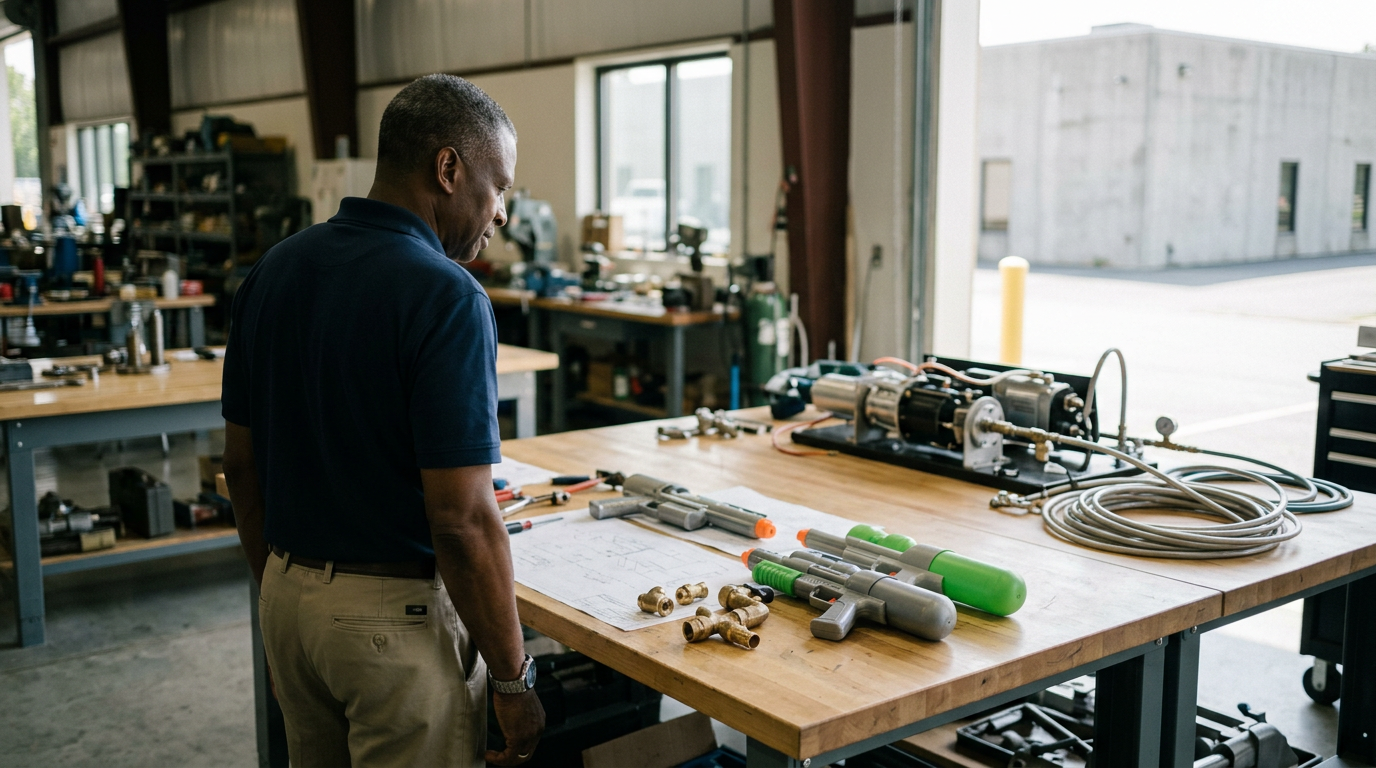
The inventor of the Super Soaker was once a NASA engineer working on advanced propulsion systems for space missions. This is fascinating because it highlights how cutting-edge scientific and engineering expertise, developed for the rigours of space exploration, can be ingeniously applied to create something as joyful and accessible as a child's toy.
In a hurry? TL;DR
- 1Lonnie Johnson, a NASA engineer, invented the Super Soaker water gun by accident while developing a new heat pump system.
- 2The Super Soaker's design leveraged high-pressure fluid dynamics principles, similar to those used in aerospace propulsion.
- 3It took seven years of rejections before the water gun, initially called the Power Drencher, was successfully brought to market.
- 4Johnson holds over 140 patents, demonstrating a prolific career beyond the Super Soaker.
- 5The accidental invention showcases how advanced engineering concepts can revolutionize consumer products.
- 6The Super Soaker's success demonstrates the significant market potential of innovative toy designs.
Why It Matters
It's fascinating that the powerful water blasts of the Super Soaker originated from a NASA engineer's work on advanced propulsion systems.
The inventor of the world’s most famous water gun, Lonnie Johnson, was a NASA nuclear engineer who stumbled upon the Super Soaker while trying to build a new type of heat pump.
Quick Answer
Lonnie Johnson, a Tuskegee University graduate and Air Force veteran, spent his days at NASA’s Jet Propulsion Laboratory working on the Galileo mission to Jupiter. He invented the Super Soaker in his bathroom when a high-pressure stream from a nozzle he was testing hit the wall, sparking the idea for a pressurised water toy.
TL;DR
- Lonnie Johnson was a NASA engineer working on the Galileo and Cassini missions.
- The Super Soaker was invented by accident during research into eco-friendly heat pumps.
- It took seven years of rejection before the toy hit the market in 1990.
- Johnson holds over 140 patents, including the Nerf Dart Tag system.
Why It Matters
This is the ultimate example of how high-level aerospace principles can revolutionise mundane consumer products, turning complex fluid dynamics into a multibillion-dollar industry.
The Engineer Behind the Blast
Lonnie Johnson was not a toy designer by trade. In 1982, he was a Senior Systems Engineer at NASA’s Jet Propulsion Laboratory, where he was tasked with ensuring the Galileo spacecraft had a stable power supply for its trip to Jupiter.
The invention of the Super Soaker occurred in his home bathroom. Johnson was working on an experimental cooling system that used water instead of environmentally harmful Freon. When he hooked a custom-made nozzle to his bathroom sink and turned the valve, a powerful stream of water shot across the room.
From Rocket Science to Retail
Unlike the flimsy squirt guns of the 1970s, which relied on small finger-operated pumps, Johnson’s design utilised air pressure. By pumping air into a reservoir, the user could store energy, allowing for a continuous, high-pressure stream.
Despite the brilliance of the design, the path to market was difficult. Johnson spent seven years pitching the prototype to various companies. Most ignored him until he met with Larami Corporation in 1989. He reportedly walked into the meeting, pulled the gun from a suitcase, and blasted water across the boardroom.
The toy was originally released as the Power Drencher in 1990. After a rebranding to Super Soaker in 1991, sales exploded, reaching over 200 million dollars in its first two years on the shelf.
Technical Stats and Timeline
- 1982: The year the prototype was accidentally created in a bathroom.
- 140: The number of patents currently held by Lonnie Johnson.
- 1990: The year the toy officially launched as the Power Drencher.
- 1 billion: Total estimated revenue generated by the Super Soaker brand to date.
Scientific Impact
The Super Soaker changed the way toys were manufactured. According to the National Toy Hall of Fame, the device moved water guns from simple suction mechanisms to sophisticated pressure vessels. Compared to the battery-operated models of the era, Johnson’s manual pump design was more reliable, more powerful, and cheaper to produce.
Beyond toys, Johnson has used the royalties from his inventions to fund Johnson Research & Development. He is currently developing the Johnson Thermo-Electrochemical Converter (JTEC), a device that converts heat directly into electricity with significantly higher efficiency than traditional engines.
Practical Applications
- Fluid Dynamics: The Super Soaker serves as a perfect classroom example of Boyle’s Law, demonstrating how compressed air can move liquids.
- Intellectual Property: Johnson’s success is a case study in the importance of patenting and the long-term value of licensing.
- Clean Energy: The revenue from the toy industry is currently being used to fund advanced solid-state battery research for electric vehicles.
What was the Super Soaker originally called?
It was first marketed as the Power Drencher in 1990 before being rebranded a year later.
How many patents does Lonnie Johnson have?
He holds more than 140 patents, covering everything from thin-film batteries to hair rollers and toy projectiles.
Did Lonnie Johnson invent Nerf guns?
He did not invent the original Nerf foam, but he designed the Dart Tag system and several high-performance air-pressure mechanisms used in modern Nerf blasters.
Key Takeaways
- The Super Soaker was a byproduct of heat pump research, not a deliberate attempt to make a toy.
- Lonnie Johnson used his NASA-honed skills in thermodynamics to outperform existing toy designs.
- Success required nearly a decade of persistence and pitching before a manufacturer took a risk on the design.
- The inventor continues to work on high-stakes green energy solutions, proving that toy royalties can fund serious science.
Frequently Asked Questions
Sources & References
- 1NASA Jet Propulsion LaboratoryThis source confirms Lonnie G. Johnson worked at NASA's Jet Propulsion Laboratory (JPL) on missions like Galileo and Cassini, and states he was a Senior Systems Engineer.jpl.nasa.gov
 WikipediaThis source verifies that Lonnie Johnson, while working on an experimental heat pump using water, discovered the Super Soaker concept when a high-pressure stream shot across his bathroom.en.wikipedia.org
 Smithsonian National Museum of American HistoryThis Smithsonian source identifies Lonnie Johnson as the inventor of the Super Soaker and states he was a NASA engineer working at the Jet Propulsion Laboratory at the time.americanhistory.si.edu