
Quick Answer
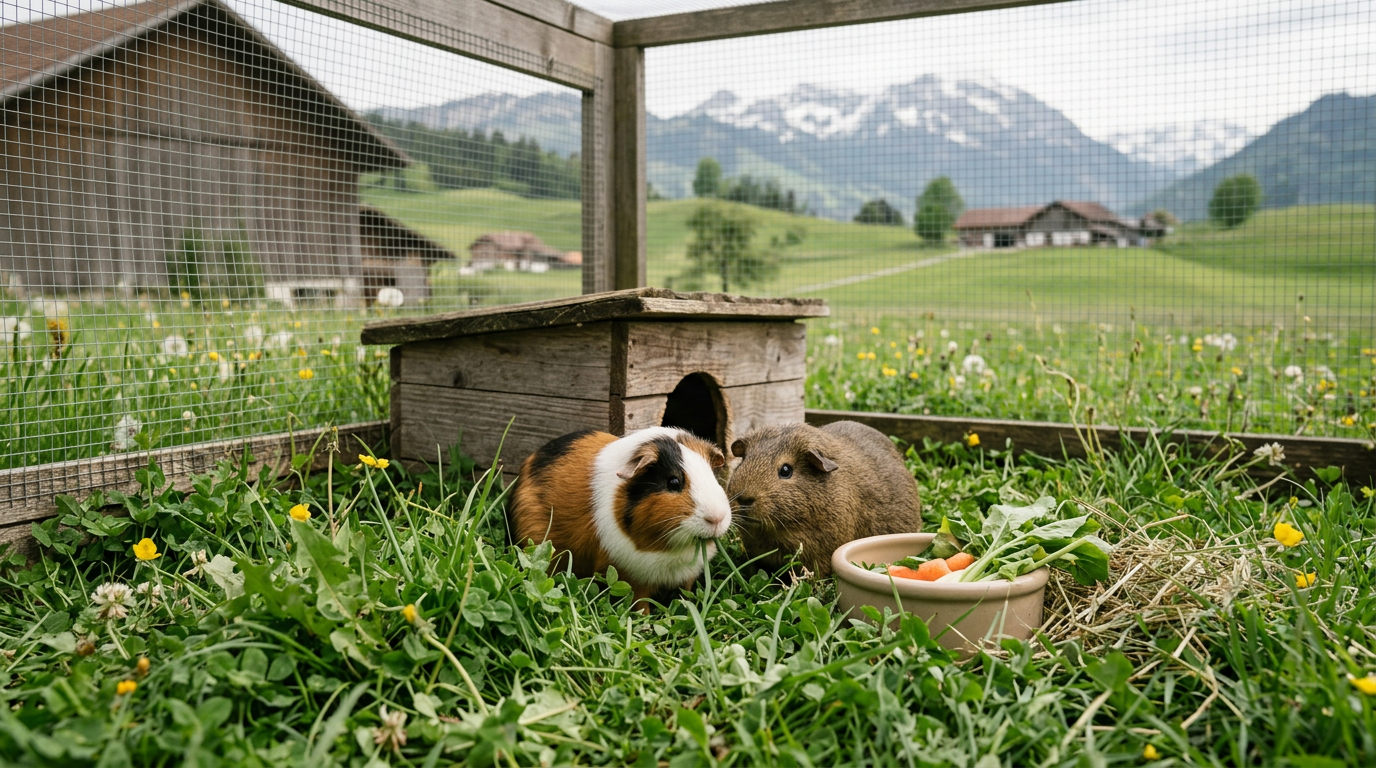
In Switzerland, it's illegal to own just one guinea pig. This is because they are very social creatures and can get lonely and distressed if kept alone. It highlights a strong commitment to animal welfare, ensuring pets have companions for their well-being, which is a rather thoughtful approach.
In a hurry? TL;DR
- 1Switzerland legally requires guinea pigs to be kept in pairs or groups, classifying single ownership as animal cruelty.
- 2This law stems from guinea pigs being highly social animals that suffer psychological distress and stress when isolated.
- 3Swiss law views animals as sentient beings with emotional needs, not just property, reflecting a broader 'animal dignity' concept.
- 4Isolation in guinea pigs can lead to physiological stress responses, including elevated cortisol, lethargy, and reduced lifespan.
- 5A unique 'rent-a-guinea-pig' service emerged in Switzerland to legally address situations where one pet dies, preventing owners from being forced into continuous purchases.
- 6The Swiss approach extends to other animal welfare regulations, such as humane disposal of pets and broader constitutional protections for animal dignity.
Why It Matters
It's surprising that Switzerland has a law specifically protecting guinea pigs from loneliness because they're social animals.
Swiss law dictates that owning a single guinea pig is a form of animal cruelty. Because these rodents are obligate social creatures, the Swiss Animal Protection Ordinance mandates they must be kept in pairs or groups to prevent psychological distress.
The Social Mandate
Under Swiss federal law, specifically the Animal Protection Ordinance (Tierschutzverordnung) updated in 2008, guinea pigs are classified as social animals. This means keeping one in isolation is a punishable offence. The law reflects a shift in legal philosophy where animals are treated as sentient beings with specific emotional requirements rather than mere property.
Key Facts and Figures
- Legislation: Animal Protection Ordinance (TSchV)
- Implementation Year: 2008
- Minimum Requirement: Two social counterparts
- Classification: Social species (Art. 13)
- Enforcement Body: Federal Food Safety and Veterinary Office (FSVO)
The Logic of Companionship
The Swiss approach is rooted in the biological reality of Cavia porcellus. In the wild, guinea pigs live in tight-knit herds to mitigate the risk of predation. Isolation triggers a physiological stress response that can lead to lethargy, loss of appetite, and a significantly shortened lifespan.
Unlike hamsters, which are notoriously solitary and territorial, guinea pigs lack the internal resources to thrive alone. According to researchers at the University of Zurich, social isolation in herd animals leads to elevated cortisol levels, effectively keeping the animal in a permanent state of high alert.
The Rent-a-Guinea-Pig Economy
The law created an accidental logistical crisis: what happens when one member of a pair dies? If the owner does not want to enter an infinite loop of buying new pets to accompany the survivor, they find themselves in accidental breach of federal law.
This gave rise to a niche service industry. Priska Küng, a Swiss breeder, gained international attention for founding a guinea pig rental agency. These services allow owners to lease a companion for their surviving pet. When the original pet eventually passes away, the rented guinea pig is returned to the colony, allowing the human owner to exit the cycle legally.
Broader Implications of Animal Dignity
The Swiss legal framework is significantly more stringent than that of the United Kingdom or the United States. While the UK Animal Welfare Act 2006 requires owners to provide a suitable environment and protect animals from pain, it does not specifically mandate social pairings for rodents by law, though it is strongly advised by the RSPCA.
Real-World Scenarios
- The Bereaved Owner: A resident whose guinea pig dies on a Sunday must secure a new companion or a rental immediately to remain compliant with welfare standards.
- The Group Dynamic: In larger enclosures, the law requires that the social structure is maintained, meaning owners cannot simply keep a guinea pig in a room with a rabbit, as the two species do not communicate effectively.
- Public Reporting: It is common for Swiss neighbours to report animal welfare violations, including the observation of a solitary pet, to local veterinary authorities.
Related Concepts
- Animal Rights in Europe: A look at how EU nations vary in welfare legislation.
- The Science of Herd Mentality: Why some species evolved to require constant proximity.
- Anthropomorphism vs. Biology: Understanding when we are projecting human feelings and when the science is absolute.
Key Takeaways
- Biological Necessity: Guinea pigs are biologically wired for herd life; isolation causes measurable physiological harm.
- Swiss Legal Innovation: The 2008 ordinance shifted pet ownership from a right to a responsibility tied to the animal's dignity.
- Practical Solutions: The rental market serves as a legal loophole for owners wishing to end their pet-owning journey humanely.
- Species Specificity: A companion must be of the same species to satisfy the legal and psychological requirements of the animal.
Loneliness in the animal kingdom is not a sentimental concern but a biological one. By codifying companionship, Switzerland has set a global benchmark for what it means to truly account for the welfare of the smallest members of a household.
Frequently Asked Questions
Sources & References
- 1Swiss Animal Protection Ordinance (Tierschutzverordnung - TSchV)This official Swiss federal law document (Tierschutzverordnung) confirms that guinea pigs are classified as social animals and must be kept with at least one social counterpart.fedlex.admin.ch
 Encyclopaedia BritannicaThis source from Britannica states that guinea pigs are gregarious and highly social, naturally living in groups, which corroborates the biological basis for the Swiss law regarding their social needs.britannica.com